Read More







China's largest import expo opens in Shanghai amid record trade imbalances
05-11-2026 14:37 HKT

China looks forward to deeper North Korea ties, Xinhua reports
05-11-2026 13:34 HKT


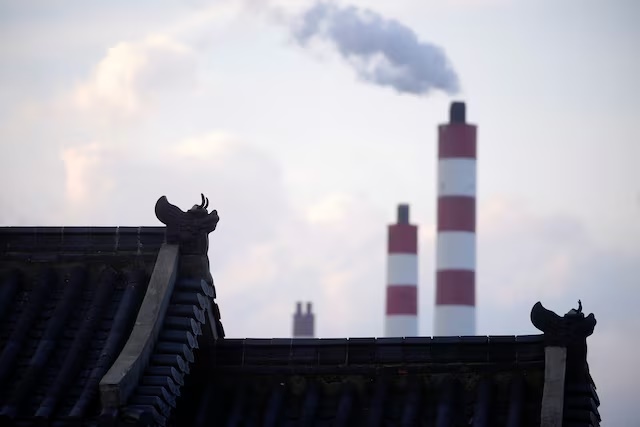
China's carbon dioxide emissions fell in the third quarter of the year at the fastest rate since the Covid-19 pandemic, a think tank said on Friday, attributing the drop to impacts from the Middle East war.
The massive Asian economy's emissions fell by 3.1 percent between July and September, according to analysis by the Centre for Research on Energy and Clean Air (CREA) published by Carbon Brief.
Severe disruption to traffic through the crucial Strait of Hormuz has heavily impacted oil shipments to China, the world's second-largest economy and the top importer of crude.
Overall oil use fell by four percent year-on-year while transport oil consumption decreased by nine percent, the CREA report said, citing official figures and commercial data.
"It's clear there is going to be some kind of a rebound in oil consumption once, or if, prices come down," CREA co-founder and lead analyst Lauri Myllyvirta told AFP.
"That's against the context that China's oil consumption had highly likely peaked before the shock," he said.
"The shock has clearly accelerated the electrification trend and the shift away from oil."
Coal use also fell by three percent year-on-year despite China's rapid construction of new coal plants.
"Coal power sustaining a downward trend is a key factor in the further development of renewable energy," said Gao Yuhe, the Beijing-based project lead at Greenpeace East Asia.
"At the same time, we need to see expanding uptake of renewable energy and marketisation of renewable energy and energy storage systems," he added.
The country has seen explosive growth in renewable installation, with coal's share in its energy mix edging down in recent years.
China is the world's biggest emitter, responsible for over 30 percent of global greenhouse gases.
Its leaders have promised to step up efforts to reduce CO2 and boost the green transition, aiming for carbon neutrality by 2060.
AFP