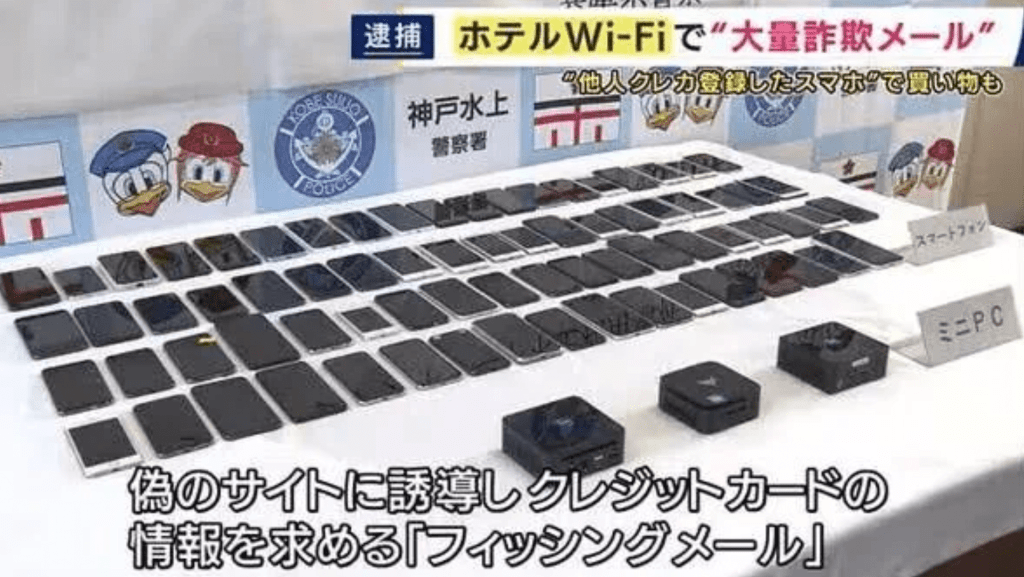
Japanese police in Hyogo prefecture have arrested a Chinese couple living in Kobe on suspicion of entering a hotel as fake guests, hiding a small computer behind a guest room fridge and using the hotel's Wi-Fi to send at least 480,000 phishing emails.
The man, 39-year-old Ye Jiafeng, and his wife, 39-year-old Shen Qi, have been arrested. Police have not disclosed their response to the allegations.
Police said Ye allegedly entered a hotel in Kobe with another person on May 15 last year pretending to be guests, and hid the small computer behind the fridge in a guest room. After they left, another suspect allegedly controlled the computer remotely from elsewhere, using the hotel's network to send large numbers of scam messages.
The emails impersonated credit card companies and contained links to fake websites, tricking recipients into entering credit card numbers and personal data. Police found records of about 480,000 emails sent and about 2.4 million target email addresses on the computer.
Police believe the suspects used the hotel's public network to hide their true location and IP address. Ye was arrested on suspicion of obstructing the hotel's business by deception.
During the investigation, police uncovered another suspected credit card fraud case. Ye and Shen allegedly used another person's credit card details on a smartphone to buy three items including down jackets worth about 470,000 yen (about HK$24,000) at a commercial facility in Kobe on January 1 this year. They also face charges including computer fraud.
Police seized as many as 74 smartphones from their home and are investigating the devices, the source of the card data and money flows, amid suspicions of other victims. Japanese media reported that police believe the computer sending the emails was controlled remotely by another person, and are investigating whether the couple installed the device and made purchases under instructions, and whether a cross-border fraud syndicate is involved.
The case is notable because the suspects did not hack the hotel's systems but hid their own computer in a guest room to use the hotel's guest network as a relay for fraud. Even if investigators trace the IP address, initial leads would point to the hotel while the real operator could be elsewhere.
Japanese hotels have been warning travellers about scammers impersonating hotels, booking platforms or credit card companies, asking recipients to click links and enter payment details under the pretext of confirming bookings or resolving account issues. Travellers who receive suspicious emails should avoid opening links or attachments and verify through official channels.