Read More








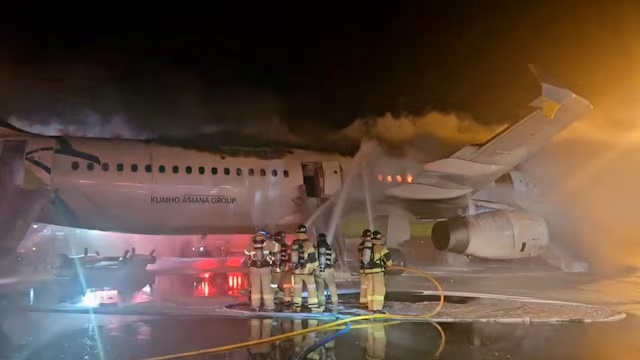
South Korea's Air Busan will not allow passengers to keep power banks in luggage stored in overhead cabin bins, in what on Tuesday it called a preemptive measure after one of its planes was engulfed in flames last week.
An investigation led by South Korean authorities into the fire has begun, but no cause has yet been determined. Air accidents are nearly always caused by a combination of factors, according to experts.
Passenger carry-on bags inspected at boarding gates and found not to contain power banks will be tagged and then allowed in overhead luggage bins, in measures set to begin on Friday on trial routes, before expanding to all flights.
Any power banks should be kept with passengers so any overheating, smoke or fire can quickly be spotted and dealt with.
Air Busan said the changes, which will also include additional crew fire training and fire containment equipment on board, were in response to an increase in the number of power banks overheating.
The fire, which began on Jan. 28 while preparing for departure to Hong Kong, was first detected by a flight attendant in an overhead luggage bin in the rear left-hand side of the plane, Air Busan has said. All on board were evacuated safely.
Global aviation standards say lithium batteries must not be placed in checked-in luggage because they can start intense fires if they short circuit due to damage or manufacturing faults.
Regarding whether Hong Kong will adjust their power bank restrictions, executive director of local tour operator WWPKG Yuen Chun-ning indicated that they had yet to receive a request from the airline.
Hong Kong Airlines stated that any lithium batteries and portable lithium battery chargers are prohibited from being checked in as cargo, which must be stored in carry-on luggage. Passengers are also not allow to use power banks to charge any electronic devices during the flight.
(Staff reporter and Reuters)