Read More
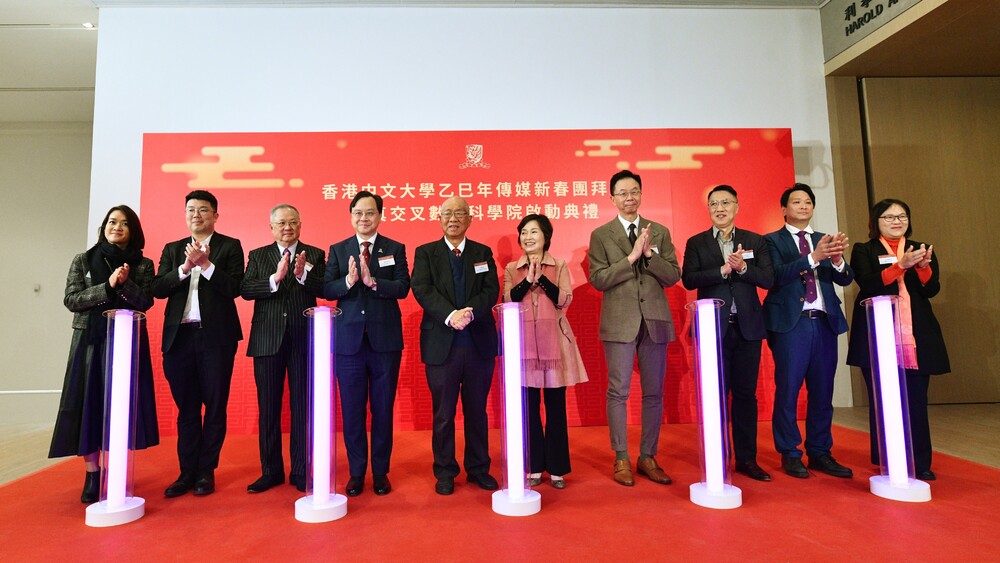
The Chinese University establishes the Zhizhen School of Interdisciplinary Mathematical Sciences, with renowned mathematician Yau Shing-tung serving as the school's founding director.
ADVERTISEMENT
SCROLL TO CONTINUE WITH CONTENT
The school enrolls its first cohort of 40 students in the 2025/26 academic year, starting in September, comprising 10 local and 30 non-local students.
Admission requires passing an examination conducted in collaboration with Tsinghua University's Qiuzhen College in Beijing.
In a notable move, the school also accepts talented students who have not taken traditional university admission examinations, such as the Diploma of Secondary Education and Gaokao from mainland China.
The program offers an eight-year Bachelor and Doctoral training pathway, mirroring Qiuzhen College's curriculum, and engages in close collaboration with other prestigious institutions, including Fudan University in Shanghai.
The curriculum encompasses three years of mathematical foundation training, two years of scientific research training, and three years of doctoral training.
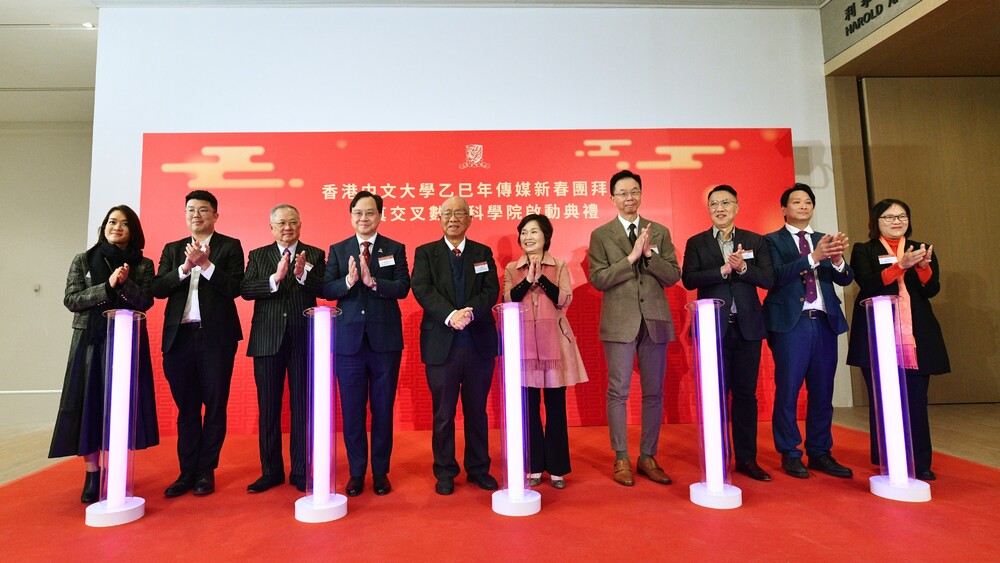
During the launching ceremony and media gathering, Yau, a former professor emeritus at Harvard University and a 1982 Fields Medal laureate, emphasizes that the establishment of the Zhizhen School elevates the city’s scientific development to new heights.
When discussing the balance of local and non-local students, Yau expresses the university’s aspiration to attract “at least 10 talented Hong Kong students annually.”
Secretary for Education Christine Choi Yuk-lin commends Yau’s efforts in initiating the Zhizhen School and expresses hope that it enhances Hong Kong’s well-established reputation in education.
CUHK president Dennis Lo Yuk-ming, who took office last month, highlights the critical role of mathematics as the foundation of various fields, including Physics, Chemistry, and Economics.
“Mathematical talents determine a country's scientific dominance,” he said.
Lo also outlines CUHK’s focus for the next five years (2026-2030) on enhancing students’ learning experiences and promoting innovative research and knowledge transfer, with proposals including the establishment of a new college for graduate students.
(Eunice Lam)