According to the World Health Organization, over 5% of the world’s population – or 430 million people – require rehabilitation to address their ‘disabling’ hearing loss. It is estimated that by 2050, 2500 million people will have disabling hearing loss. The good news is that by applying state-of-the-art technology, Vibrosonic, a German-based company, has come up with a brand new product that takes hearing aid to the next level of sophistication.
People with untreated hearing loss are more likely to experience irritation, depression, and anger since the impairment interrupts the natural flow of discourse, and severely affects their mental health in the long term. Hearing aids are the best course of action that offers relief. Yet, when we talk about hearing aids, what immediately comes to mind will be a visible device in the ears that possibly causes inconvenience and discomfort.
The current receiver technology is far from perfect as it requires blocking the ear canal in order to achieve higher amplification and audio bandwidths. As a result, annoying ringing or whistling noises often occur when sound from the hearing aid receiver leaks back to the microphone. The negative stigma associated with hearing loss has also contributed to the low adoption rate of hearing aids not only among young people, but also among the elderly.
“With conventional hearing devices, people always have to make a compromise: they can either go for a system that is invisible with limited sound quality, or they can go forward with better sound quality which is obviously visible,” explains Dr Dominik Kaltenbacher, founder and Managing Director of Vibrosonic. “Ultimately, people want something that is both invisible and has a good sound quality.”
Subversion of the traditional
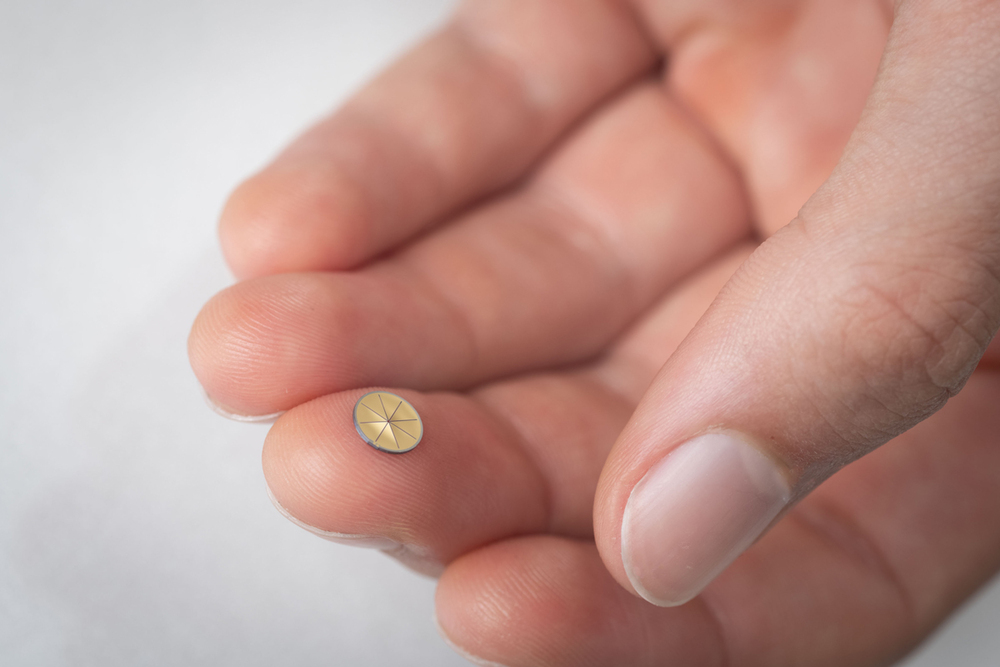
For over a decade, Dr Kaltenbacher, together with Dr Dalhoff and Dr Schächtele, have been devoted to nurturing the Hearing Contact Lens from a scientific project into a real product for the benefit of hearing-impaired people. Vibrosonic was founded in 2016 with the mission of reconnecting people with hearing impairment to the sound of life.
“We, as a team, knew from our research that if we wanted to combine invisibility with high sound quality, we would have to create sound directly on the eardrums and in direct mechanical contact to the eardrum,” says Dr Kaltenbacher. “This is key to the best sound quality.”
In its research and development work, Vibrosonic has received strong support from its scientific root institutions, Fraunhofer and the University Hospital Tubingen. The former and current directors of the Clinic for Otolaryngology, Head and Neck Surgery, Professor Zenner and Professor Löwenheim, have steadfastly provided their medical expertise and guidance to the success of inventing Vibrosonic Hearing Contact Lens.
“It is a totally new approach to treating hearing loss, featuring invisibility of the medical hearing solution and providing a superior hearing experience at the same time,” Dr Kaltenbacher remarks. “It has the potential to revolutionize the premium segment of the market for hearing aids.”
He points out there are other research approaches, such as putting magnets on the eardrum, but they are too heavy and could easily fall off, with the possibility of tearing the eardrum. “Instead, our approach is to create a micro speaker that is light, thin and flexible enough to be put directly in the ear with dramatic mechanical contact with the drum,” he explains.
A unique hearing solution
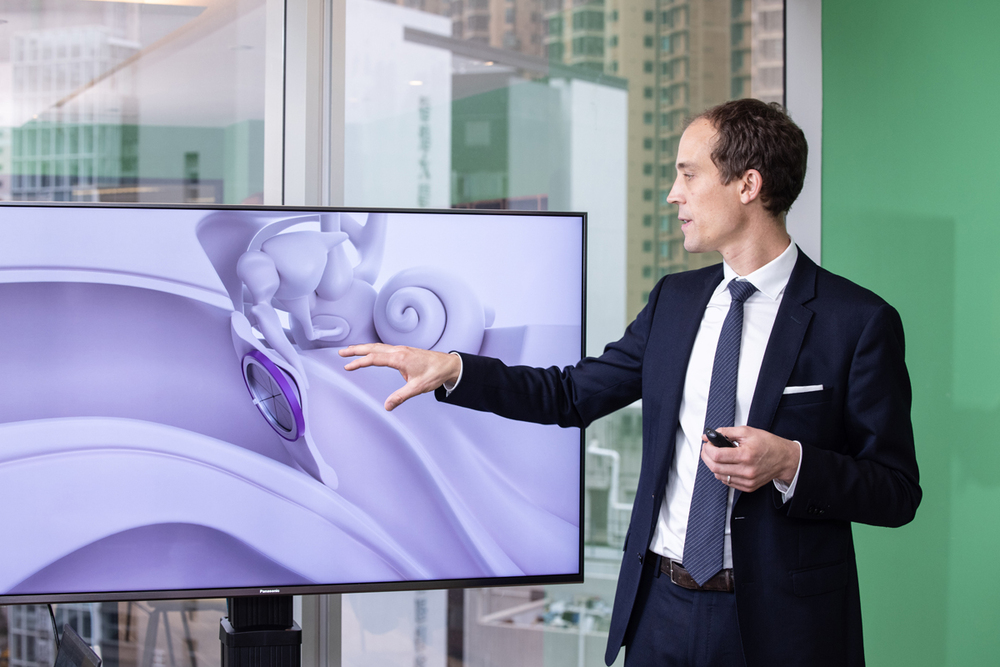
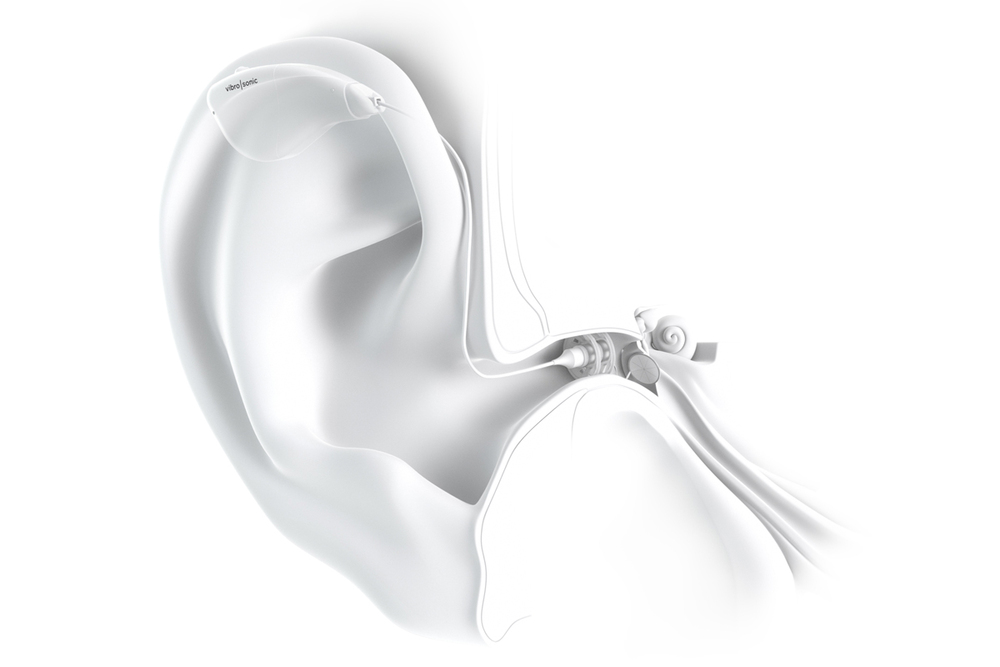
“What Vibrosonic offers is a new generation of receiver technology for unprecedented sound quality. It is not just another conventional device, it is really different,” elaborates Dr Werner Zöllner, Co-founder of Vibrosonic. “We take the tiny micro speaker and put it in silicone mold which is tailored-made for each individual patient. And then an ear doctor inserts the hearing contact lens - without surgery, and without anesthesia - through the ear canal onto the eardrum.”
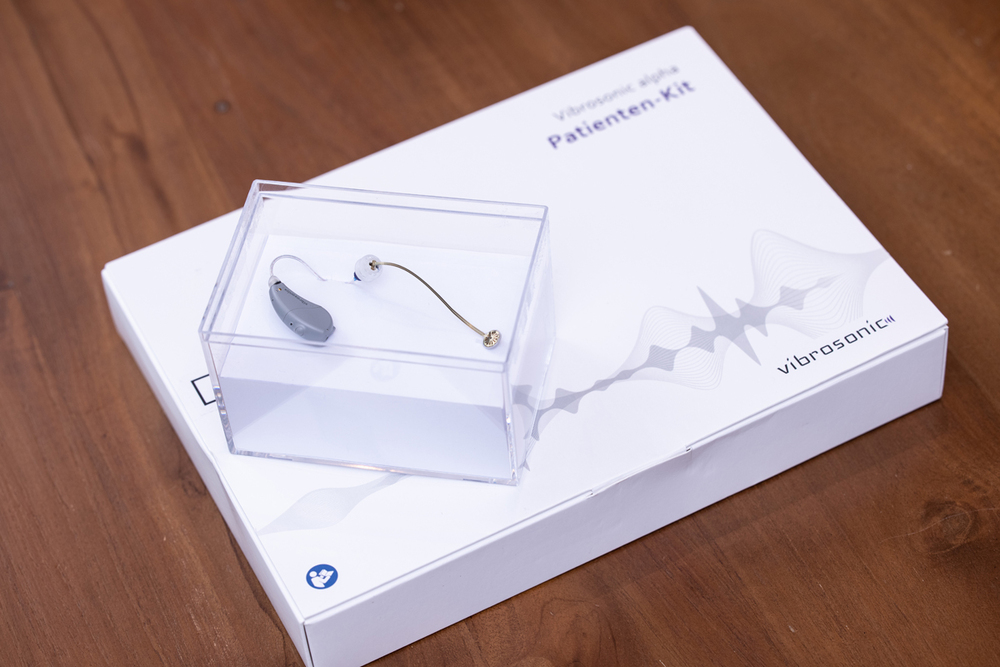
The Hearing Contact Lens massively reduces distortions and enables a wide audio bandwidth with a perfectly flat frequency response. Minor rear emission reduces the need for acoustic isolation and energy-hungry feedback suppression technology. The open ear canal module connected to the Hearing Contact Lens enables both ventilation and highwearing comfort.
“This makes a big difference in two aspects: Firstly, we can boost your experience of music by providing rich bases and a good sound. Secondly, we can provide more information in the higher frequency regions, especially in noisy environments with many people,” adds Dr Zöllner.
Apart from the technological advancement, Vibrosonic will contribute to a higher penetration rate by easing the customer journey. “Today, in many markets, the journey to get hearing aids is very fragmented,” observes Dr Kaltenbacher. “Throughout this complicated journey, over 30 to 40% of the people get lost; they don’t end up with a hearing device which they urgently need.”
“In contrast, we really want to ease that journey; we have just two touchpoints which can be accomplished through a website or an app. Appointments can be made with your ear doctor nearby or ENT specialists. It is followed by two sessions: measurements will be made in the first session, with the insertion of the the Hearing Contact Lens and adjustments in the second session,” he points out.
Strong market potentials
Dr Kaltenbacher foresees strong market potentials for their invention. “Our first generation product, Vibrosonic alpha, will be marketed in Germany in the second half of this year, followed by Hong Kong as it accepts European medical device certifications,” he discloses. “We see Hong Kong as an important entry to the Asian market where the current penetration rate is very low.”
Hong Kong, he notes, could be the entry point of Vibrosonic to the Greater Bay Area and China which is one of the biggest markets for medical devices in the world. The UK also has a strong private medical market, in terms of hearing devices in particular. They will both be the key market entry points for Vibrosonic.
With the completion of the first generation device, Vibrosonic will finish the development of the invisible product, the second generation, and apply for a Chinese certification and NMPA certification. By 2024, they plan to launch it in three main markets - Germany, the UK, Hong Kong, and then one year after, in China.