Read More






Night Recap - April 3, 2026
15 hours ago





Iran demands transit fees in yuan, stablecoins for Strait of Hormuz passage
03-04-2026 02:45 HKT
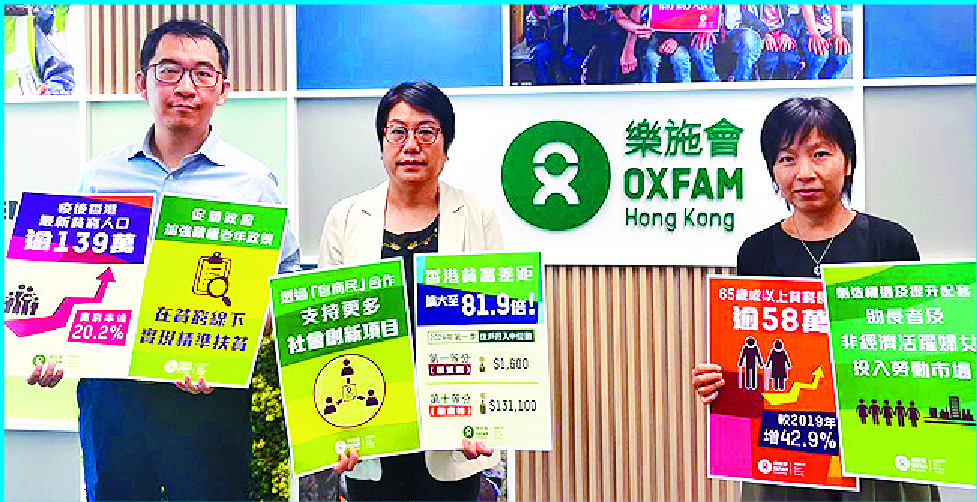
More than 1.39 million residents are now living in poverty, including about 580,000 elderly individuals - a staggering 42.9 percent increase from pre-pandemic levels, according to the latest report from Oxfam Hong Kong.
Oxfam's analysis of government data revealed that the overall poverty rate in the city reached 20.2 percent in the first quarter of 2024.
"The income disparity is continuing to rise, and the issue of elderly poverty is becoming more serious," Tsang said at a press conference.
The report showed that the median monthly income for the poorest 10 percent of households was just HK$1,600 in the first quarter - a 54.3 percent drop from 2019 and 33 percent lower than last year.In stark contrast, the wealthiest 10 percent earned a median monthly income of HK$131,000.
Wong Shek-hung, Oxfam's director for Hong Kong, Macau, and Taiwan programs, said the growing poverty among the elderly is exacerbating the divide between the rich and poor.The number of poor households in Hong Kong rose to 619,000 in the first quarter, of which 260,000 - over 40 percent - comprise families with elderly members.
The report also reveals a concerning rise in singleton elderly poor households, which increased by 47.2 percent since 2019 to 131,700, while the number of doubleton elderly poor households grew by over 50 percent to 132,800."Hong Kong is facing significant challenges, including an economic recovery that falls short of expectations, fiscal deficits and structural demographic changes," Wong said.
"Most elderly individuals lack employment opportunities and have not accumulated sufficient Mandatory Provident Fund savings before retirement, with many lacking family support."More than 580,000 impoverished residents are aged 65 and above, among which 558,900 are economically inactive.
The labor force participation rate for the elderly stands at 13.9 percent, substantially lower than mainland China's 25 percent and Norway's 22 percent.In response to these challenges, Tsang urged the government to implement targeted measures to facilitate elderly reentry into the job market.
She proposed simplifying the application process for companies willing to hire seniors under existing employment programs and lowering working-hour requirements for the reemployment allowance scheme.She also recommended establishing a database of singleton and doubleton elderly households to better identify their needs and provide necessary assistance, including job-seeking resources.
Tsang called for collaboration between the government, enterprises, and non-governmental organizations to support anti-poverty initiatives and alleviate fiscal pressures.She also stressed the need for increased childcare services for children aged 0 to 2, along with more quotas for home-based childcare, to enable mothers living in poverty to return to work.