Read More




Morning Recap - June 10, 2026
5 hours ago




Bowie Wu, 94, sets Guinness World Record at star-studded concert
08-06-2026 18:03 HKT


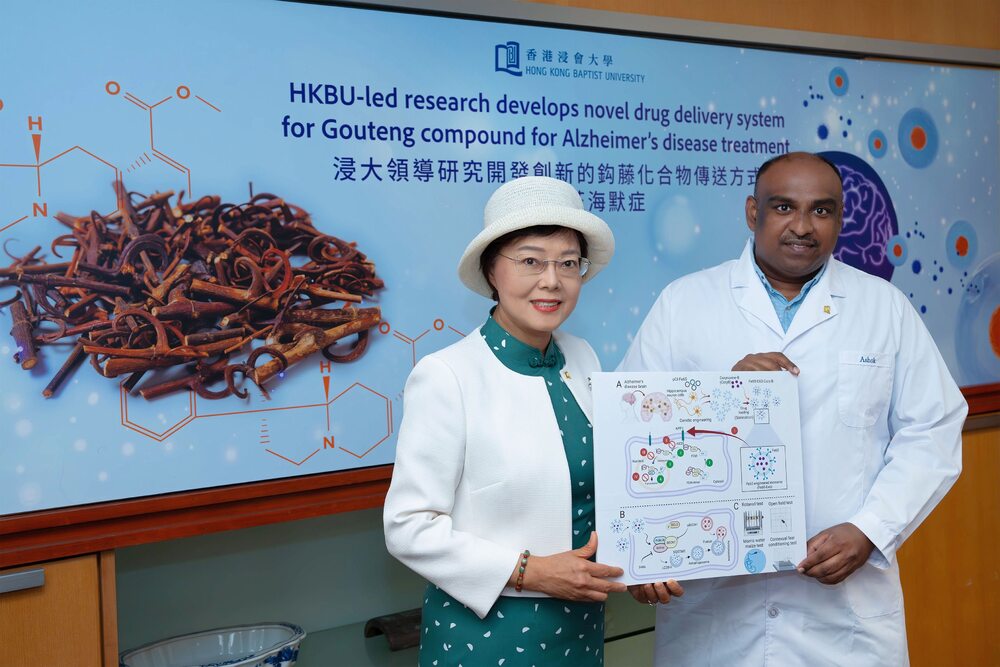
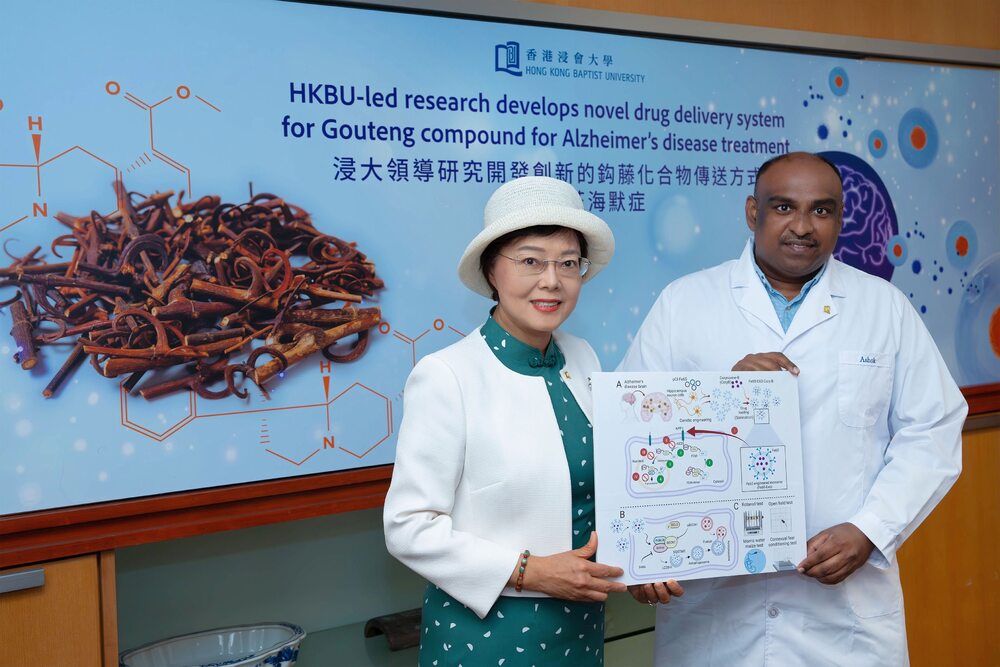
A research team led by the Hong Kong Baptist University (HKBU) has found a new way to effectively deliver drugs to the brains of Alzheimer's patients with the help of engineered exosomes, extracellular vesicles released by cells, to reduce the symptoms of the disease.
The team - comprised of experts from the School of Chinese Medicine at HKBU along with other local, mainland and overseas scientists - has successfully utilized the engineered exosomes to carry Corynoxine-B extracted from Chinese herbal medicine Gouteng to the brain of mice with Alzheimer's disease (AD).
Corynoxine-B, a bioactive compound of Gouteng, was proven effective in treating AD. However, the blood-brain barrier that prevents harmful substances from reaching the brain has affected the uptake.
The researchers loaded the Corynoxine-B into the engineered exosomes and injected it into the mice with AD, with the result showing that the exosomes were able to cross the blood-brain barrier to deliver the drugs to the brain.
In addition, various behavioral tests conducted on mice with AD showed that applying engineered exosomes loaded with Corynoxine-B resulted in a 25 percent recovery of cognitive and locomotor behavior.
"Our study suggests that exosomes could be a promising new way to deliver drugs to the brain and treat AD," said Li Min, the associate dean of the teaching and research division of the School of Chinese Medicine of HKBU.
She added that further research is needed, but the study provides hope that a cure for AD may be possible.
The findings have been published in the international academic journal Nature-Signal Transduction and Targeted Therapy.
There are over 55 million dementia patients in the world, with more than 100,000 elderly people suffering from dementia in Hong Kong.
(Adelyn Lau)