Read More
The SAR's political structure should be headed by the Chief Executive despite different interpretations, the Secretary for Justice says.
ADVERTISEMENT
SCROLL TO CONTINUE WITH CONTENT
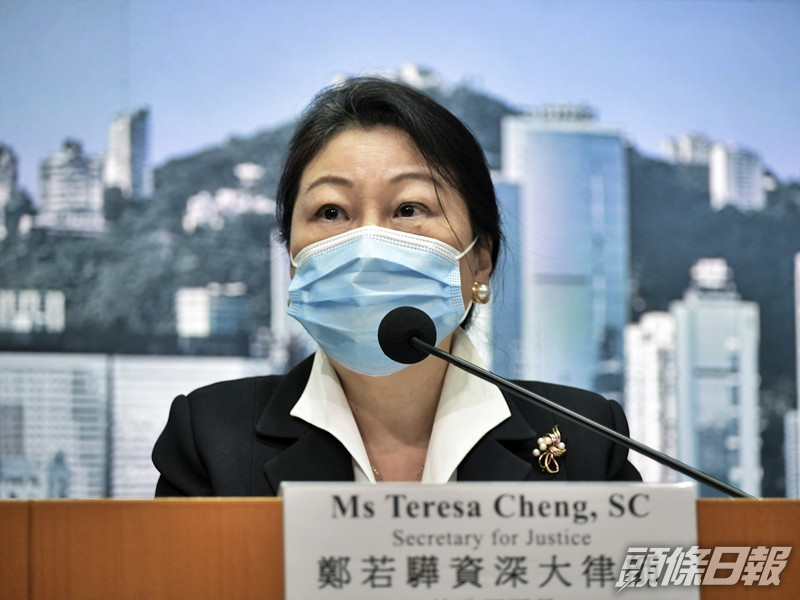
In a blogpost, Teresa Cheng said the three powers – the executive authorities, the legislature and the judiciary – should perform their respective functions under the executive-led system in accordance with the Basic Law, and complement each other to uphold national and territorial integrity.
This came as the city's chief Carrie Lam Cheng Yuet-ngor and its education minister Kevin Yeung Yun-hung declared that there is no separation of powers in Hong Kong earlier this week, saying the executive legislature and judiciary are accountable to the central government through her.
“Instead of focusing on the labeling, I wish to take this opportunity to explain, on the basis of the provisions of the Basic Law, the constitutional order of the HKSAR in substance,” Cheng said.
She added under the Basic Law, the SAR government is responsible for formulating policies and introducing bills, while the legislative council should enact laws and scrutinized bills.
But since any bills passed by lawmakers have to obtain a written consent of the Chief Executive, Cheng said the powers of introducing bills mainly rest with the executive.
The justice chief also stressed the Basic Law guarantees courts to exercise judicial powers independently, free from any interferences. Members of the judiciary shall be immune from legal action in the performance of their judicial functions.
“ At the same time, the Basic Law also provides that judges of the courts of the HKSAR shall be appointed by the Chief Executive on the recommendation of an independent commission. Although the executive authorities enjoy greater power in policy making under the political structure of the HKSAR, they must abide by the law,” she said.
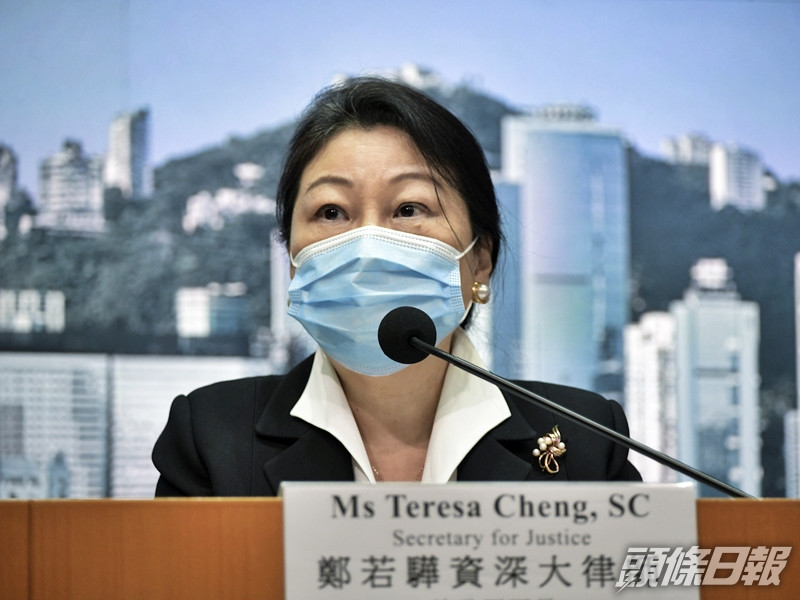
Teresa Cheng says Hong Kong's political structure should be headed by the Chief Executive. File Photo.