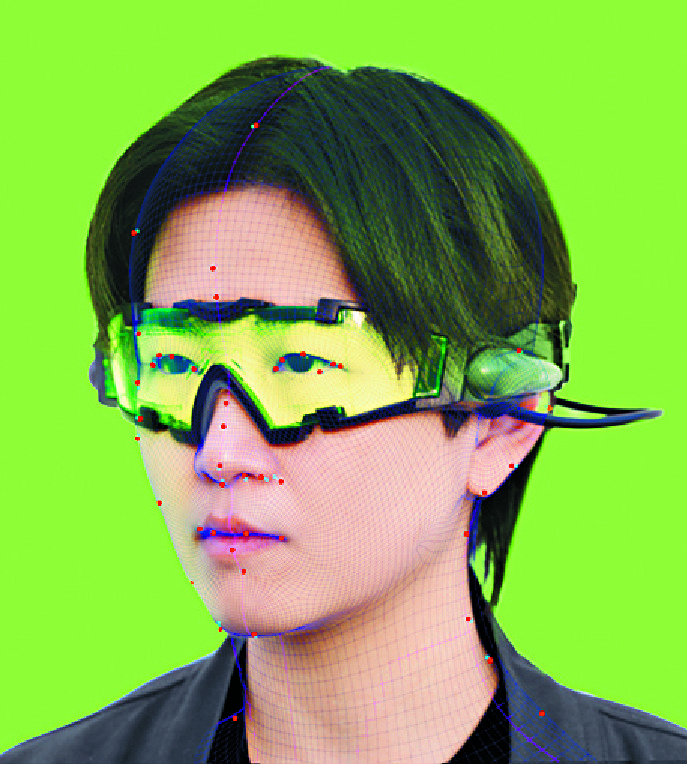
"Everything with form is unreal." Caison Wong takes this saying from the Diamond Sutra to heart. In her latest exhibition, Hyperland, the artist takes visitors into a chaotic space where reality and illusion intertwine with the undertones of religious mythology to discover what is real.
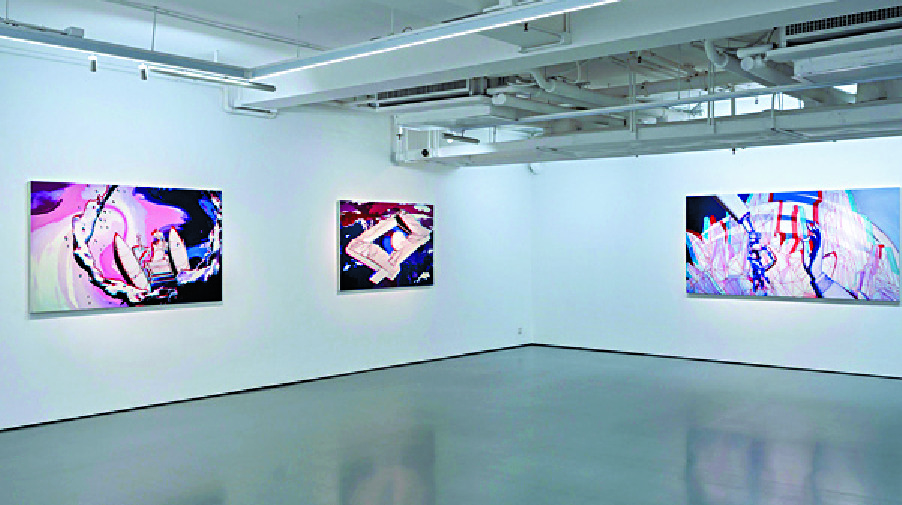
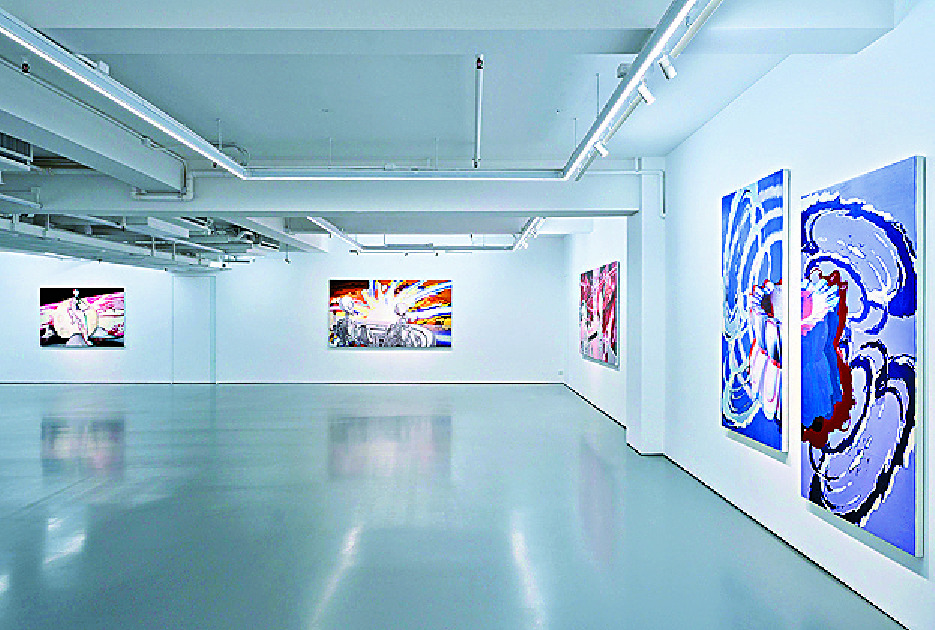
The artist, who hails from Guangdong, is presenting 10 canvases at De Sarthe Gallery as her first solo exhibition in Hong Kong.
These works will be structured around the themes of humanity, religion and technology to present fantastic images and thought-provoking experiences.
"I always question whether the world I live in is real, and maybe it will return to the true reality when my body disappears after my death," said Wang, of her inspiration.
"This exhibition will simply focus on people's inner feelings," she said.
"I believe that every experience and feeling that people hold in their hearts - whether it is bliss or melancholy - may just come from the discipline of society. In my artworks for this exhibition, I aim to propose rebellion against the discipline."
She named her exhibition after Hyperion, the Greek mythological figure who either travels through or observes from the sky.
It also represents the idea of a "pure land," she added.
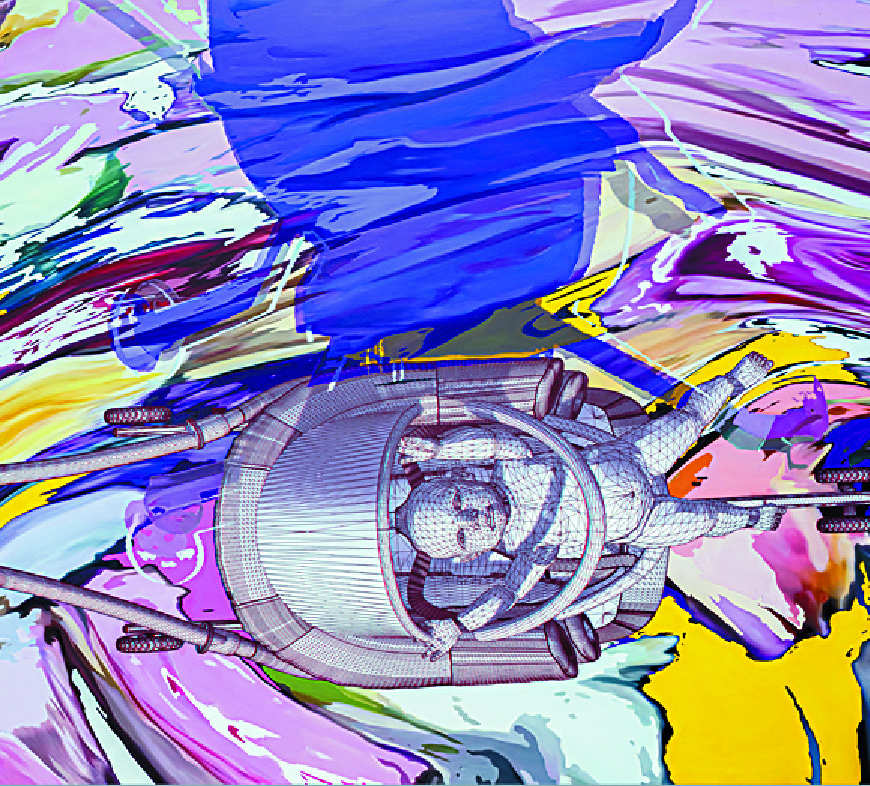
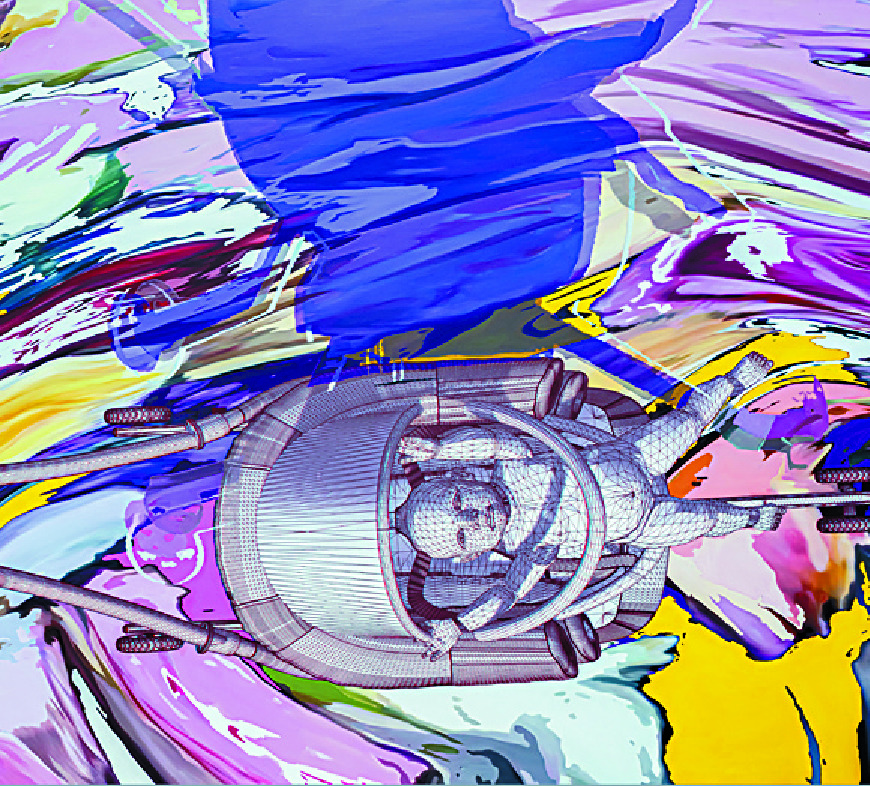
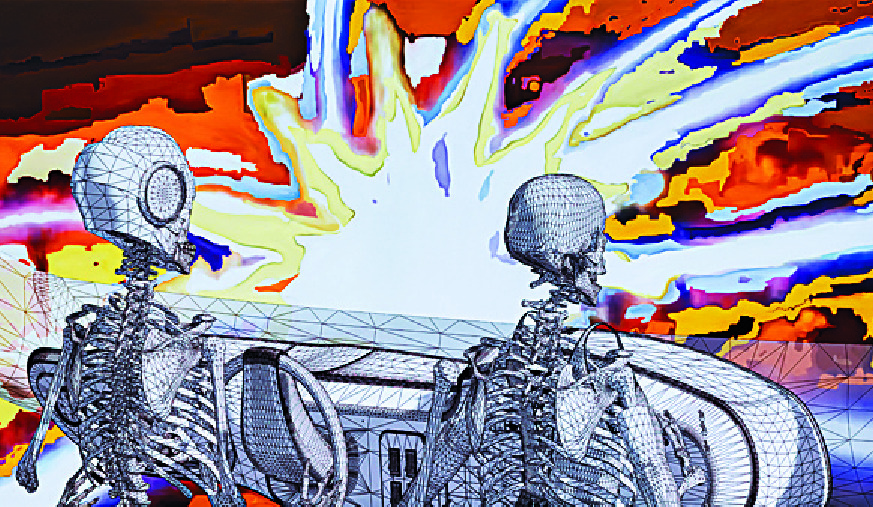
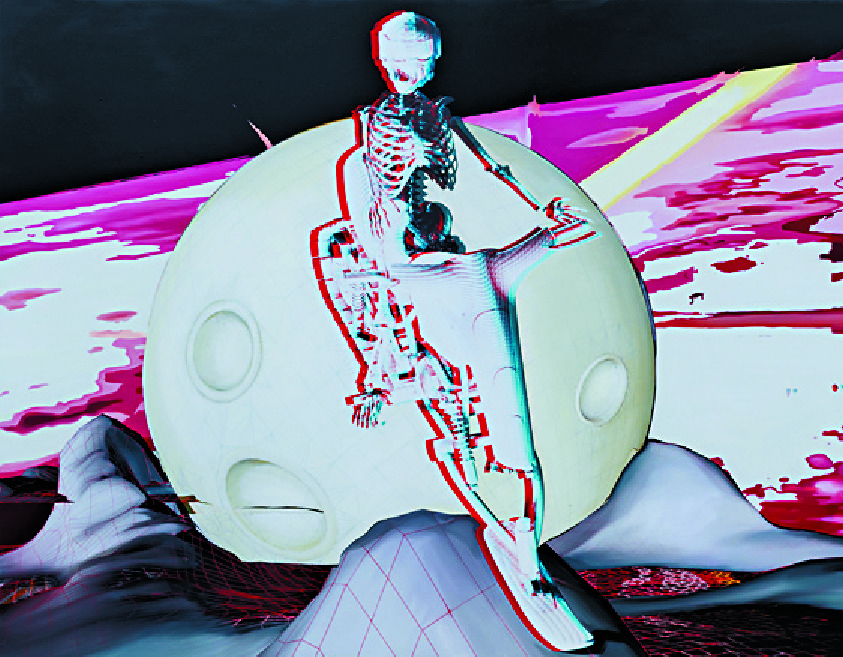
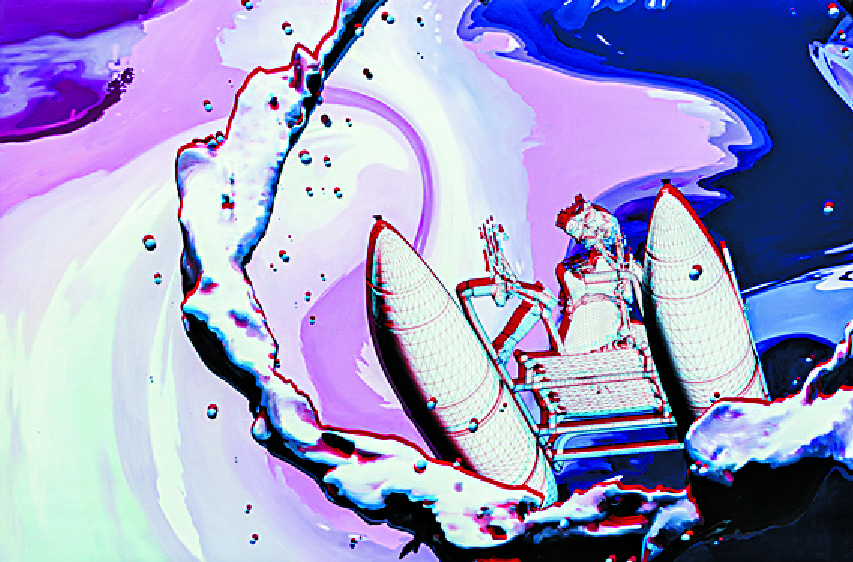
All 10 pieces show two skeletons, a male and female named Jack and Mary - "ordinary names that symbolize all human beings" - interacting in a dreamy, chaotic space.
Both skeletons were created using 3D modeling technology and are equipped with devices resembling goggles or headsets, as well as various mechanical instruments intertwined with their torsos.
They ride roller coasters and rockets as they journey through scenes like volcanic eruptions, tsunamis and tidal waves.
"What I have created is a trippy space that is neither heaven nor hell. The world has abandoned all the definitions and doctrines of the world that we live in. All beings are here to confront their innermost world," said Wang.
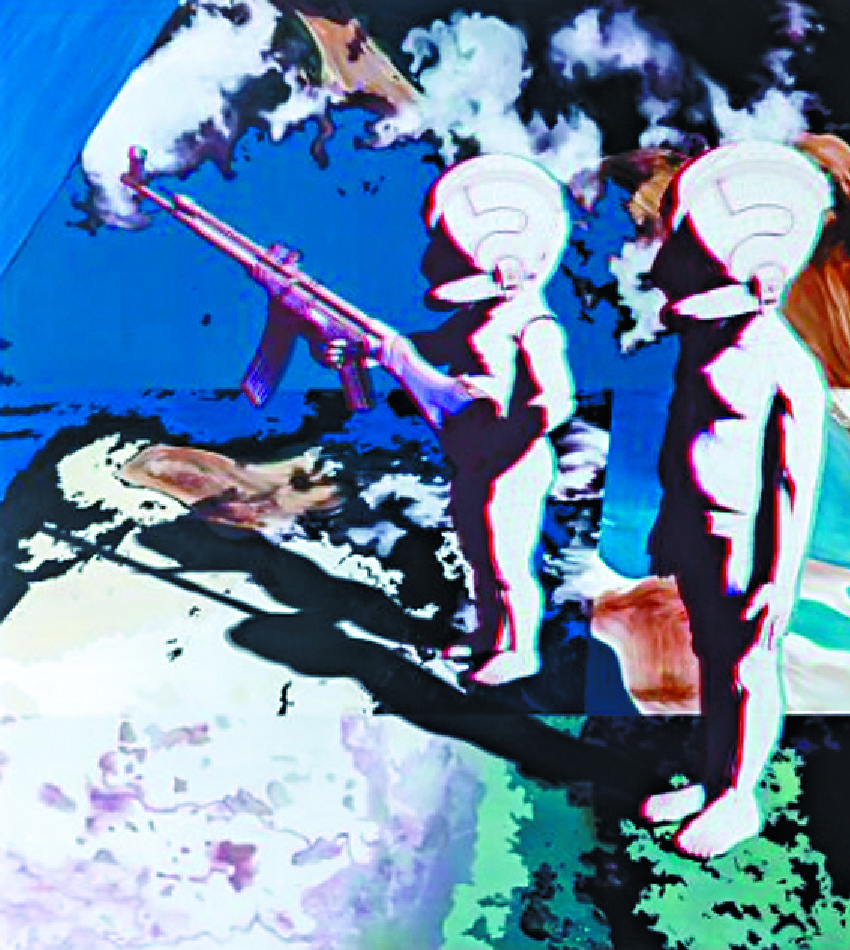
Digital technology and 3D modeling are used to create these pieces, which creates a striking contrast between the technological and religious scenes.
"I have an idea: maybe the feeling of being 'alive' is actually false. And the afterlife, the world after we leave our flesh, is the right place for us to 'return to reality'," said Wang, explaining why she chose two skeletons as the main characters.
When you view the pieces, you can see how the abundance of purple and blue colors, and the crisscrossing of mechanical lines blend into a fantastic chaos of landscapes.
"I chose purple since it is a mysterious color, the meaning of it is not defined," Wang said.
In addition to clues from Western religions, you can also spot enigmatic oriental symbols such as Buddha's gestures and lotus flowers. "I've always been interested in religion and what influences people's perceptions and values of the world," she said.
"Examining all these religious figures in numerous works around the world - Buddha, the gods - I always wonder: can I shake things up a bit?" she said mischievously.
"Or can I provide a new definition, some rebellious idea to them? Is it possible that the dogmas of religion, the universal values established by society, are sometimes incorrect?"
Similar to the ancient Chinese philosophical story Zhuang Zhou Dreams of Being a Butterfly, Hyperland aims to dissolve the artificial barrier between humanity and society, further overturning our established sense.
"I have also placed the moon as a part of the scene in my works," Wang said. "Because I don't believe that the moon is real - it's perhaps the biggest lie in the human world. By including the moon as a tool, I am also challenging the universal value that we now appreciate."
"The emotions we experience in our lives can be defined by an authority - such as religion, socially recognized values, or the political system," Wang said. "For example, travel, holidays and shopping, I see them as traps of consumerism, and their meanings are actually artificially imposed."
From this perspective of a "society of the spectacle" - similar to what Guy Debord described - Wang takes Jack and Mary on a journey through her Hyperland world to propose a rebellion against the order and rules established by idols and authority.
"I believe that all the chaos and suffering can stem from our inner world. That's why you have the power to decide how you feel. You are your own god," she said.
Hyperland will be on until June 24 at De Sarthe Gallery in Wong Chuk Hang.