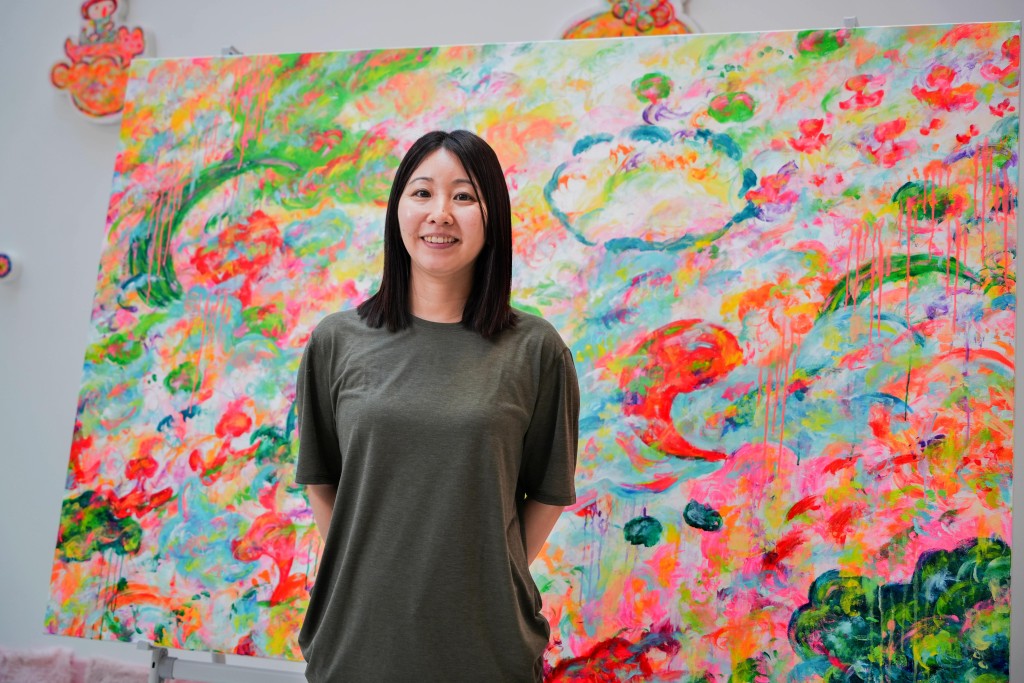
Self-taught and instinct-driven, Japanese artist Ayako Rokkaku has built a practice rooted in touch, spontaneity, and emotional honesty—where each painting grows into a life of its own.
There is a moment, just before Ayako Rokkaku begins to paint, when nothing is decided. No sketch. No composition. No plan.
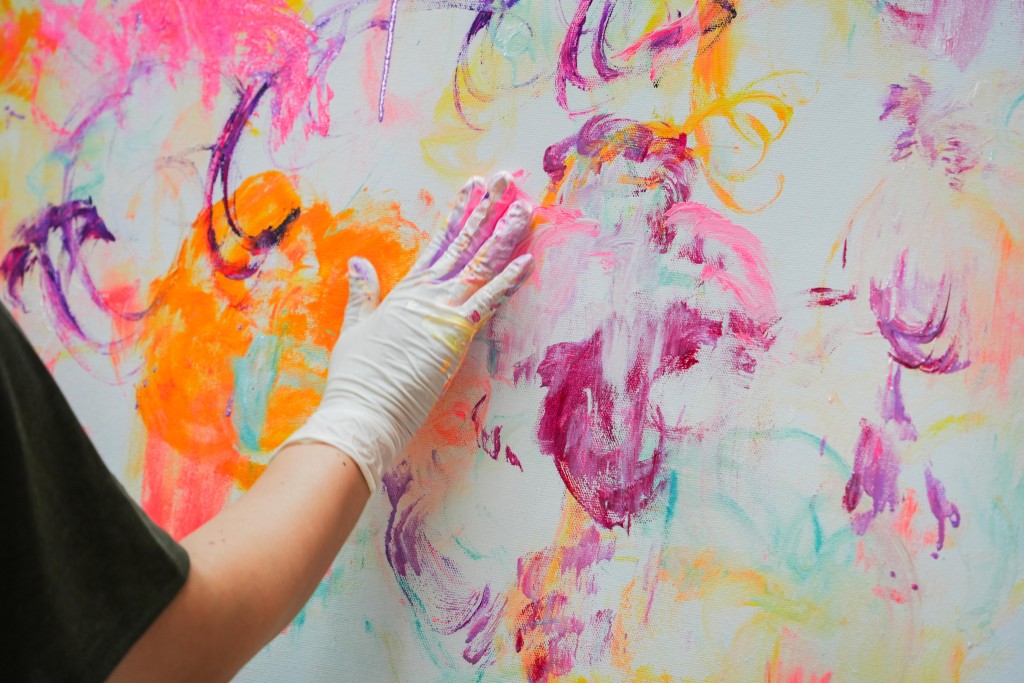
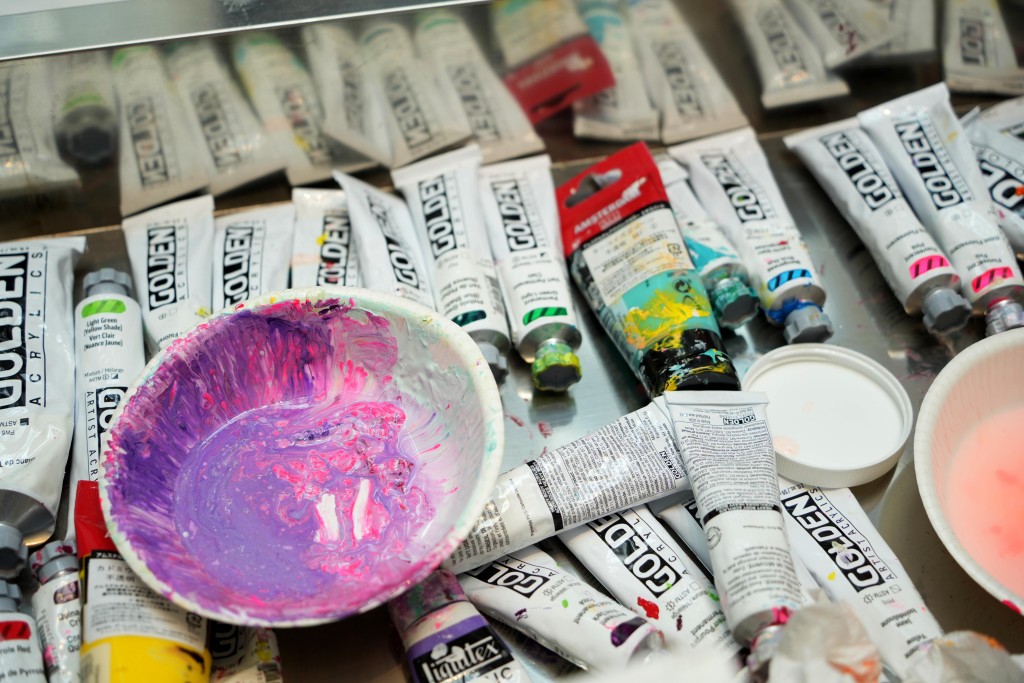
Then, she places her hands into paint.
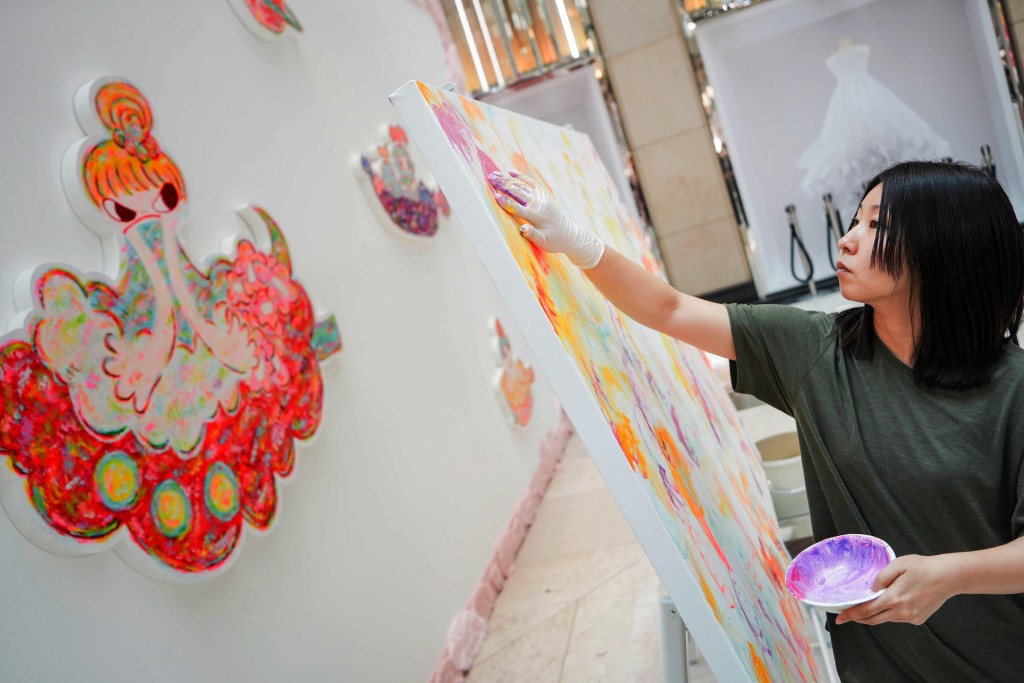
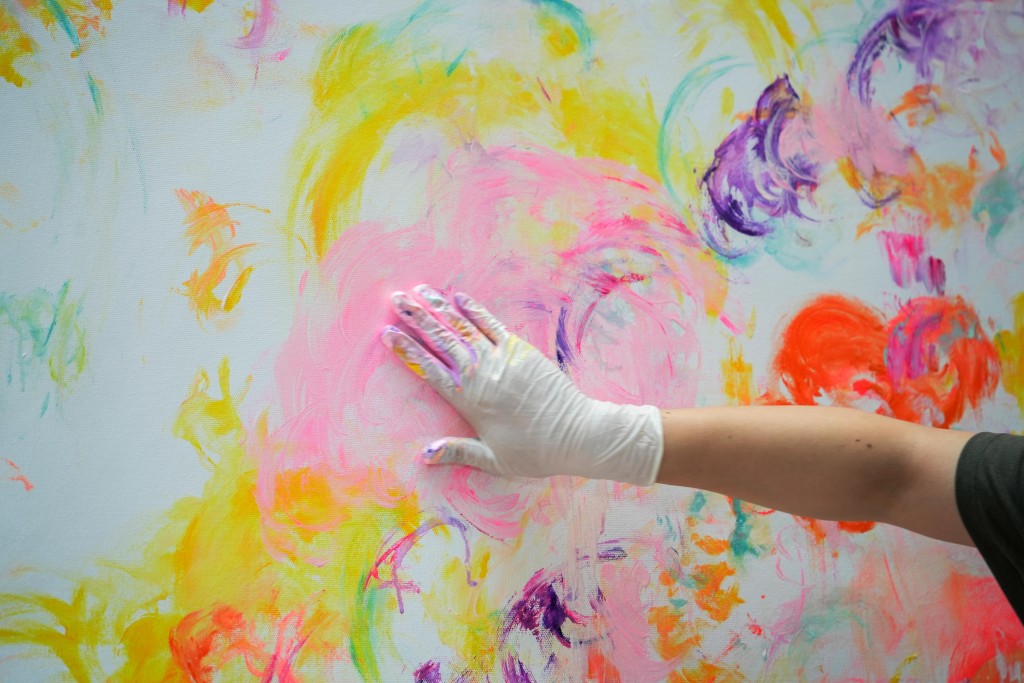
For Rokkaku, this gesture—simple, almost childlike—remains the foundation of everything she creates. “When I touch the paint with my hands, I feel a direct connection to my brain,” she says. “It reminds me of the joy I had as a child.”
That connection is immediate and physical. Without the mediation of brushes or tools, her entire body becomes part of the act of painting. The surface responds, and she responds in return.
“I don’t have to think about anything else,” she says. “I just focus on the sensation.”
Rokkaku’s work unfolds without premeditation. She begins not with an image, but with a gesture—colour meeting surface, movement shaping form.
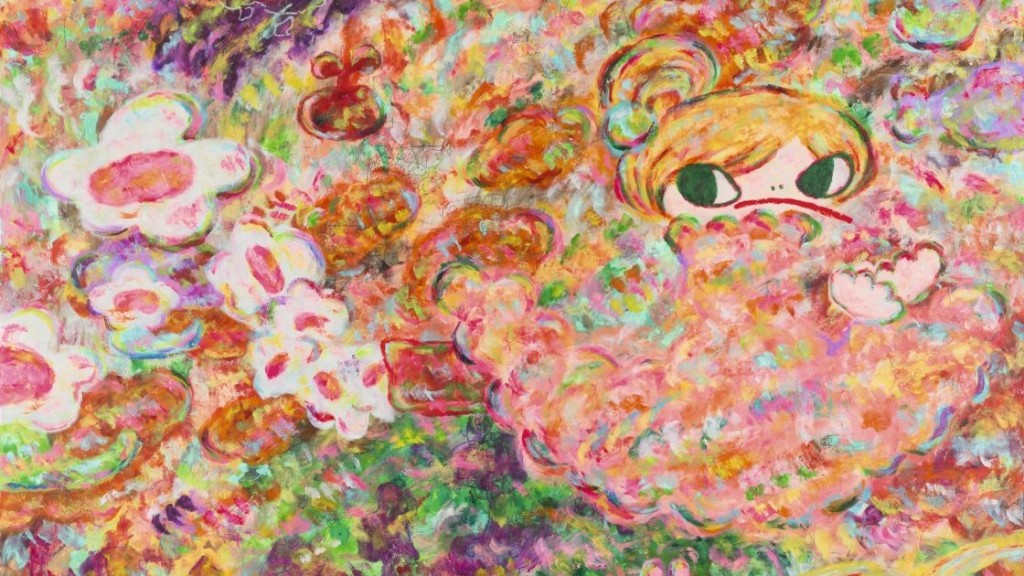
What follows is a process of discovery. Shapes emerge, shift, and transform, often in ways she does not anticipate. “Sometimes I find something unexpected,” she says. “I might start painting one thing, and suddenly it looks like a rabbit.”
These moments are not corrected. They are embraced. In Rokkaku’s world, coincidence is not a mistake—it is the point.
Each painting grows as she works, developing its own rhythm and presence. “During the process, I might create a random creature, and as I continue painting, it develops naturally,” she says. “It’s almost like it has its own life.”
To paint, then, is not to execute an idea, but to encounter one. Meaning emerges in the act itself.
“I want to be more sensitive to real materials and feelings, rather than just what I imagine in my head,” she says. “It’s about trusting instinct.”
Between innocence and complexity
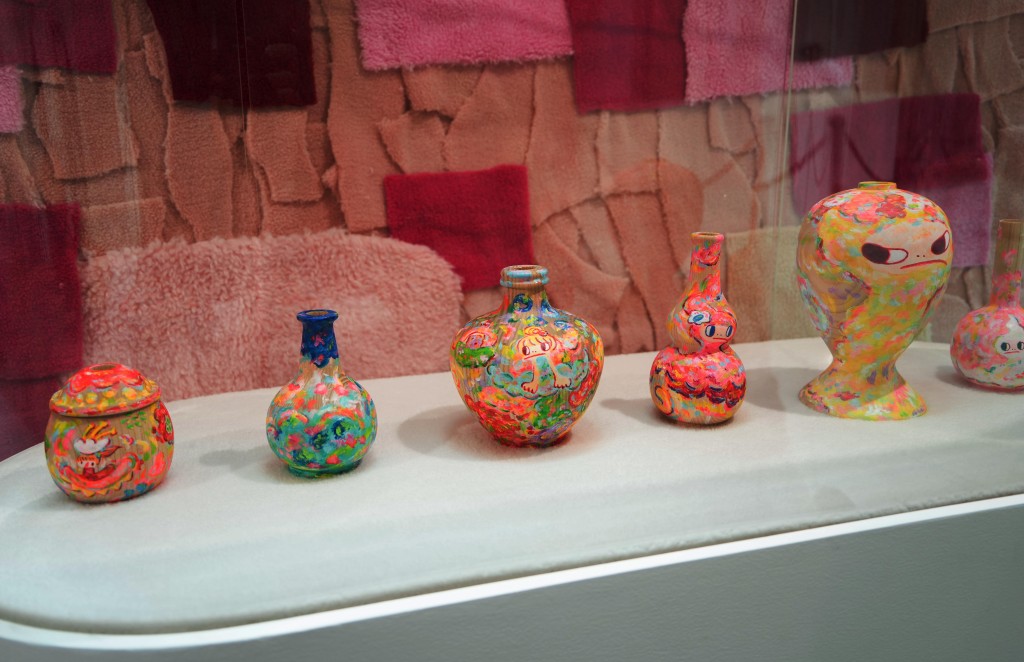
Her paintings are instantly recognisable: wide-eyed girls, drifting figures, clouds of saturated colour. At first glance, they appear playful, even innocent.
But the longer one looks, the more ambiguous they become.
“Some people may find them strange, others may feel they are natural,” she says. “But I think everything—even what is strange—can be lovable.”
Rokkaku’s figures exist somewhere between character and emotion. They are not portraits, but they are not entirely separate from her either.
“They come from my emotions,” she says. “But as they grow in the painting, they become independent.”
Often labelled as “kawaii”, her work complicates that simplicity. Beneath the softness lies something less defined—imperfection, oddness, and a quiet emotional depth.
“Because each one is unique, that’s what makes them interesting,” she says.
Finding a voice beyond comparison
Early in her career, Rokkaku was frequently compared to another Japanese artist, Yoshitomo Nara, best known for his paintings of children and animals that appear simultaneously sweet and sinister.
Rather than resisting the comparison directly, she turned inward.
“I became more interested in finding what only I could express,” she says.
Having started painting at 20, and gaining recognition quickly, Rokkaku has always measured her practice against time rather than trends.
“I think more about whether my work can continue to evolve over 10 or 20 years,” she says.
There was no single turning point—no moment of arrival. Instead, her artistic identity formed gradually, through repetition, instinct, and trust.
“It’s about believing in what feels right,” she says. “That naturally leads you forward.”
Even now, she resists the weight of expectations.
“I just want to create what I find interesting and fun,” she says. “The most important thing is to satisfy myself first.”
The body in motion
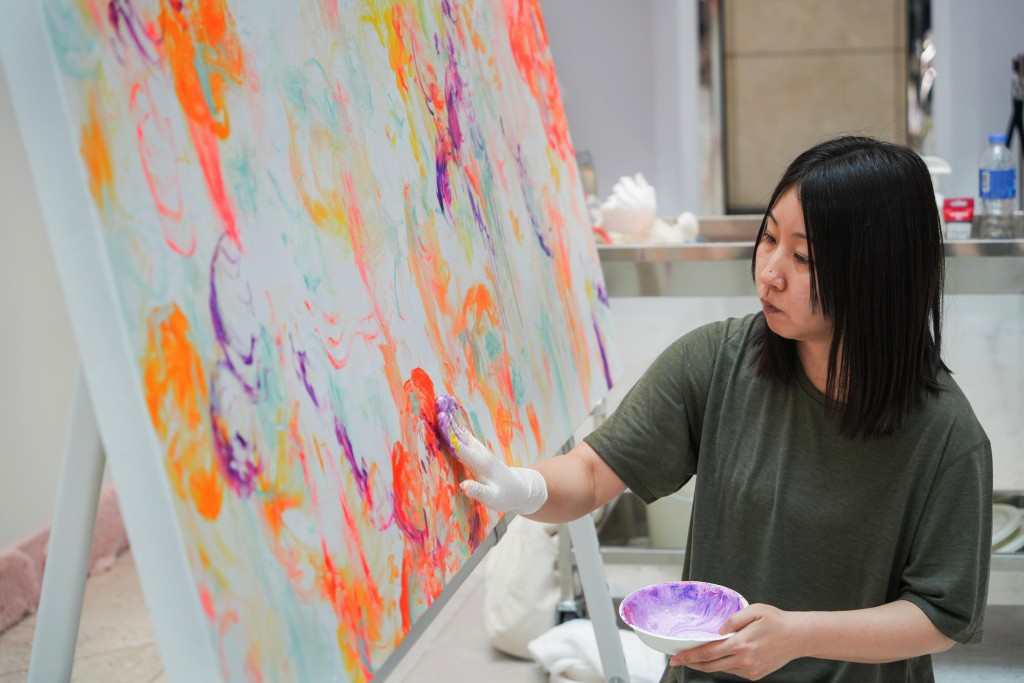
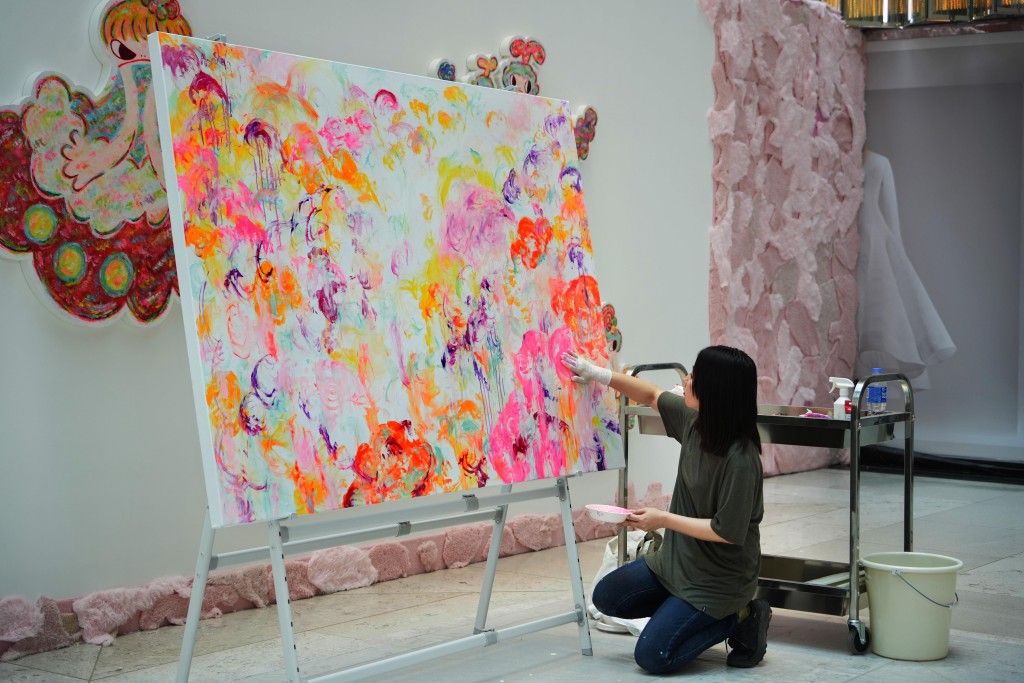
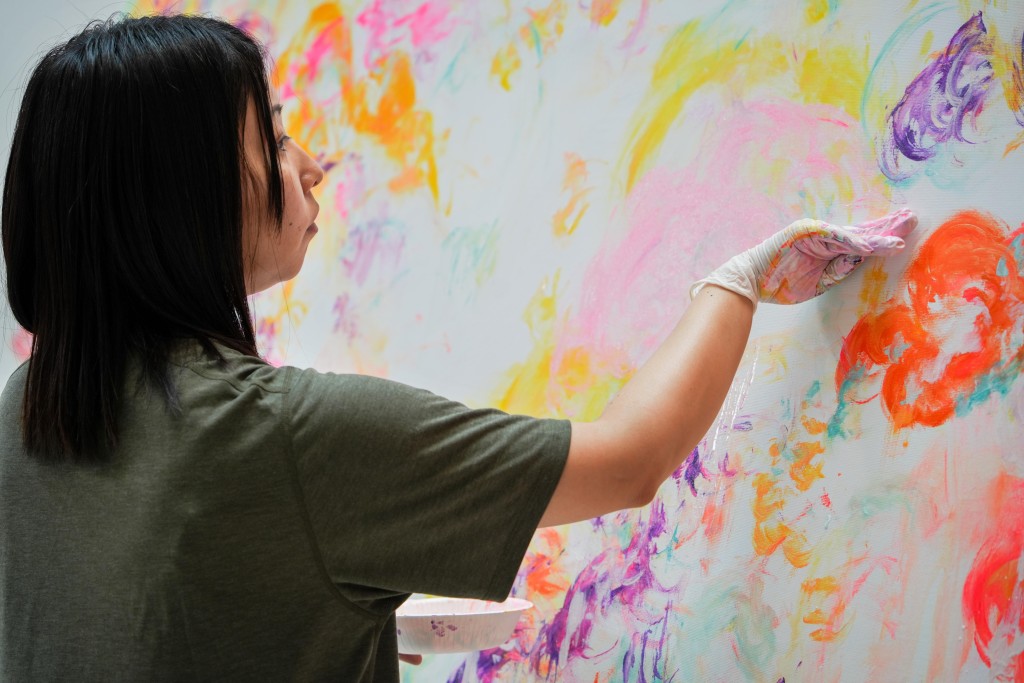
To watch Rokkaku paint is to see a process that is as physical as it is visual. Her movements are fluid, almost rhythmic—her entire body engaged in the act of creation.
“I don’t only focus on the final image,” she says. “The way I move, the way I paint with my body—that is also part of the work.”
Ayako Rokkaku paints directly with her hands, allowing instinct to guide each movement as forms emerge naturally on the canvas.
In this sense, the painting is not just the finished surface, but the accumulation of gestures that created it. The act and the outcome are inseparable.
Instinct, nature, and the unplanned
Rokkaku’s sensitivity to instinct is shaped by two parallel worlds. On one hand, nature—its movement, its unpredictability, its quiet complexity. On the other, the dense visual culture of Tokyo, where she grew up.
“I’m inspired by how leaves move, how waves flow,” she says. “But also by the man-made world, and ‘cute’ culture.”
Rather than choosing between them, she allows both to exist within her work. The organic and the artificial, the planned and the accidental, the playful and the strange—all coexist.
“I embrace unpredictability and coincidence,” she says.
What remains unchanged
Despite her international recognition, Rokkaku’s practice continues to return to a single moment: the first time she placed her hands into paint and knew she had found something essential.
“When I touched the paint, I knew immediately—this was right for me,” she says.
That feeling has remained constant. What has changed is everything around it—the accumulation of experience, memory, and time.
“The feeling is still there,” she says. “But now there are many layers within me.”
To paint is to hold both at once: instinct and experience, simplicity and complexity.
“It’s both the same and different at the same time.”
Now in Hong Kong
That instinct-led world now takes on a new form in Hong Kong, where Rokkaku’s work steps beyond the canvas and into space.
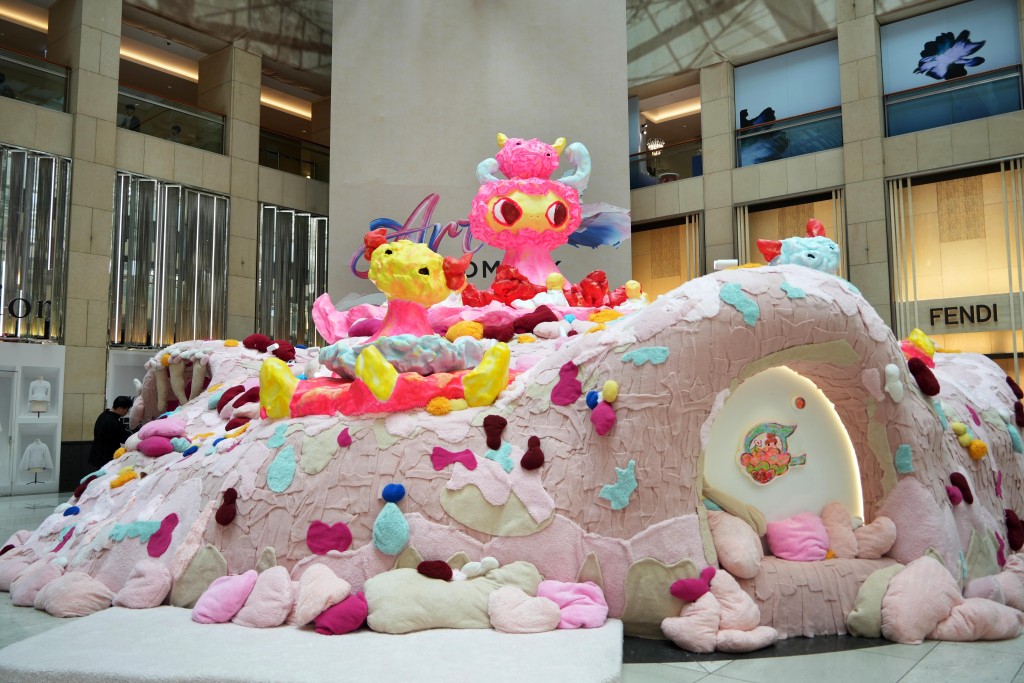
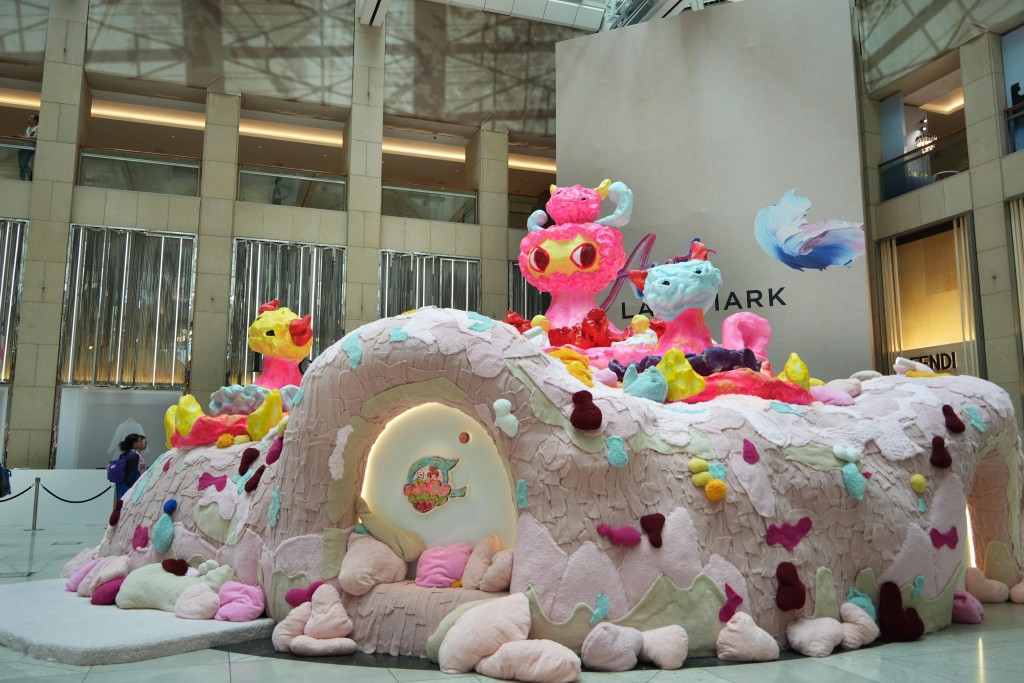
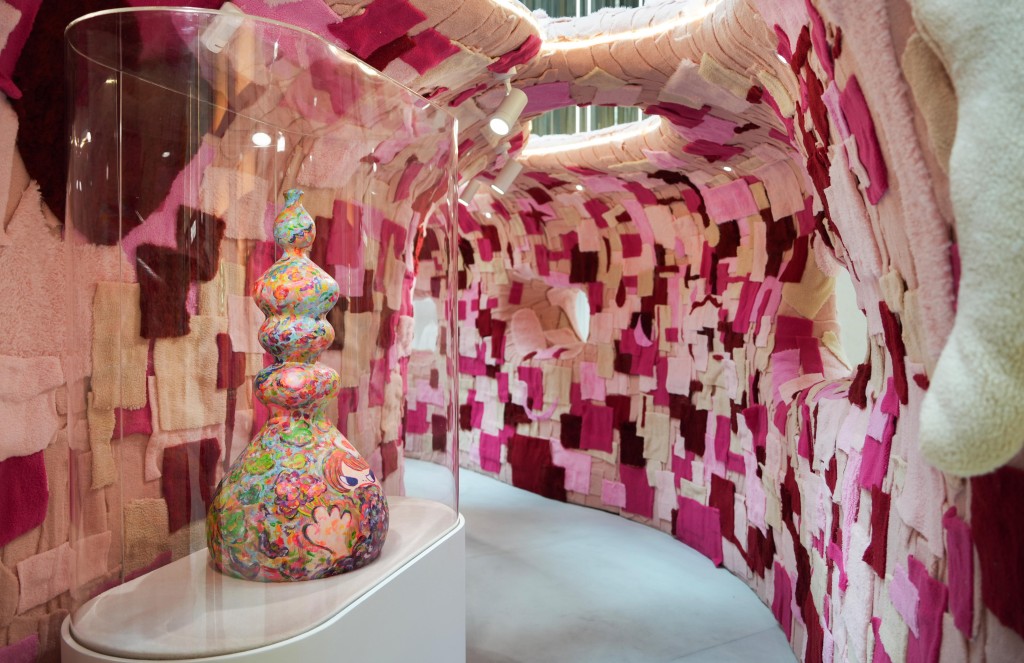
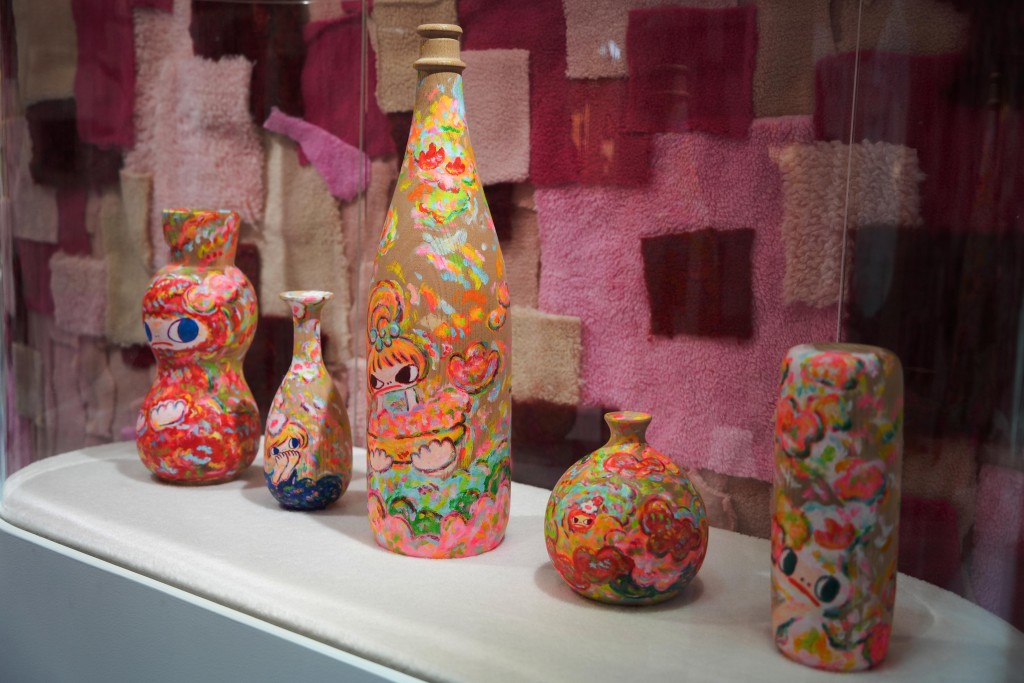
Her latest project, THE ISLAND – ONIGASHIMA, marks her solo debut in the city—a large-scale, interactive installation that invites viewers to move through and physically engage with her imagined universe.
Inspired by the idea of islands—both Japan and Hong Kong sharing this geography—the work creates a space populated by curious, not-quite-human creatures, echoing the forms that inhabit her paintings.
Unlike traditional exhibitions, the installation encourages touch and exploration.
“Usually in a museum, you cannot touch the work,” she says. “Here, I want people to experience it with their senses.”
Set within a public environment, the work also reflects her growing interest in bringing art into everyday life—where it can be encountered not in isolation, but as part of a shared, living space.
For Rokkaku, it is less a departure than an expansion: a continuation of the same instinctive process, now unfolding on a larger scale.
In Ayako Rokkaku’s world, nothing is fully planned, and nothing is entirely fixed. Forms emerge, dissolve, and return again—guided not by intention, but by feeling.
marco.lam@singtaonewscorp.com