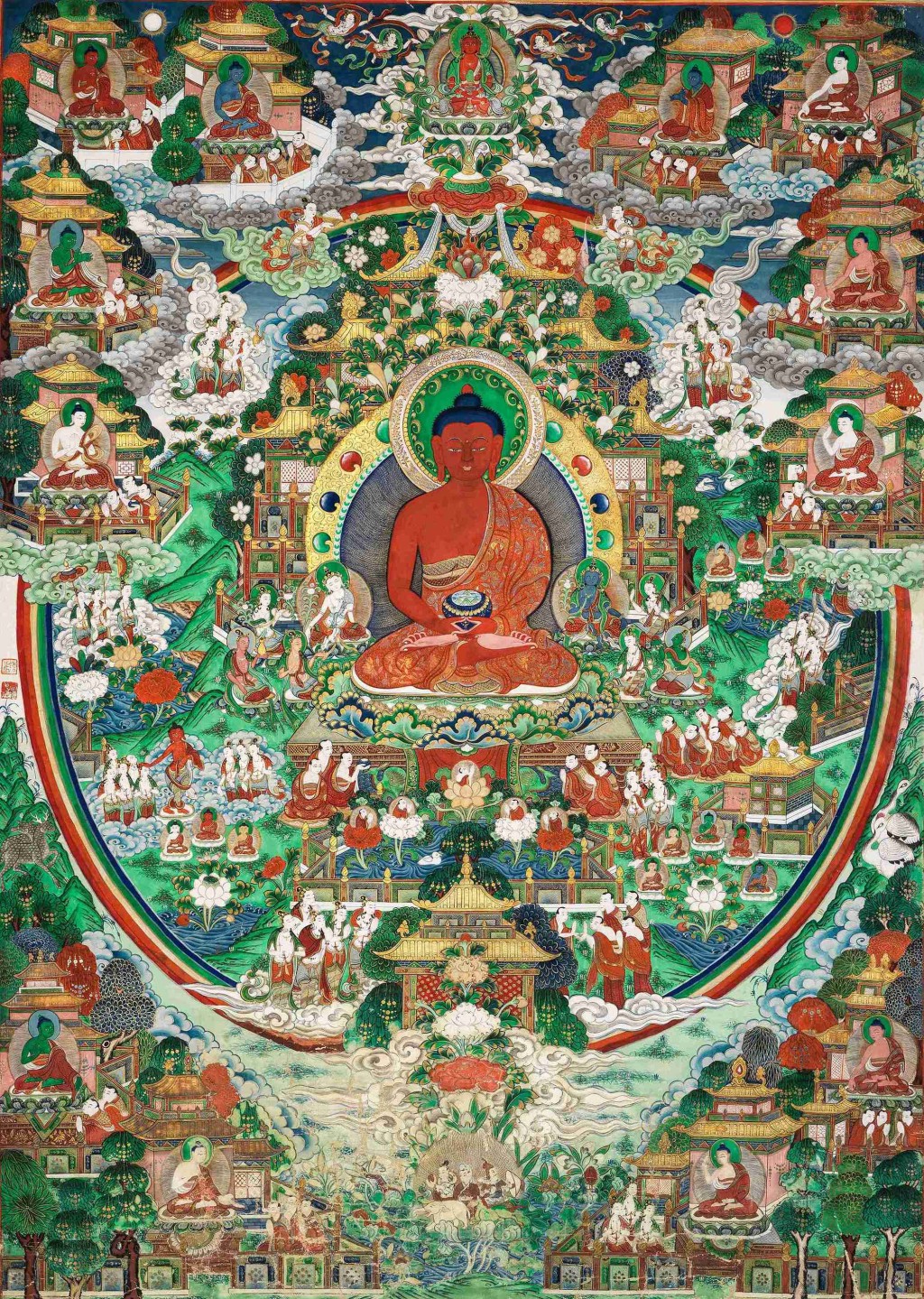
Thangkas present a rich variety of themes, spanning key elements of Buddhism – including the Shakyamuni Buddha, bodhisattvas and dharmapalas – as well as revered lineage masters in Tibetan Buddhism, and even nonreligious aspects of Tibetan customs and traditions.
This time, the “Blessings from the Pureland” exhibition also demonstrates a diverse range of themes and artistic expressions.
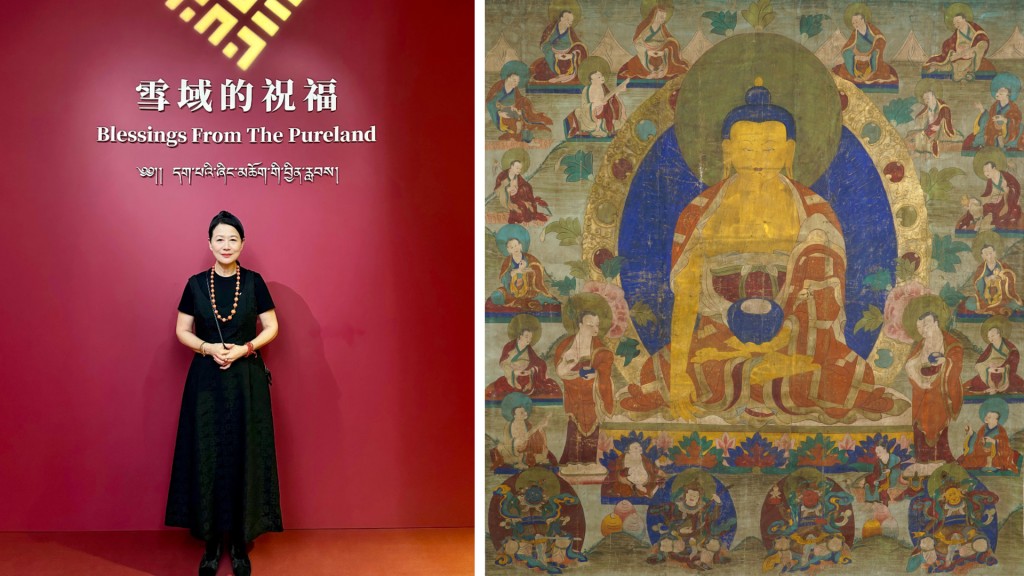
One of the most striking pieces in the exhibition is the thangka Shakyamuni Buddha and the 16 Arhats, believed to originate from the Amdo region of
Qinghai province in the 19th to 20th century.
It depicts the Buddha seated amid snow-covered mountains, surrounded by his enlightened disciples – the 16 arhats. The painting is embellished with gold leaf, which is considered exceptionally rare.
Curator Linda Lau Hung Man-yin noted that depictions of Shakyamuni Buddha must follow strict conventions: the Buddha must be shown front-facing, with a symmetrical face and precisely proportioned limbs according to established iconographic standards.
Another highlight is Amitayus Buddha, also known as the Buddha of Infinite Life, who symbolizes longevity.
The composition places Amitayus at the center, flanked by Ushnishavijaya and White Tara – both deities associated with long life – at the lower left and right corners, showcasing a typical stylistic arrangement in thangka painting.
The thangka Jataka Tale: The Buddha Offers His Body to a Tigress illustrates one of the Buddha’s previous incarnations, in which he, moved by
compassion, sacrifices his body to feed a starving tigress and her seven cubs.
The Buddha’s Youthful Deeds recalls an episode from Prince Siddhartha’s early life before renunciation, when he uses his supernatural powers to subdue a rampaging elephant.