As the old Chinese saying goes, "Food is of primary importance to the people." Chinese cuisine culture is a significant part of the history, embodying the civilization's evolution.
With a fresh perspective on the concept of "mobility", the new special exhibition "A Movable Feast: The Culture of Food and Drink in China" displays over 110 exquisite artifacts in Gallery 8 of the Hong Kong Palace Museum.
Tracing 5,000 years of Chinese culinary culture, the exhibition explores the evolution of food vessels, eating practices, and related traditions, comprehensively illustrating the rich culinary culture and lifestyle throughout the history of China.
The theme of "mobility" is inspired from the practice in the Forbidden City, where the busy emperor often ate at different places, necessitating food and drink vessels to be delivered to him according to the emperor's current location. Exploring the "movement" of food and vessels, the concept crosses life and afterlife, cultures, mountains and lakes, and time.
The first section, "Crossing from Life to Death – Feeding the Spirits," features food and drink vessels used in rituals and burials from the Neolithic period to the Han dynasty.
While bronze ritual vessels were used for making offerings and served as a medium between people and spirits, prevalent earthenware burial objects in the shape of granaries, wells, stoves, pigsties, and chicken coops signify people's desire for an abundant afterlife.
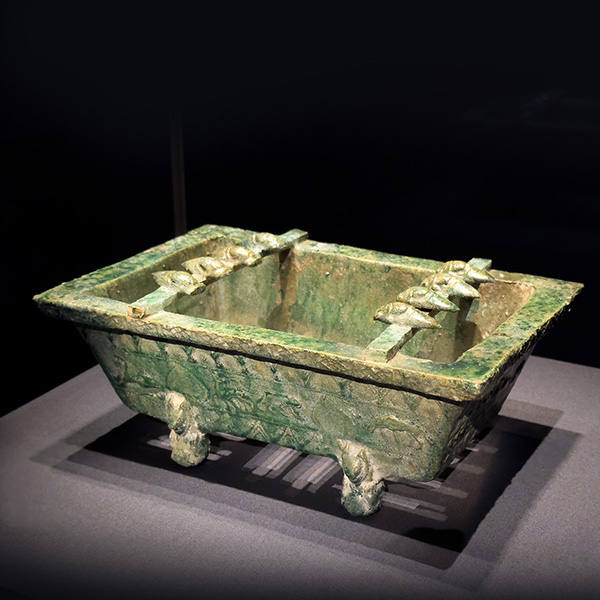
Featuring green glaze, a model of a brazier with cicadas has roasting rack with two rows of cicadas, showing the custom of eating cicadas during the mid-to late Western Han dynasty. Ancient cicadas cooking methods continue today, with modern customs including roasted and deep-fried cicadas.
Model of a brazier with cicadas from Han dynasty. HKPM
The second section "Crossing Cultures: Nomadic Eating Practices" describes how China's food culture mixed with Central and West Asia's during the Tang, Song, and Yuan dynasties. The Silk Road brought new ingredients and dining customs to China. Foods from Central Asia were prefixed with "hu" - used to denote non-Chinese populations - such as hujiao (black pepper), hutao (walnuts), and huma (sesame), which are still used today.
"Crossing Mountains and Lakes – Packing the Perfect Picnic" showcases the mobility of food and drink across different landscapes by presenting artworks and picnic sets of the Ming and Qing dynasties. Just like Hong Kong people have been fond of picnicking in recent years, the ancient people also like to enjoy foods in the nature.
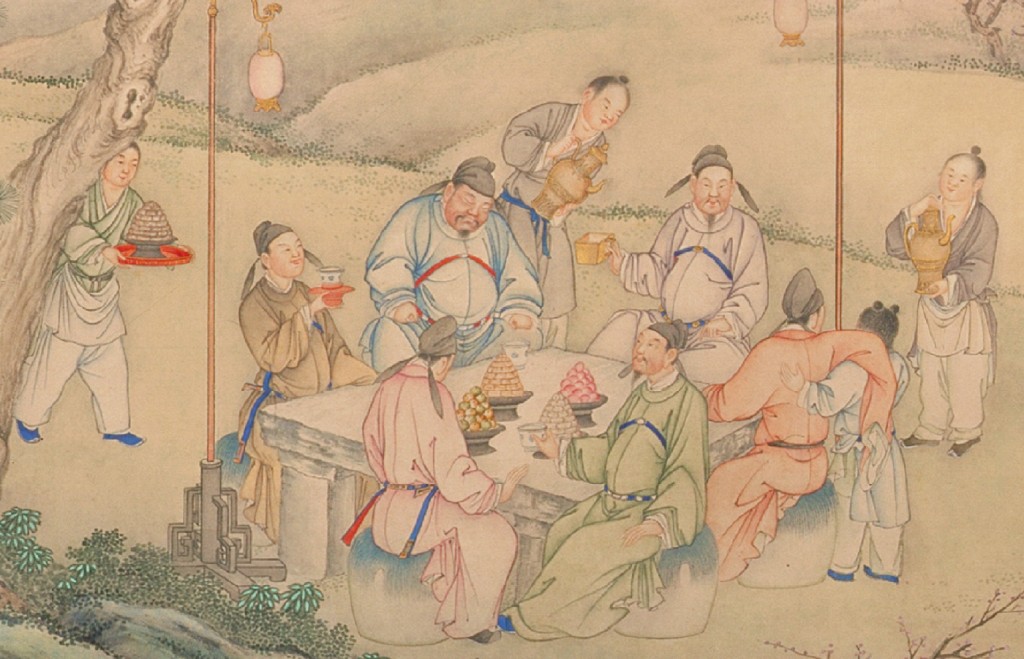
"A Night Banquet at the Peach and Plum Garden," a painting by renowned Qing court painter Ding Guanpeng, is the highlight of the exhibition, according to HKPM's director Louis Ng Chi-wa. It portrays the famous Tang poet Li Bai and his cousins enjoying a banquet amidst a garden filled with peach blossoms, conveying the spirit of seizing the day despite Li Bai's political difficulties.
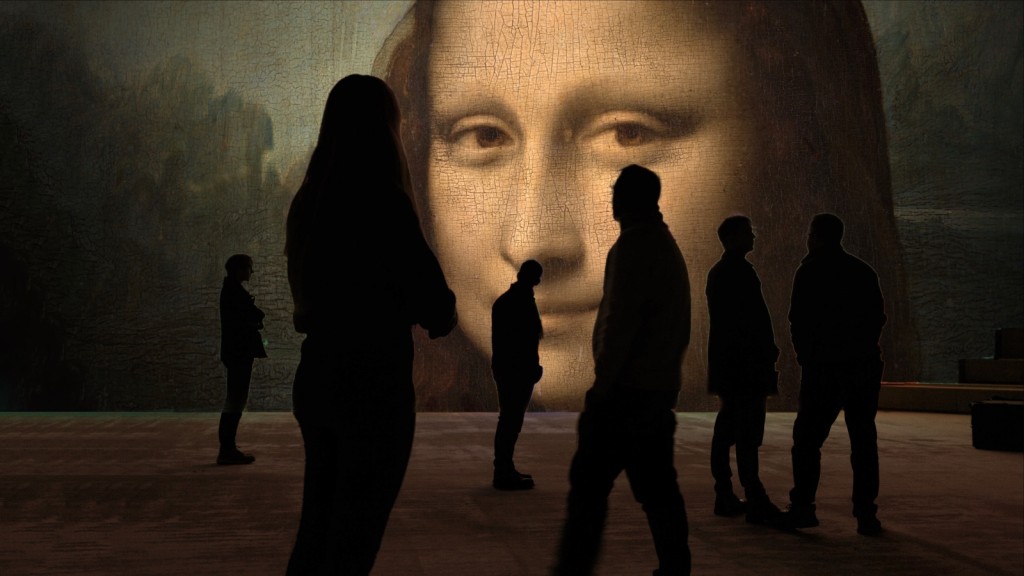
Finally, at the "Crossing Time" multimedia table, visitors can simulate ordering food at a virtual dining table while observing the cooking processes of various dishes, enjoying a virtual feast that transcends time and space.
The special exhibition will be open to the public until June 18.
Helen Zhong