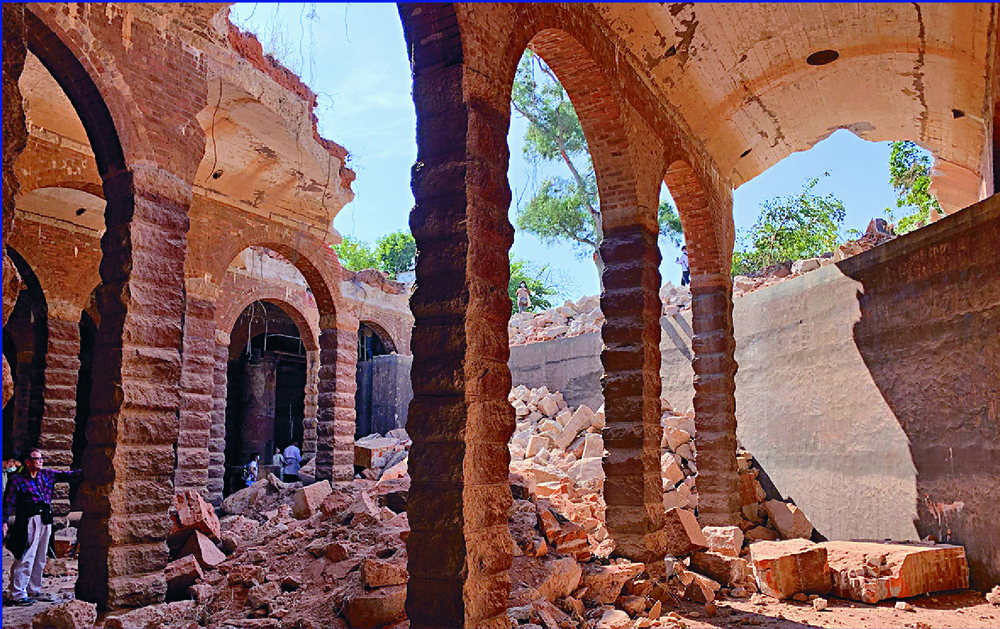
Just listed as a grade one historical building, the Romanesque Bishop Hill cistern in Shek Kip Mei has sparked a lot of interest but why was such a style adopted?
Indeed, there is no clear definition of a Romanesque architecture style apart from the fact that it is characterized by the semi-circular arches, which had allowed the Romans to build bigger buildings and infrastructure with their wider span.
Romanesque architecture mainly referred to those built between the 6th and the 11th century as the Gothic style, with the pointed arches, rib vaults, and flying buttresses, became dominant from the 12th century.
London was actually founded and ruled by the Romans for about 400 years until the 5th century. Under the reign of Queen Victoria between 1837 and 1901, there were different architectural style revivals in the mid-to-late 19th century including the Romanesque revival. This may explain why this cistern, built as part of the Kowloon Waterworks Gravitation Scheme in 1902 in such a style. The underground chamber with 100 brick pillars and water pipes was completed in 1904.
This architecture reminds one of the Basilica Cistern in Istanbul built in the 6th century during the Byzantine Empire, or Eastern Roman Empire.
Located at the Bishop Hill, this cistern was connected to the Engineer’s Office of the Former Pumping Station of Water Supplies Department or The Red Brick House in Yau Ma Tei, which was completed in 1895. The two-story building was constructed in the Neoclassical style, that stresses symmetry and simple geometry, with the Arts and Crafts influence, marked by its red brick, with a stress on the texture of ordinary materials.
Surrounded by sea water with high concentration of salt, water supply has always been an issue to Hong Kong even though the city's population was small in the early 20th century.
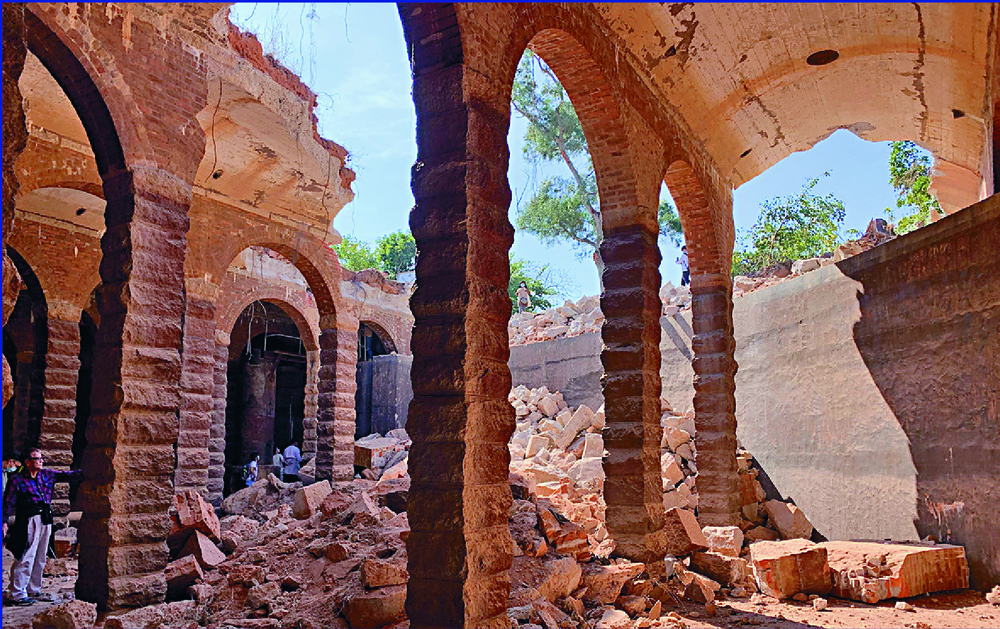
Bishop Hill cistern in Romanesque style