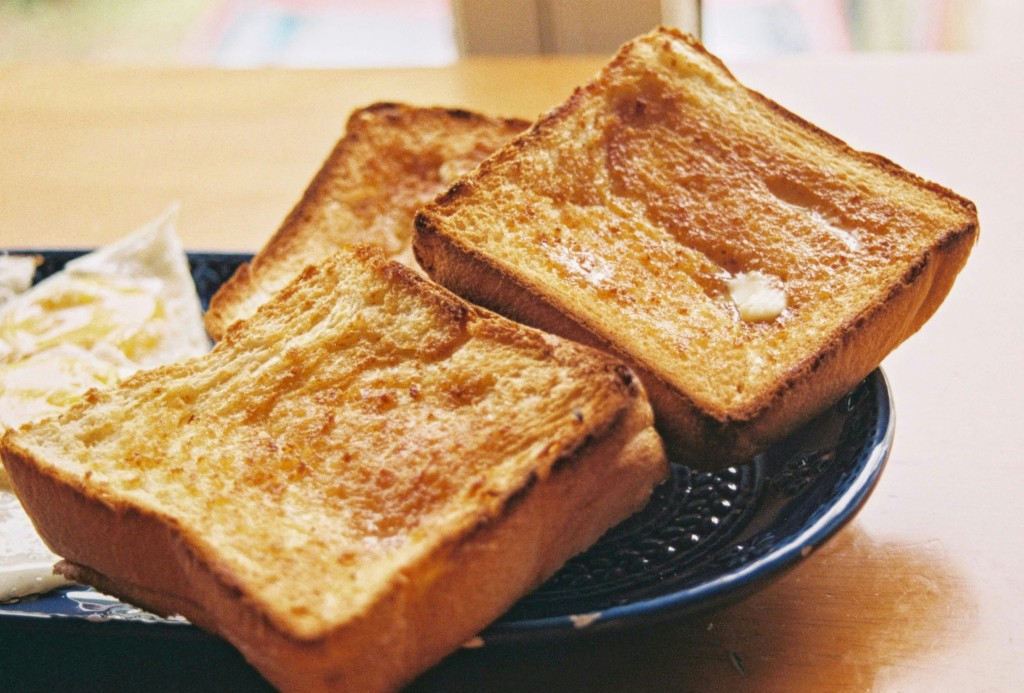
Bread is a daily breakfast choice for many. According to the Centre for Food Safety (CFS), bread is the fourth largest source of sodium intake for adults (accounting for 6%). On July 27, the CFS released a risk assessment study on the sodium content of bread sold in Hong Kong. The study showed that the overall average sodium content of bread samples was below the "high-sodium" level. However, sodium levels varied greatly among samples of the same bread type, indicating that the industry still has room to reduce sodium content.
The CFS collected a total of 112 non-prepackaged bread samples from the retail level. Samples were sourced from various retailers across Hong Kong Island, Kowloon, and the New Territories, including bakeries, Hong Kong-style tea restaurants (cha chaan tengs), Western-style cafes selling bread, and supermarkets with in-store bakeries. The study covered 12 types of bread: bagels, butter loaf, cheese bread, cocktail bun (a sweet coconut-filled bun), croissant, French bread, pineapple bun (bolo bao), sausage bun, sesame bun, sweet dinner roll, tuna bun, and raisin wheat bun. Additionally, the CFS specifically collected 8 extra sausage bun and 8 tuna bun samples to separately test the sodium content of the bread portion and the filling (sausage or tuna). The total sample count was 112. A maximum of 3 samples per bread type was collected from the same retailer, chain, or brand.
Sodium Content of 12 Bread Types (per 100g)
| Bread Type (Sample Count) | Sodium (mg per 100g) – Average, Lowest, Highest |
| French Bread (8) | Avg: 550, Lowest: 250, Highest: 670 |
| Cheese Bread (8) | Avg: 490, Lowest: 280, Highest: 640 |
| Bagel (8) | Avg: 470, Lowest: 380, Highest: 580 |
| Sausage Bun (8) | Avg: 460, Lowest: 310, Highest: 550 |
| Croissant (8) | Avg: 440, Lowest: 260, Highest: 520 |
| Sesame Bun (8) | Avg: 380, Lowest: 240, Highest: 550 |
| Tuna Bun (8) | Avg: 300, Lowest: 160, Highest: 430 |
| Cocktail Bun (Sweet Coconut Bun) (8) | Avg: 280, Lowest: 200, Highest: 430 |
| Pineapple Bun (Bolo Bao) (8) | Avg: 150, Lowest: 32, Highest: 260 |
| Sweet Dinner Roll (8) | Avg: 130, Lowest: 19, Highest: 310 |
| Butter Loaf (8) | Avg: 130, Lowest: 18, Highest: 230 |
| Raisin Wheat Bun (8) | Avg: 100, Lowest: 13, Highest: 670 |
Key Findings
The average sodium content across all 12 bread types was 320 mg per 100g. The types with the highest average sodium were French bread (550 mg/100g), cheese bread (490 mg/100g), and bagels (470 mg/100g). The types with the lowest average sodium were raisin wheat bun (100 mg/100g), butter loaf, and sweet dinner roll (both 130 mg/100g).
Sodium levels varied significantly between samples of the same bread type. For several breads (e.g., French bread, cheese bread, bagels, sausage buns, croissants, sesame buns, tuna buns, cocktail buns), the difference was about two-fold. For others (e.g., sweet dinner rolls, butter loaf, raisin wheat buns), the difference was over 10-fold.
Separate testing revealed that the filling (sausage or tuna) had higher sodium content than the bread portion. Specifically, per 100g, sausage filling contained 800 mg sodium and tuna filling contained 440 mg sodium. For sausage buns, the sausage accounted for an average of 55% of the total sodium (range 46-71%). For tuna buns, the tuna accounted for an average of 35% (range 28-43%).
CFS Advice for Consumers
- Maintain a balanced and varied diet.
- Avoid excessive consumption of high-sodium breads to prevent exceeding sodium limits.
- For prepackaged bread, check the nutrition label for sodium content, and also pay attention to other nutrients like sugar and fat.
CFS Advice for the Trade
- Consider modifying production methods and ingredient formulas to reduce sodium content.
- Provide more lower-sodium options and consider offering smaller-sized bread.
- Establish a company food database to record sodium content for monitoring purposes.
Source: Centre for Food Safety (Hong Kong)