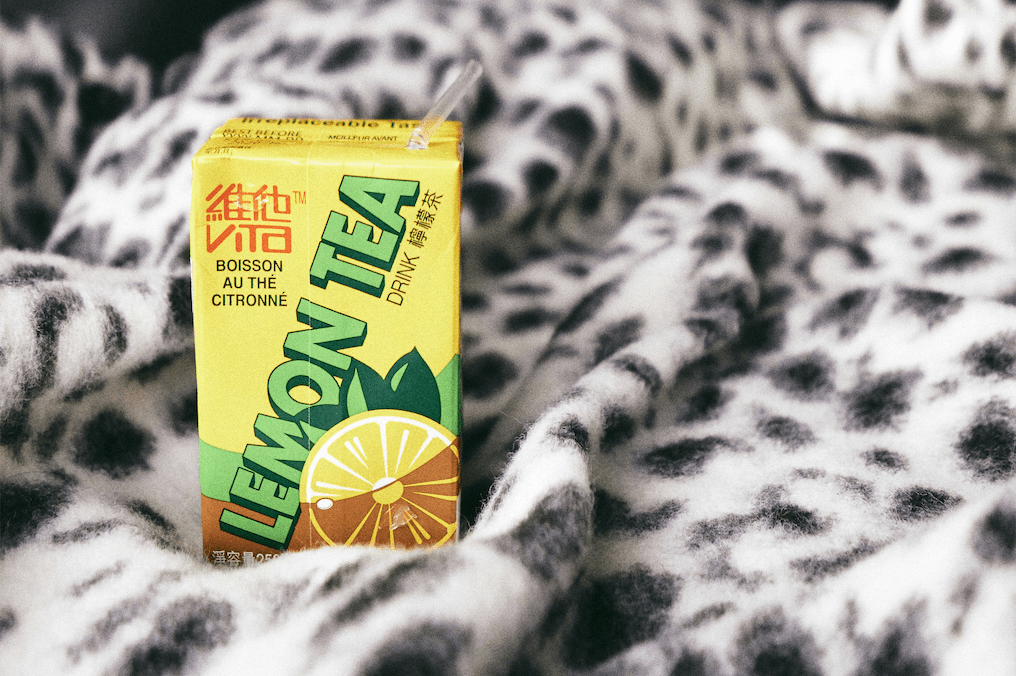
Summer calls for cold drinks to beat the heat. Paper packaged tea is convenient and refreshing, making it a favorite for many in Hong Kong. A registered dietitian has listed the calories and sugar content of 12 paper packaged drinks. The analysis reveals that the same type of tea from different brands can have vastly different calorie and sugar levels – Vitasoy Lemon Tea is more than twice as fattening as Hi-C Lemon Tea.
12 Paper Packaged Drinks: Calorie and Sugar Showdown
Registered dietitian Tam Hei-yin posted on her Instagram that with the recent hot weather, many people reach for paper packaged drinks to quench their thirst. However, the same type of tea can have significant differences in calories and sugar. For example, Vitasoy Apple Green Tea has nearly 1.4 more sugar cubes and double the calories of Tao Ti Honey Green Tea. She listed the calories and sugar content of 12 paper packaged drinks for reference:
12 Paper Packaged Drinks Calorie and Sugar Ranking (Highest to Lowest)
1. Lemon Tea
- Vitasoy Lemon Tea: 108 kcal, 27g sugar
- Vitasoy Low Sugar Lemon Tea: 50 kcal, 12.5g sugar
- Vitasoy Iced Lemon Tea: 50 kcal, 12g sugar
- Hi-C Lemon Tea: 50 kcal, 11.5g sugar
2. Chrysanthemum Tea
- Vitasoy Chrysanthemum Tea: 88 kcal, 22g sugar
- Hi-C Chrysanthemum Tea: 80 kcal, 20g sugar
- Vitasoy Low Sugar Chrysanthemum Tea: 50 kcal, 12.5g sugar
- Tao Ti Premium Chrysanthemum Oolong Tea: 0 kcal, 0g sugar
3. Green Tea
- Vitasoy Apple Green Tea: 63 kcal, 14.5g sugar
- Vitasoy Qing Xin Zhan Apple Jasmine: 48 kcal, 11g sugar
- Tao Ti Honey Green Tea: 33 kcal, 8g sugar
- Authentic Tea House Jasmine Green Tea: 0 kcal, 0g sugar
Tam Hei-yin noted that based on 1 sugar cube being approximately 5g of sugar, drinking 2 regular packaged lemon teas is equivalent to consuming 10.8 sugar cubes, already exceeding the daily recommended intake. According to the World Health Organization (WHO), healthy individuals should limit added sugar intake to 10% or less of total daily caloric intake. For an adult consuming 2000 calories daily, added sugar should not exceed 50g (about 10 sugar cubes). Further reducing this to within 5% (less than 25g) is even more beneficial. Additionally, the latest US Dietary Guidelines have tightened sugar restrictions for young children, recommending that children under 10 should not consume any added sugar (the previous standard was under 2 years old).
Excessive Sugar Intake May Lead to Aging and Cardiovascular Disease
Tam also pointed out that excessive sugar intake causes fat to accumulate around organs and the belly, and even accelerates skin aging. She explained that when too much sugar is consumed, excess sugar molecules bind with proteins (such as collagen in the skin), triggering a "glycation reaction" that forms yellowish-brown "Advanced Glycation End Products (AGEs)." Over time, AGE accumulation makes skin dull, sallow, and deepens wrinkles. AGEs also damage collagen structure, causing skin to lose support and elasticity. Furthermore, glycation increases oxidative stress, generating free radicals that further damage the skin barrier, accelerating aging, thinning, drying, and even peeling.
Liquid sugar is absorbed faster by the body. When blood sugar spikes rapidly, the body must secrete large amounts of insulin to stabilize it. Over time, cells become less sensitive to insulin, leading to "insulin resistance," making blood sugar increasingly difficult to control. Sugary drinks don't promote satiety, easily leading to excess calorie intake. This surplus sugar is converted to fat stored in the body, significantly increasing the risk of obesity, cardiovascular disease, type 2 diabetes, and certain cancers. Clinical data shows that over 60% of type 2 diabetes patients also have weight problems. In particular, abdominal fat (visceral fat) interferes with insulin signaling, further exacerbating insulin resistance, creating a vicious cycle.
Source: Registered Dietitian Tam Hei-yin