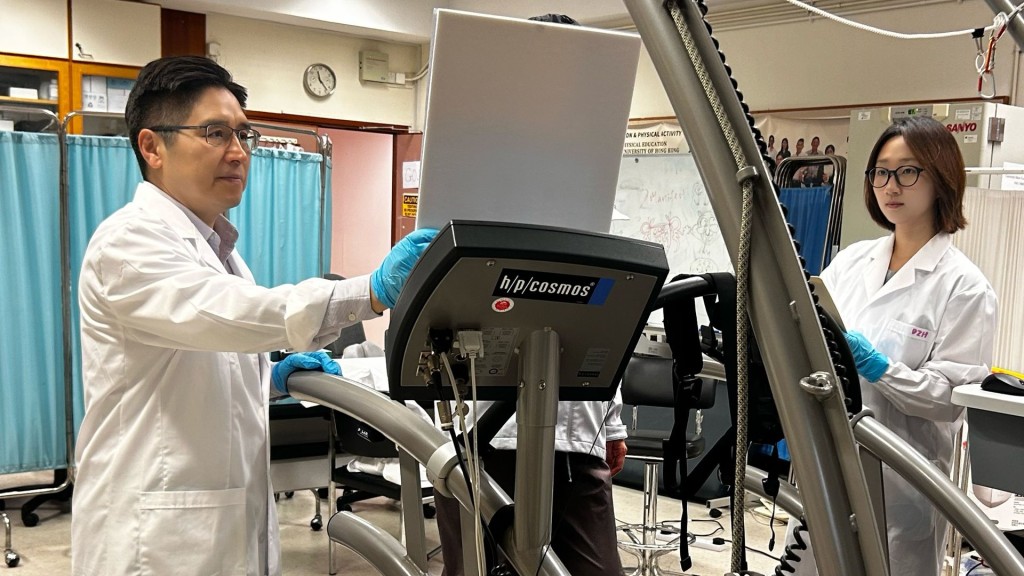
In the currently screening Chinese New Year film Golden Fortune, veteran actress Michelle Yim's portrayal of a "grandmother with dementia" has touched the hearts of countless audience members, her nuanced and realistic performance leaving a deep impression. However, the emotion behind this performance is not solely due to the actress's skill. To truly understand the inner world of dementia patients, the film's director and assistant director made a low-key visit to the Jockey Club Centre for Positive Ageing for field research and learning before filming began. Their goal was to present not just the symptoms, but the authentic mental and emotional journey of someone living with dementia.
According to data from Hong Kong's Department of Health for 2021-2022, dementia is listed as one of the top ten causes of death in Hong Kong. Dementia primarily occurs in people aged 60 or above. The older one gets, the higher the chance of developing dementia. Studies indicate that in Hong Kong, 1 in 10 elderly people aged 70 or above has dementia.
While gender does not show a strong correlation with the overall incidence rate, males tend to develop dementia earlier or have dementia caused by vascular issues, whereas females are more likely to develop dementia at age 70 or later. Dementia has recognizable signs, and early detection allows for early medical consultation.
The 10 Warning Signs of Dementia:
- Memory Decline Affecting Daily Life: For example, easily forgetting recent events, repeating questions, or forgetting important appointments or times.
- Difficulty Performing Familiar Tasks: Difficulty with planning, problem-solving, or managing personal finances; omitting steps when preparing familiar recipes, or forgetting previously mastered work skills.
- Confusion with Time or Place: Confusing day and night, being unclear about the current date, or getting lost on familiar streets or in one's own community.
- Problems with Visual Images and Spatial Judgment: Difficulty judging distance, recognizing colors, or understanding images; may even mistake their own reflection in a mirror for another person.
- Trouble with Language Expression or Comprehension: Difficulty finding the right words during conversation, or using incorrect words, leading to communication problems.
- Decreased or Poor Judgment: Losing judgment when handling money, or acting inappropriately or unsafely (e.g., wearing inappropriate clothing for the weather, disregarding traffic rules when crossing the street).
- Misplacing Things and Being Unable to Retrace Steps: Putting personal items in illogical places, being unable to recall where, and potentially accusing others of theft.
- Withdrawal from Social Activities and Loss of Initiative: Losing interest in previous hobbies (e.g., housework, volunteer work), participating less in social activities, becoming passive or isolated.
- Changes in Mood or Personality: Frequent mood swings, or feeling anxious, irritable, or depressed without reason; noticeable personality changes such as increased suspicion or stubbornness.
- Difficulty Understanding Abstract Information: Struggling to follow or comprehend the content of conversations or stories.
4 Common Phrases Often Spoken by the Elderly That May Indicate Early Dementia
Dr. Sun Yong-an, Chief Physician of the Neurology Department at Peking University First Hospital, and Dr. Guo Jifeng, Chief Physician of the Neurology Department at Xiangya Hospital, Central South University, pointed out in an interview with Life Times that individuals with a tendency towards dementia often say the following four sentences:
- "What? Can you say that again?" (Frequently needing repetition)
- "Where is this place? Why am I here?" (Disorientation)
- "My things are gone! Who took them?" (Misplacing items and accusing others)
- "None of you care about me!" (Emotional changes and withdrawal)
Guo reminds us that if you notice family members exhibiting these early signs of cognitive impairment, it is best to seek examination and treatment from a neurology department as early as possible.