Kasuga Taisha was built in 768 by a lord of the powerful Fujiwara clan. Whereas it is quite common for Japanese shrines to honor one or two gods, the influence of the Fujiwaras allowed Kasuga Taisha to host four of them, including ones from Chiba, Ibaraki and Osaka. Each has its own shrine.
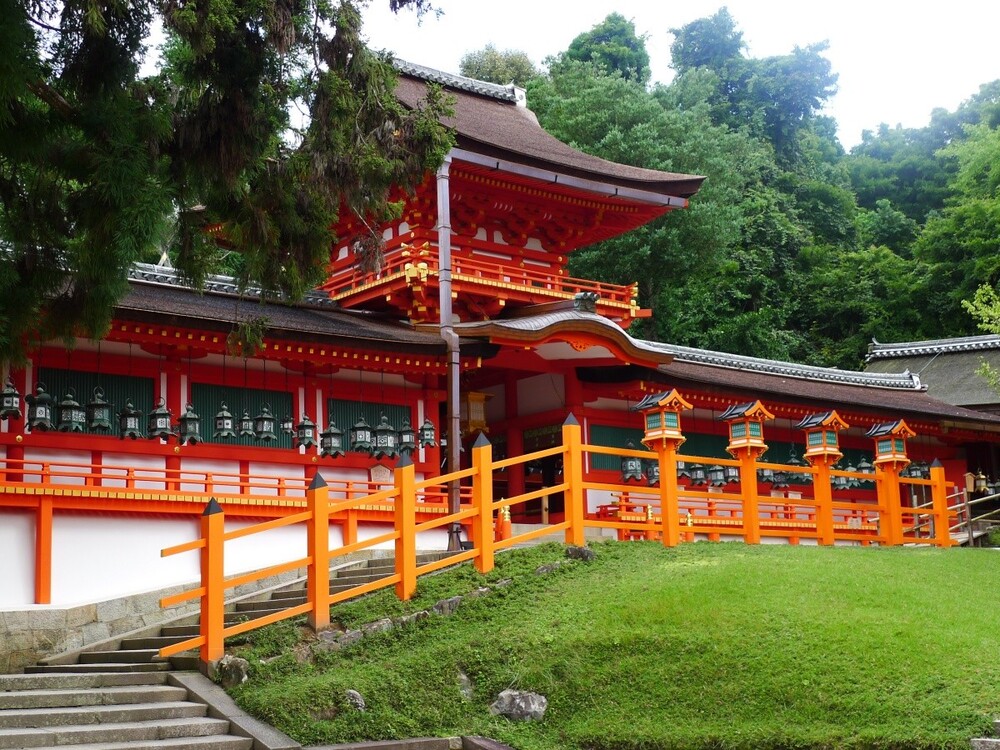
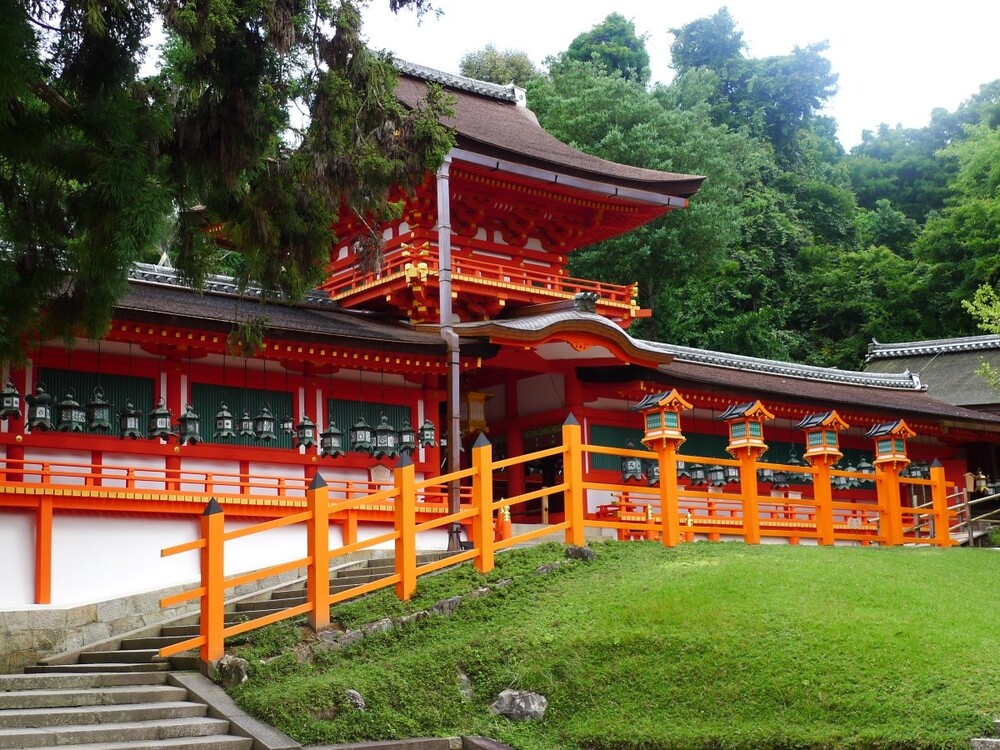
The site is known for its colors and photogenic setting. The contrast between the bright vermilion paint, the white walls and the cypress wood roofs has inspired photographers for many years. The shrine was rebuilt every two decades, a practice that lasted until the Edo period ended.
Kasuga Taisha is renowned for being the finest example of the Kasugazukuri style of architecture, which dates back to the early 8th century and incorporates Chinese-style roofs and red, gold and vermilion decoration. A sloping roof gently extending over the front of the building also identifies structures of this style.
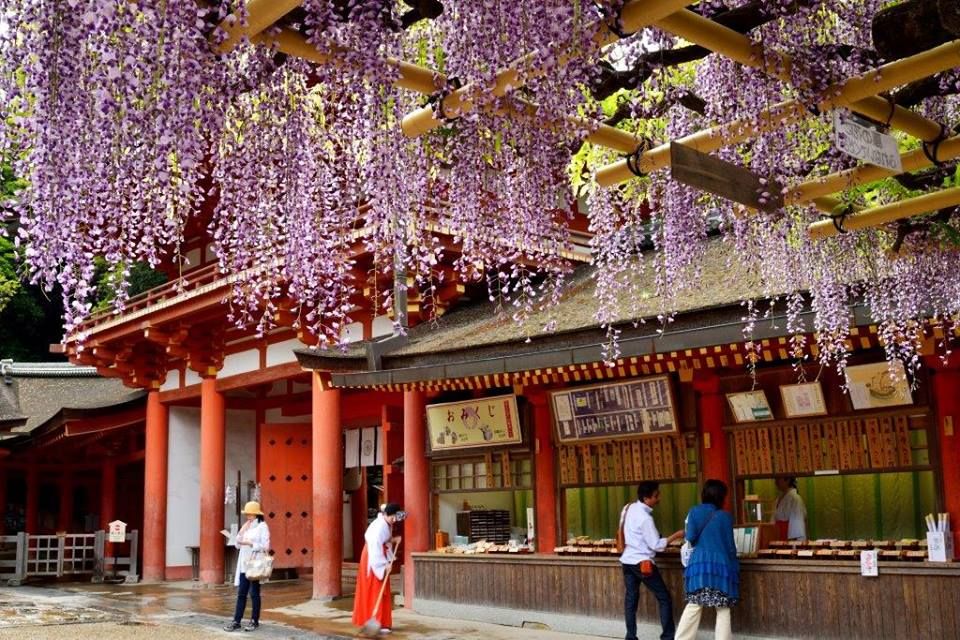
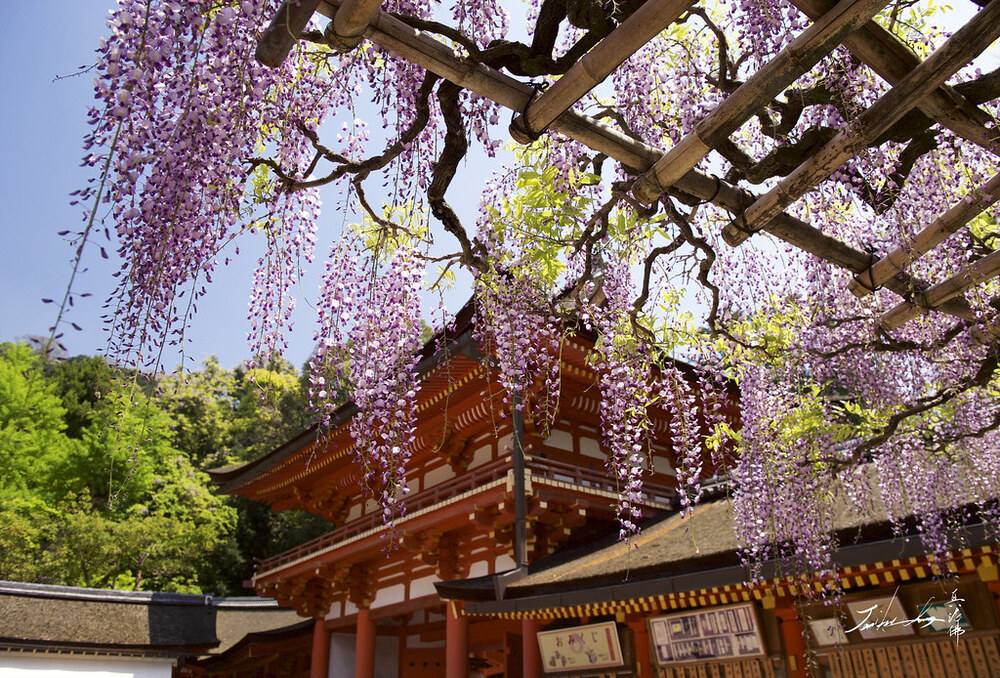
Another popular spot in the shrine grounds is the Shinen Manyo Botanical Garden, which has over 200 kinds of plants. The wisteria flowers that bloom from late April to early May are a particular favorite of visitors.
The symbol of the Kasuga Taisha Grand Shrine is a wisteria bloom and the miko, or shrine maidens, also wear headpieces decorated with the elegant purple flower.
The wisteria has historical significance as the flower emblazoned on the family crest of the Fujiwara clan that dominated the government of Japan from 710 to 1160. The clan used to control much of Nara, the ancient capital of Japan before Kyoto, and built the Kasuga Taisha Grand Shrine in 768.
One of the first things people notice when they enter Kasuga Taisha is its thousands of stone lanterns – over 3,000 of them, in fact. The path to the main building is flanked on both sides by these lanterns, and the main building has hundreds of bronze lanterns as well. Not surprisingly, the area is known for its lantern festival, Mandoro. During this festival, held in early February and also in mid-August, the lanterns light up the shrine and surroundings.