Australia yesterday granted humanitarian visas to five Iranian women footballers after they sought asylum, fearing persecution on their return home for their refusal to sing the national anthem at an Asia Cup match.
“Australians have been moved by the plight of these brave women,” Australian Prime Minister Anthony Albanese said, a day after police had helped extract the women from their Iranian government handlers.
“They’re safe here, and they should feel at home here.”
US President Donald Trump praised Albanese for allowing the women to stay, saying on social media America was ready to take the players if Australia did not.
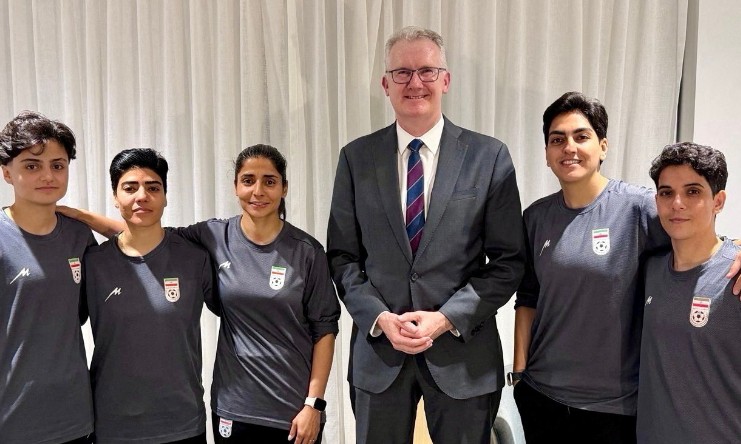
Officials identified the players as Zahra Sarbali Alishah, Mona Hamoudi, Zahra Ghanbari, Fatemeh Pasandideh and Atefeh Ramezanizadeh. They were staying at an undisclosed location under police protection.
Albanese said help was also available to the other players currently in Australia with the Iranian national team, but it was up to them to accept.
Television footage showed several other Iranian players leaving their hotel in the northeastern city of Gold Coast on a bus on Tuesday afternoon.
Home Affairs Minister Tony Burke posted pictures on his X account showing him posing with the five players after granting their visas.
He said the government had been in secret talks with the players for days but acknowledged fleeing was a difficult decision for them.
“Even though the offer continues to be there for other members of the team, it is quite possible and indeed likely that not every woman in the team will make a decision to take up the opportunity,” he said.
The team’s campaign in the Asian Cup started just as the US and Israel launched air strikes on their country, killing the Islamic Republic’s Supreme Leader Ali Khamenei.
Iran were eliminated from the tournament on Sunday after losing 2-0 to the Philippines.
There were concerns about the welfare of the team after they were labeled “wartime traitors” on state television for refusing to sing their national anthem before their first match against South Korea.
REUTERS