Read More
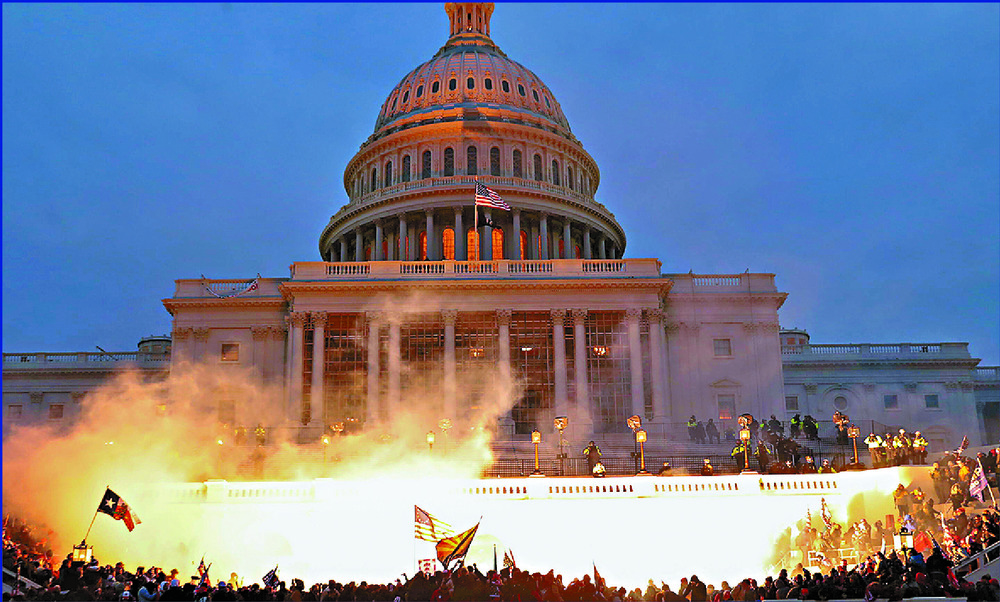
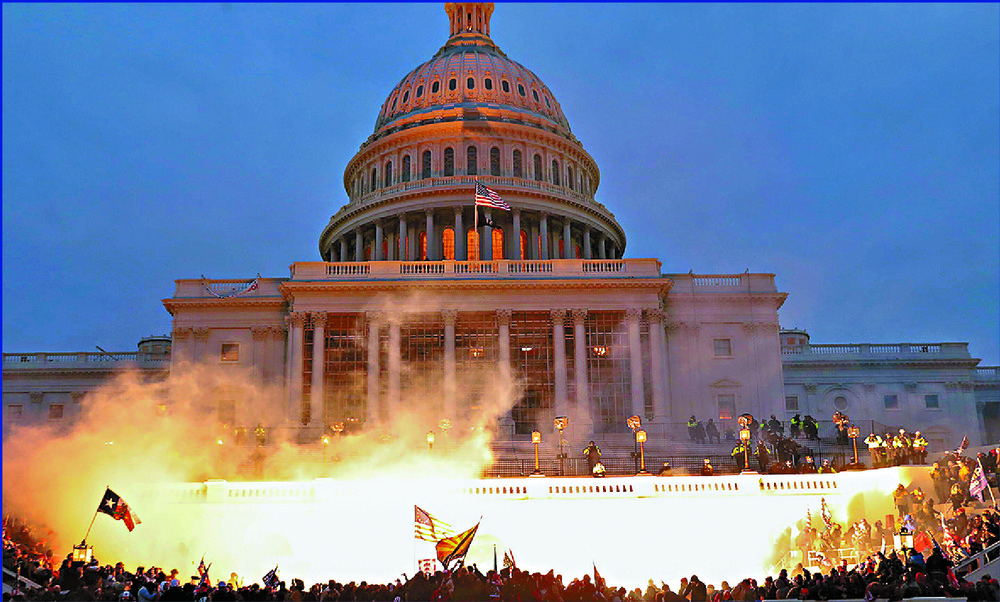
The US presidential election of 2000 hinged on a few votes in Florida and was decided in the Supreme Court. The 2020 contest gave birth to the "Big Lie" and saw supporters of the losing candidate storm the US Capitol.
ADVERTISEMENT
SCROLL TO CONTINUE WITH CONTENT
Just wait and see what 2024 has in store.
Donald Trump, the first president in US history to refuse to accept the outcome of an election, is flirting with another White House run in what could be a make-or-break moment for American democracy.
Robert Kagan, a senior fellow at the Brookings Institution, has just set alarm bells ringing with a doomsday scenario in The Washington Post: "The United States is heading into its greatest political and constitutional crisis since the Civil War."
The neoconservative scholar warned of a "reasonable chance over the next three to four years of incidents of mass violence, a breakdown of federal authority and the division of the country into warring red and blue enclaves."
Polls suggest a majority of Americans share at least some of Kagan's concerns: 56 percent of respondents in a recent CNN-SSRS survey said US democracy is under attack, and 37 percent said it is being "tested."
Only 6 percent said the country is not in danger.
Trump's unceasing and unfounded claims that the November 2020 presidential vote was "stolen" by democrat Joe Biden have seeped into the political bloodstream. Seventy-eight percent of Republicans surveyed by CNN-SSRS do not believe Biden won the presidency fair and square, in line with other polls.
"It's a new phenomenon in American elections," says Edward Foley, a constitutional law professor at Ohio State University. The 'Big Lie' is disconnected from reality and is a kind of a social pathology."
Richard Hasen, a law and political science professor at the University of California, Irvine, said in a recent research paper: "The United States faces a serious risk that the 2024 presidential election, and other future US elections, will not be conducted fairly and that candidates taking office will not reflect the free choices made by eligible voters under previously announced election rules."
In his piece, Kagan also said the 75-year-old Trump and his Republican allies are laying the groundwork to ensure a 2024 victory "by whatever means necessary."
Trump appears to be setting the stage for the "Big Lie 2.0," adds Foley.
The strategy involves new voter identification laws in some Republican-led states and replacing Republican state election officials such as Brad Raffensperger, a Georgia secretary of state who refused to do Trump's bidding in 2020, and "find" 11,780 votes with candidates who are diehard supporters.
"Once you have that person in charge you have somebody who has great influence on how the election is conducted, how the votes are counted, who's declared the winner," says Larry Sabato, director of the Center for Politics at the University of Virginia.
Republicans are also well positioned to win a majority in 2022 in the currently Democratic-controlled House of Representatives, giving them another lever in 2024.
"As ugly as last January 6 was with bloodshed and insurrection, the outcome was never in doubt," Foley says, as then vice-president Mike Pence ultimately refused to go along with Trump's demands that he reject the Electoral College slates from several states they lost to Biden.
"But if members of Congress on January 6, 2025 are predisposed to the 'Big Lie' approach and are willing to repudiate election results just for the sake of pure political power, that would be the ultimate perversion of democracy."