Read More








HK restaurants sweep top two spots at Asia's 50 Best Restaurants
26-03-2026 02:33 HKT

Man dies in suspected electrocution at Mui Wo beach
26-03-2026 06:50 HKT
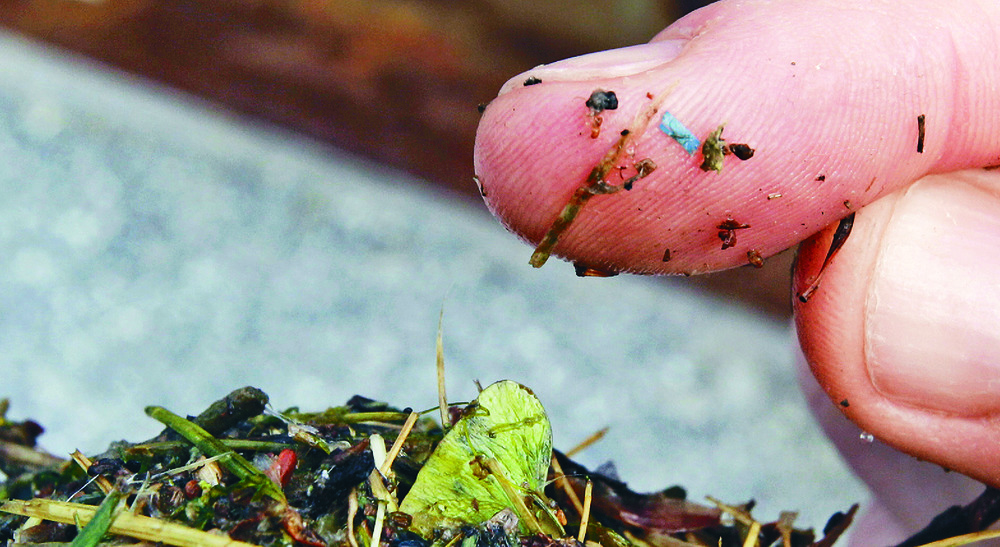
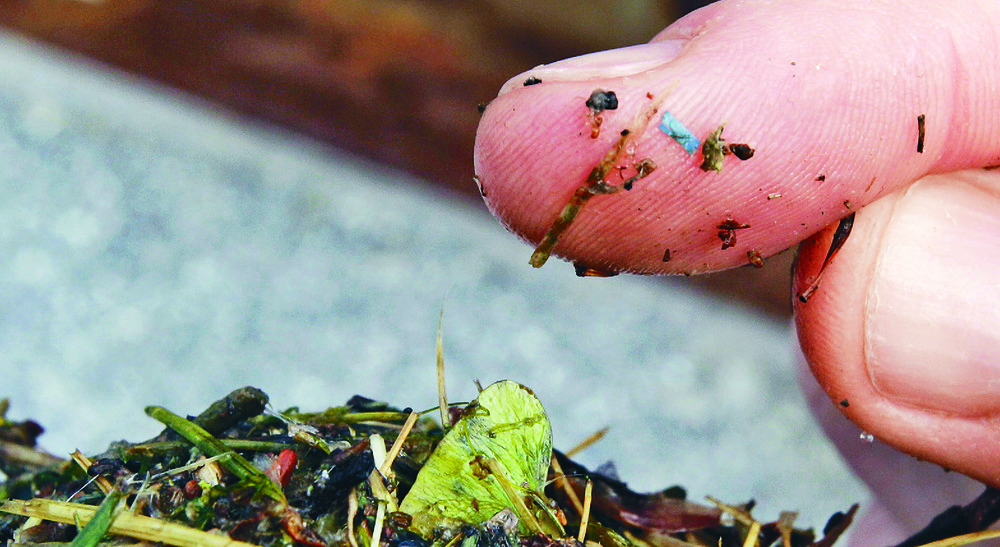
For the past two weeks, I have been discussing plastic and plastic waste. This week I want to focus on a more recent issue: food contamination by microplastics.
Microplastics, to reiterate, are smaller than five millimeters in diameter.
Manufacturers and regulatory agencies have long assured us that everything we consume is safe because there is a robust system that examines food contamination, including contamination with plastic.
Consumers have always felt very confident about any plastic coming into contact with the food they buy in a grocery store.
However, some research has shown that very tiny bits of plastic are in our food, drinking water, the air we breathe and therefore, inside our bodies.
Some scientists estimate that the plastic the average person may be eating and drinking adds up to as much as five grams per week. This suggests each Hongkonger may consume the equivalent of an Octopus card within two months.
One review by the University of Victoria published last year calculated that the average American eats, drinks, and breathes in more than 74,000 microplastic or nanoplastic particles every year.
At the same time, plastic use is ever-growing.
In 2018, manufacturers created almost 400 million tonnes of plastic, and production is expected to almost quadruple by 2050.
The more plastic we use, the more non-recyclable the waste we produce.
Since mass production of plastic began 60 years ago, we have produced over eight billion tonnes of plastic.
Just 9 percent has been recycled, while another 12 percent incinerated.
The remainder - almost 80 percent - sits in landfills or is dumped into the environment.
Much of this eventually finds its way into the oceans, and over time, plastic breaks down into microplastics.
Any wildlife in or around rivers is exposed to microplastic pollution.
We know microplastics can be ingested by organisms as small as zooplankton.
When ingested, microplastics can block the animals' gastrointestinal tracts. This has the effect of tricking the animal into thinking it is full, thus leading to starvation and possibly death.
But it is not only animals that suffer.
If we consume the marine animals that ingest microplastic, then we in turn consume the plastic.
In June, two independent scientific studies, by the University of Catania and Leiden University, showed that microplastics are contaminating the fruit and vegetables we eat.
According to their findings, apples are the most contaminated fruit and carrots are the most contaminated vegetables.
They discovered that microplastics are penetrating the roots of lettuces and wheat plants, after which they are transported to the edible above-ground plant parts.
For decades scientists believed that plastic particles are too large to pass through the physical barriers of intact plant tissue.
New research casts doubt on this.
It is now known that microplastics can further break down into even smaller pieces: nanoplastic. Nanoplastics are smaller than 0.001 millimeter in diameter.
Both microplastics and nanoplastics are emerging pollutants. But getting rid of them will be difficult.
Professor Agostino Merico of Tropical Marine Research at Jacobs University has argued that because plastic is an extremely versatile material with a wide range of consumer and industrial applications, a clear alternative must present itself before we can significantly reduce the use of plastic.
In the meantime, more research is clearly needed to understand the implications of microplastics and nanoplastics on human health, especially on the effect they have on food-supply chains.
If apples and carrots are meant to be healthy, then we need answers soon.
Dr Jolly Wong is a policy fellow at the Centre for Science and Policy, University of Cambridge