Read More
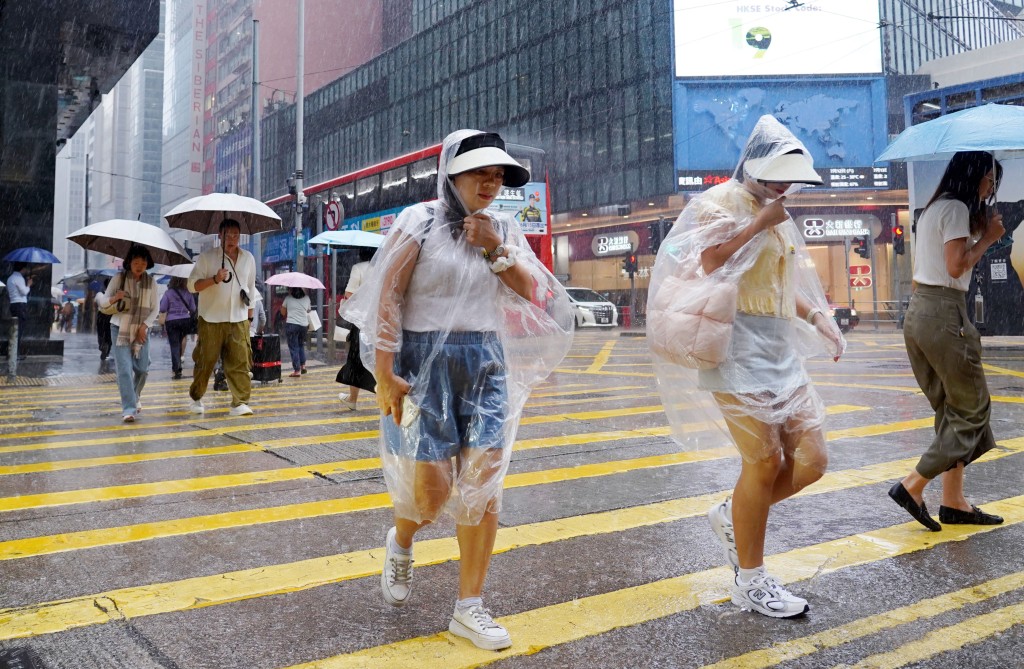
Wan Chai and Sham Shui Po are rated as having Hong Kong's most dangerous black spots for pedestrians mainly because of open-air markets, narrow streets and the substantial weight of people and vehicles using the districts' roads.
ADVERTISEMENT
SCROLL TO CONTINUE WITH CONTENT
According to a 56-page report from advocacy group Street Reset on dangers to pedestrians, there were 16,243 people listed as casualties after running afoul of vehicles in parts of the two districts from 2015 to 2019.
And 3,703 of them were killed or seriously injured.
Street Reset conducted a study based on pedestrian deaths and serious injuries by district density to assemble a ranking of the worst 10 pedestrian collision zones.
Crash density data produced two hot zones in Wan Chai, three in the New Territories - at Tsuen Wan and Yuen Long - and five in Kowloon, taking in Sham Shui Po, Wong Tai Sin, Kwun Tong and Yau Tsim Mong.
Among them, a section between Heard Street and Burrows Street off Wan Chai Road is the most dangerous location on Hong Kong Island with 243 calculated collisions per kilometer. That was calculated by dividing the actual number of pedestrian collisions by the length of that street section.
It is followed by market streets in Sham Shui Po and Johnston Road at the junction of Spring Garden Lane in Wan Chai.
Justin Yim Cheuk-hang, founder of Street Reset, noted that half of the 10 hot zones are to be found in streets that include open-air markets while the other half are located along main streets with side streets running off them. Pedestrian activity in such areas is very high at most times, he says, with substantial street crossing by people.
Also by analyzing the number and locations of collisions, Street Reset found that 71 percent of collisions involving pedestrians occurred on secondary roads or at intersections with secondary roads.
Yim suggested that authorities adopt a "safe system" approach. That would mean reduced speed limits and other disciplines to allow for a higher fault tolerance rate to tackle the number of serious accidents.
"Hong Kong has been adopting a zero accident approach to design streets, including the continuous installation of additional railings," Yim remarked. "But is using railings to separate pedestrians and vehicles a necessarily useful way?"
In terms of the top 10 hot zones, Yim suggested providing more dedicated space and priority to pedestrians to enable safer and more convenient crossing movements rather than continuing to attempt to correct human behavior through applying methods that have demonstrably failed. As regards problems in Wan Chai, Transport Department officials have already responded that since there are two sets of crossings in a Wan Chai Road section that sees frequent loading and unloading activities it would not be desirable to add more crossings.
As for the junction of Yu Chau Street and Kweilin Street in Sham Shui Po, department officers propose to relocate and widen an existing crossing, and a preliminary engineering exploration is expected to be completed this month.
Since there are more accidents involving pedestrians on secondary streets, Yim suggested authorities consider setting a speed limit of 30 kilometers per hour on them and side roads. And some major roads with more pedestrians could also require greater speed limits for vehicles.
In visualizing Hong Kong traffic accident data, Street Reset's research team has consolidated facts and figures into the Hong Kong Traffic Injury Collision website for public access.
Kenneth Wong Kiu-ho, a research member of Street Reset, said the website uses yellow, orange and red points to show slight, severe and fatal accidents, enabling people to check the details of each collision from 2014 to 2019
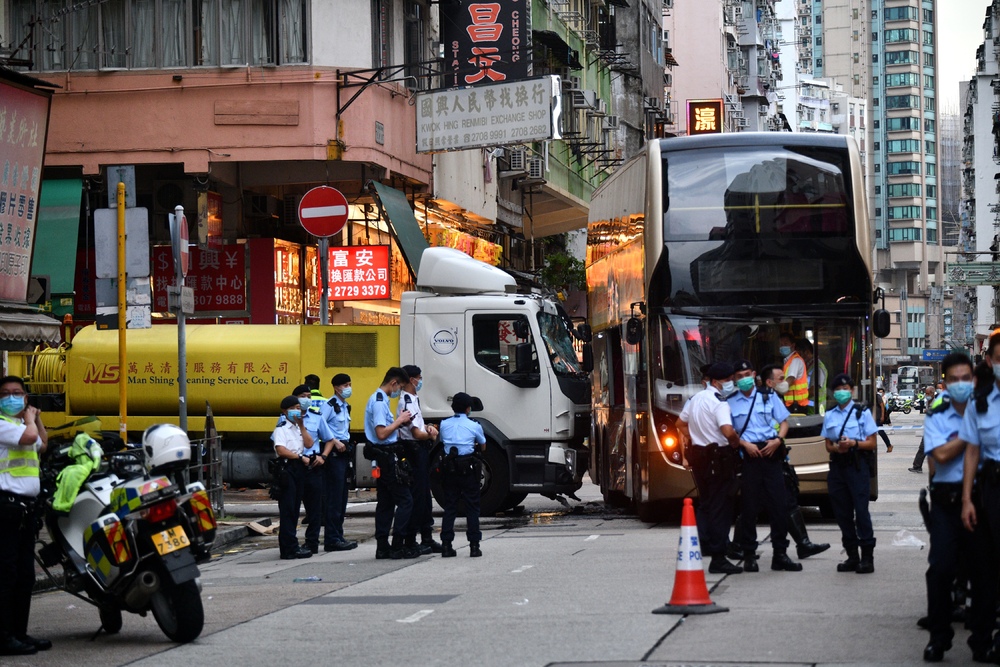
A collision on the packed streets of ShamShui Po. Sing Tao