Wallis Wang
The discovery of an intense and short burst of radio waves in space from unknown origins has won three astrophysicists this year's Shaw Prize in Astronomy, as it may help scientists better probe the universe.
The prize is one of three annual awards by the Shaw Prize Foundation, with the others being life science and medicine and mathematical sciences. Each prize carries a US$1.2 million (HK$9.36 million) award.
The astronomy prize is shared by Matthew Bailes, director of the Australian Research Council Centre of Excellence for Gravitational Wave Discovery, and West Virginia University professors Duncan Lorimer and Maura McLaughlin for their discovery of fast radio bursts.
FRBs, among the most mysterious phenomena in astronomy, are intense bursts of radio emissions lasting only a few thousandths of a second that contain as much energy as the sun emits in a month.
The three discovered the first burst in 2007 and almost a thousand FRBs have been discovered since then.
Although the origins of FRBs remain unknown, Bailes said the discovery allows scientists to count the number of electrons in the whole universe.
Every time the radio waves pass an electron in the universe, they get delayed, and scientists can calculate the number of electrons between the burst and the Earth, he said.
"You can work out how many electrons there are as a function of the age of the universe. I think that's probably why the Shaw Prize was awarded, not because there is a new type of the burst, it's [because of] the application and potential [of our discovery]," he said.
McLaughlin also said their discovery is the only way to measure electrons.
"[FRBs] can answer some very important questions going all the way back to the Big Bang and how much matter there was," McLaughlin said.
"There are other measurements that play into early universe cosmology and how the universe was formed, but there is no other way to do exactly this measurement besides this tool," she said.
McLaughlin said they had searched galaxies for years before the first FRB discovery.
"[FRBs] are fast, because of very short duration on time scales of milliseconds or thousandths of a second so they are extremely short," she said, adding they can be detected by radio telescopes.
McLaughlin said FRBs are likely coming from a tiny energy source far away.
"Some of them are billions of light years away. So they are really exciting new source class as they are so bright and coming from so far, which means there must be a very, very energetic source producing them," she said.
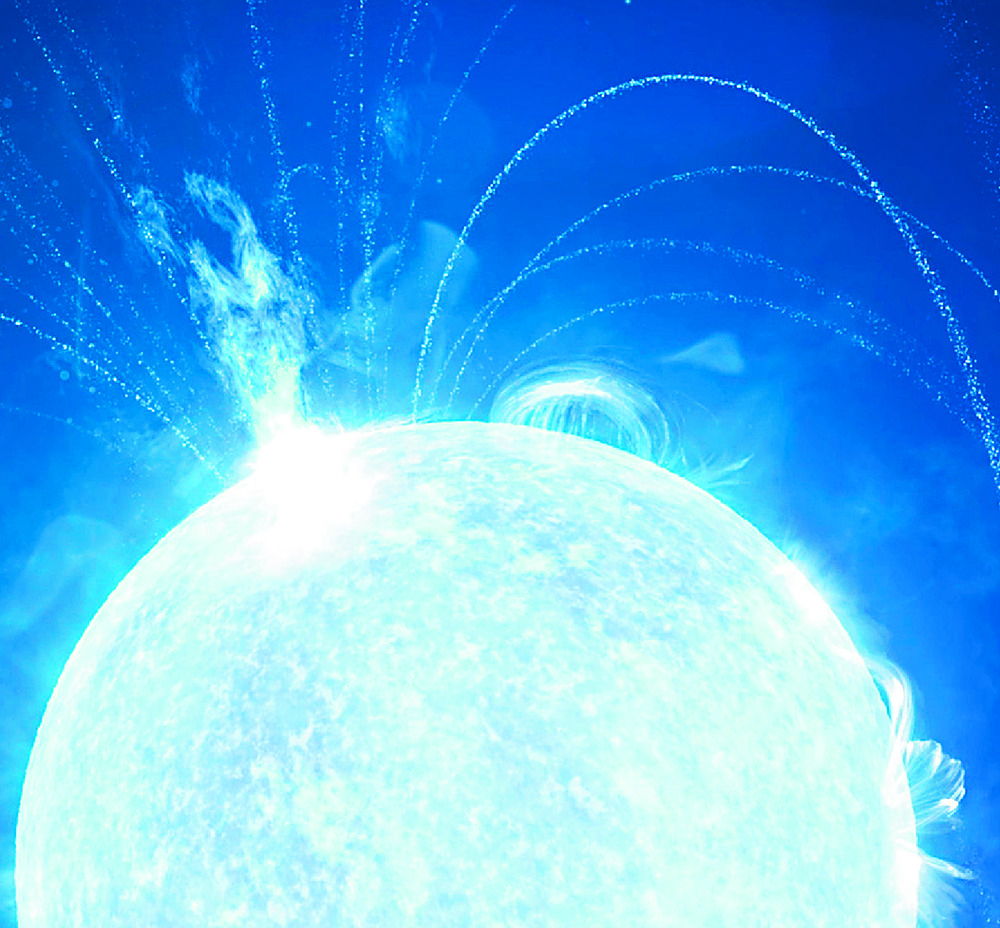
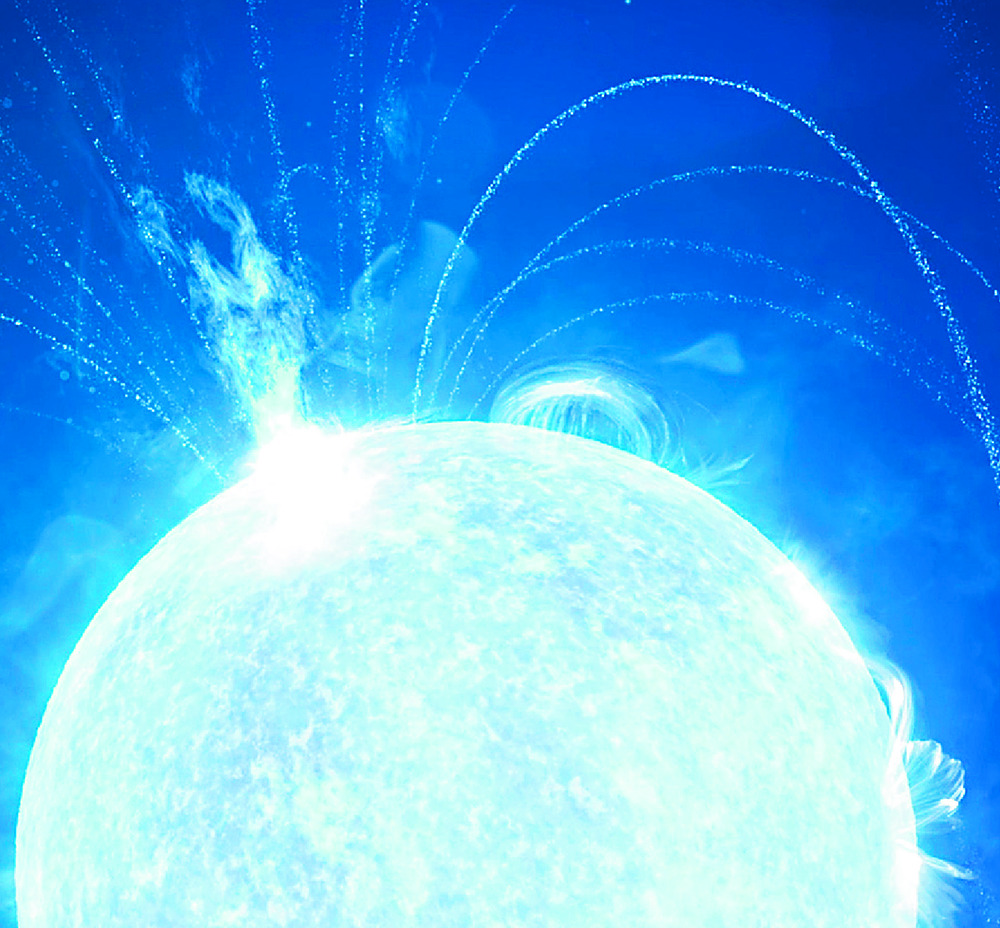
"That had to be either the collision of two small objects or maybe something produced from a neutron star, a very compact object."
The team was shocked when they first discovered the FRB as it was so unusual and were skeptical of their own findings.
"The first one we found had as much energy in it as the sun emits in a month, but it [lasted for] just five milliseconds. If we compare that to other radio flashes that we already knew about from our own galaxy, it was about one trillion times more luminous," Bailes said.
"That was very exciting because every astronomer dreams of finding a new celestial object," he added.
Duncan Lorimer, Maura McLauhlin and Matthew Bailes share the Shaw Prize for Astronomy. Left: a NASA animation image depicts a powerful X-ray burst erupting from a neutron star.