Read More
An East Rail Line train derailed last September after screws failed as the MTR Corp's management admitted the maintenance team had a knowledge gap.
ADVERTISEMENT
SCROLL TO CONTINUE WITH CONTENT
MTR managing director Adi Lau Tin-shing said: "On behalf of the corporation, I sincerely apologize again to the passengers affected by the incident. We have learned lessons from this incident."
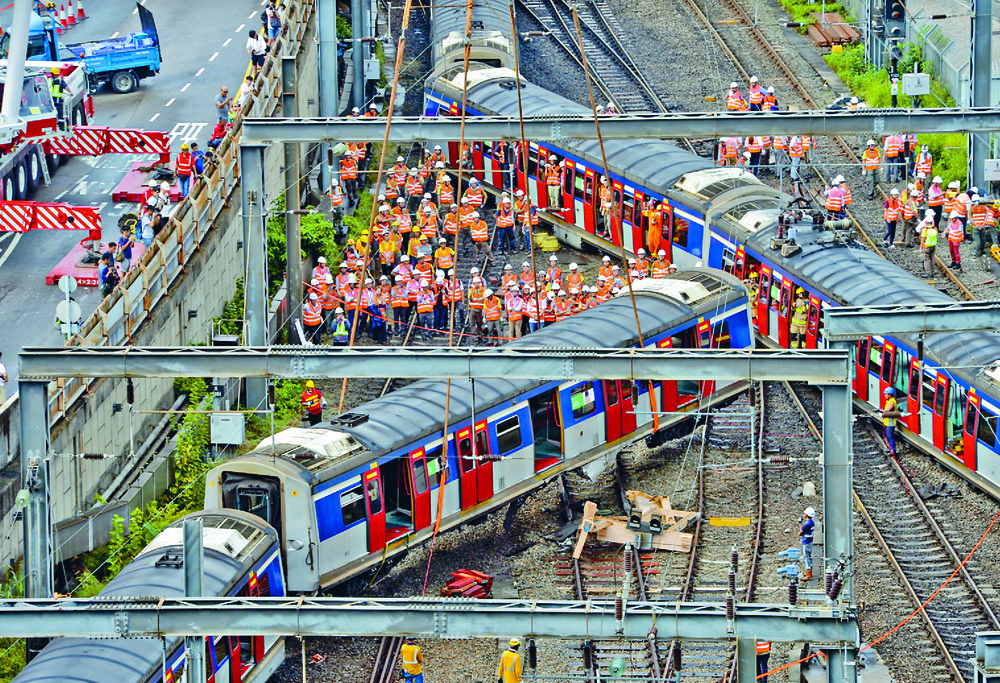
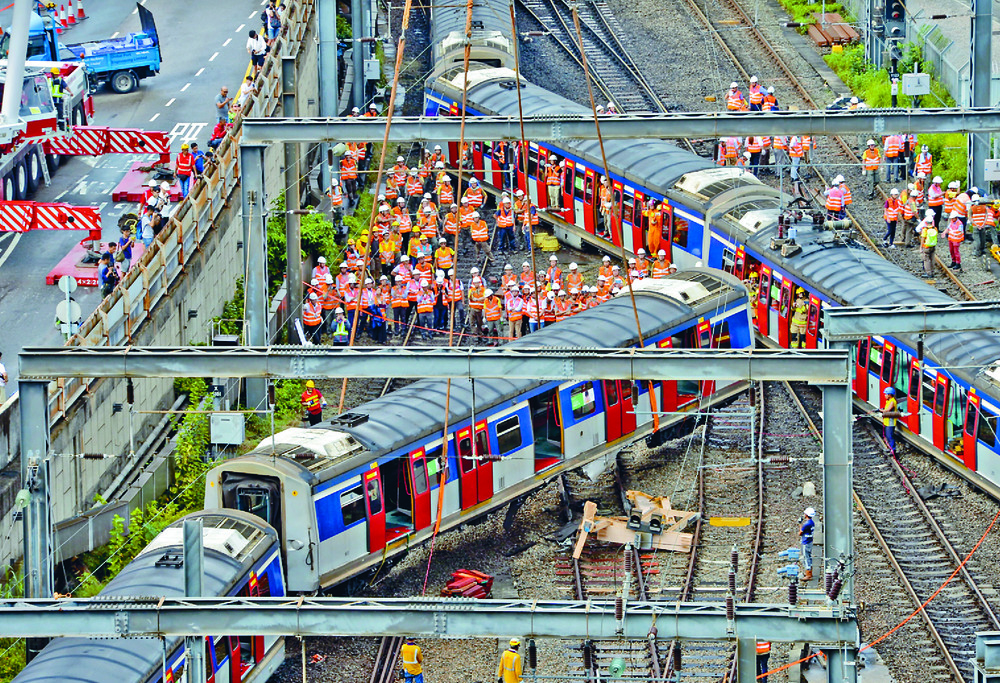
On September 17, a train derailed as it was approaching Hung Hom station.
The fourth to sixth cars of the 12-car train derailed and the train was separated in an S-shape.
Eight passengers were injured - two of them were hospitalized for two days -while the service between Hung Hom and Mong Kok East stations were suspended for a day.
At a news conference yesterday, the MTRC announced the results of its investigation, saying the derailment was caused by tracks being widened after screws of the rail fastening failed.
Lu Wong Ho-leung, deputy chief of operations, engineering, who was also a member of the investigation panel, said the maintenance team had replaced two sleepers - which fix the distance between two rails - to correct the widening distance between the two rails.
But the maintenance crew was not aware that the difference in stiffness between the new sleepers and preceding sleepers would cause the rail fastening on the new sleepers to deteriorate quicker when trains were making a sharp turn at that section, Wong said.
"The hard spot has to take most of the sideway force while the train was taking the sharp right-hand turn, and three of the fixing screws of the rail fastening therefore failed," Wong said. This led to an increase in the gap between the two rails, and caused the train wheels to hit the check rail, a guarding rail guiding wheels through crossings and eventually derail, Wong said.
Tony Lee Kar-yun, the MTR operations director, said: "The maintenance team clearly had a knowledge gap of the effect of the combination of circumstances to make an informed judgment."
Lee said the maintenance team intended to replace the sleepers on August 4 last year, which according to their experience was sufficient to correct the widening distance between the tracks found earlier.
The intervention caused an uneven stiffness between the two new sleepers and the preceding 15 sleepers, and broke the coach-screws that secured the rail to the new sleepers.
Lee said the company had learned from the incident and new measures have been rolled out to address the issue.
But Lee also admitted that the company was not aware that the difference in stiffness after replacing sleepers is a potential threat to train safety.
michael.shum@singtaonewscorp.com
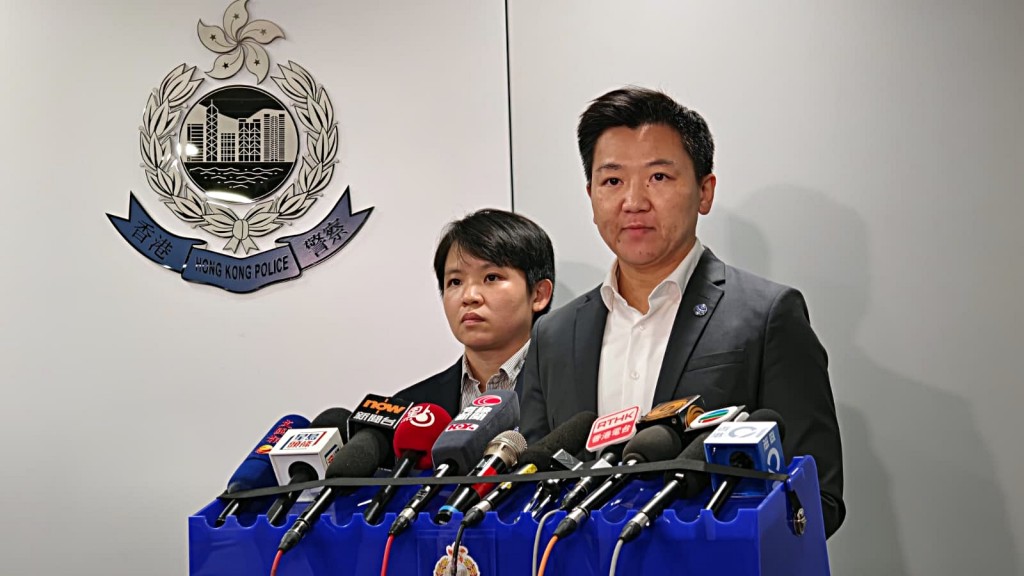
The derailment was caused by tracks being widened after screws failed and the maintenance team had a knowledge gap, said Tony Lee, far right. SING TAO