Read More


High Court rejects Chow Hang-tung's application for dismissal of charges
03-11-2025 20:22 HKT

Man found dead in river in Tin Shui Wai
2 hours ago


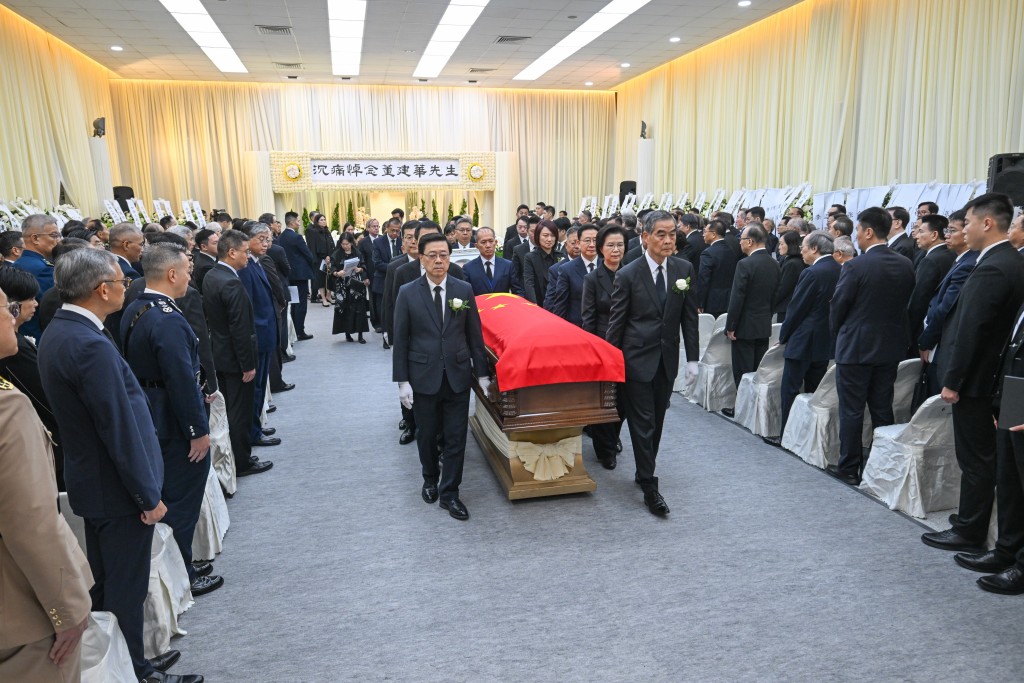
John Lee and CY Leung lead pallbearers for Tung Chee-hwa
20-09-2026 15:54 HKT



The 22-day trial of the now-disbanded Hong Kong Alliance in Support of Patriotic Democratic Movements of China over allegations of inciting others to subvert state power concluded on Tuesday at West Kowloon Magistrates’ Courts, with a verdict expected in mid-to-late July.
The former Alliance, its chairman Lee Cheuk-yan, former vice-chairman Albert Ho Chun-yan and former vice-chairwoman Tonyee Chow Hang-tung were charged with inciting others to subvert state power between July 1, 2020, and September 8, 2021. Ho pleaded guilty before the trial.
The case was heard by three judges designated under the National Security Law: Alex Lee Wan-tang, Johnny Chan Jong-herng and Anna Lai Yuen-kee.
The defense was represented by barristers Erik Shum Sze-man and Priscilia Lam Tsz-ying, while Chow represented herself.
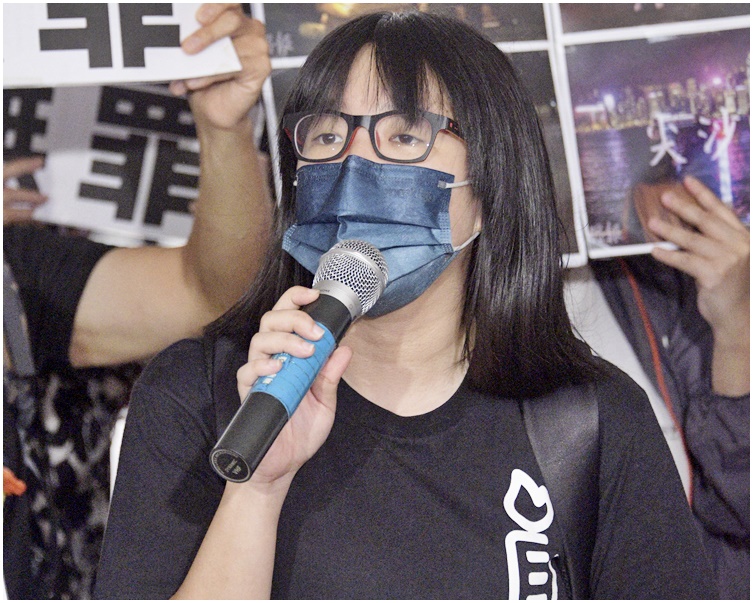
In her closing submissions, Chow said the facts of the case were not in dispute, adding that the defendants did not deny their words and actions, nor did they attempt to minimize or distance themselves from them. Instead, she said, the defendants fully embraced the conduct alleged by the prosecution to be criminal.
She said their demands had been set out in evidence, while the wording used to describe them was only a peripheral issue.
Chow argued that the key question for the court was what the law prohibits and protects, what conditions the defendants sought to end, and what system the Constitution establishes. She questioned whether the law guarantees the permanent rule of the Chinese Communist Party and prohibits citizens from advocating political transition.
She said the defendants had merely advocated ending unrestricted power, and argued that the court could not criminalize the slogan “end one-party dictatorship” while claiming to uphold the rule of law.
Chow also argued that “subversion” should be interpreted as using external forces to rapidly, drastically and abnormally change an existing order, and that this was not limited to physical force. She said “destruction” carried an additional element of malice, involving unfair, unreasonable or unauthorized conduct, while justified criticism without malice did not amount to destruction.
She said the prosecution should directly prove what unlawful means the defendants had allegedly incited others to use, describing the prosecution’s argument that they had failed to call for constitutional amendment through lawful means as groundless.
Chow further argued that the prosecution must prove not only that the defendants broke the law, but also that they acted unconstitutionally, which she said required a much stricter standard.
She said that while the Chinese Constitution forms part of Hong Kong’s legal framework, it lacks detailed statutory provisions and cannot be directly enforced in the city. Abstract constitutional concepts must instead be objectified through local legislation, such as the National Security Law, before they can become enforceable law, she said.
Chow added that provisions of the Chinese Constitution could not serve as an element of an offense under the National Security Law. As a constitution is intended to regulate state power, ordinary citizens are incapable of committing an unconstitutional act, she argued.
On the prosecution’s allegation that the Alliance’s advocacy of “ending one-party dictatorship” would naturally and logically lead to ending the leadership of the Chinese Communist Party, Chow said the argument was legally untenable.
She argued that the implied meaning of words did not equate to their actual effect. She said that when the Alliance set up street booths calling for public attendance at Victoria Park rallies and chanted the slogan, passersby would not immediately engage in subversion as alleged by the prosecution.
Chow also noted that the Alliance had existed for more than 30 years, during which the slogan had been widely used and heard. She said the actual impact of the slogan was already evident, as those genuinely moved by it simply joined the Alliance.
Lam, representing the Hong Kong Alliance, said that as the organization had been wound up and no further instructions could be obtained, she agreed that Lee, Ho and Chow constituted the directing mind and will of the organization.
She argued that if the court found the testimonies of Lee and Chow to be possibly true, the organization should also be acquitted alongside them.