One of Europe's top travel destinations doesn't like tourists - or at least you'd get that impression reading some of the unwelcoming slogans locals have graffitied across Barcelona.
The city now has a plan that could curb some of this tourism phobia, while also helping with adaptation to climate change.
Barcelona's city hall launched a new strategy to direct EUR100 million (HK$847 million) from its tourist tax - the charge travelers see at the bottom of their hotel bill - to a fund that will install heat pumps and solar panels in state-owned schools.
Using this tax for clear, long-term green benefits could change the perception of the disruption caused by the city's guests.
Barcelona, home of 1.6 million people, annually hosts seven million tourists, who add pressure to already strained services, such as waste removal. To deal with that, authorities have charged a tourist tax of EUR2.75 per person for every night spent in the city, and will increase that to EUR3.25 from April 1.
"So far we have spent these taxes on compensating the impact tourists have on the city, including cleaning services, safety and public transport," says Jordi Valls, Barcelona's head of economic and tourism promotion. "This year we've decided to go a step further and spend the tax on financing public services from a climate point of view."
Nestled on the Mediterranean shore, Barcelona's climate is changing fast as the world warms.
The city has become hotter and drier in recent years, with authorities declaring a state of emergency for water earlier this month amid a three-year drought that's the worst on record.
High temperatures and longer heat waves have forced city hall to set up climate refuges where people can cool off in July and August. But increasing heat during school terms in June and September are making children - and the classrooms they spend so much time in - a new focus.
With the tourist tax fund, Barcelona expects to install air-conditioning systems powered by rooftop solar on a total of 170 schools by 2029. When possible, old and polluting gas boilers will be replaced with heat pumps.
"Climate change impacting our children and our schools - our infrastructure - is just not appropriate anymore," Valls says. "The school project substantially improves education as a public service, while reducing carbon dioxide emissions."
Authorities are planning to roll out 181,000 square meters of solar panels across school properties. As this will likely produce more power than these facilities need, officials want neighbors and other nearby public buildings to use that surplus.
Barcelona's plan could provide a blueprint for other European cities that are also dealing with climate change and a boom in visitors.
In Italy, Venice collected EUR37 million in overnight tourist taxes in 2023, with hotels charging guests anywhere between EUR1 and EUR5. For now, current legislation forces the city to invest these funds in services and projects directly and indirectly linked to tourism, including security staff patrolling the city center.
Venice's tourist tax also contributes to traditional cultural events, such as the Festa del Redentore in July, when a variety of boats parade Saint Mark's basin, as well as preservation of the environmental and artistic heritage of the city, such as the iconic La Fenice Opera House and Teatro Goldoni.
Since day-trippers do not pay the existing overnight tourist tax, starting on April 25 the city will charge them a new EUR5 daytime levy during the busiest days in spring and summer.
In Barcelona, not everyone is convinced the new plans for the tourist tax are going far enough to offset the impacts of extra visitors.
A significant chunk of the tax is still spent on promoting the city through tourism fairs and events and the money, says Janet Sanz, vice president for climate action in the Barcelona Metropolitan Area, would be better spent on new bike lanes and the expansion of green areas.
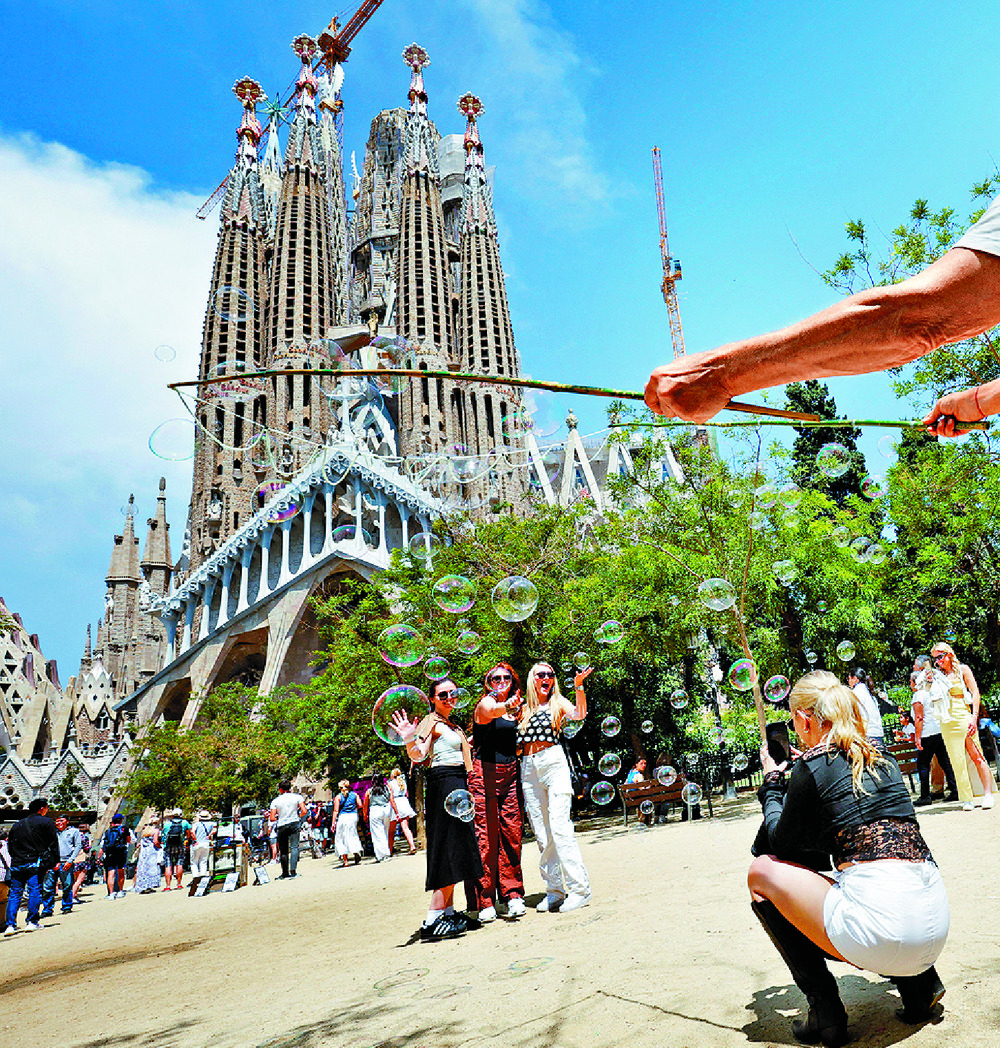
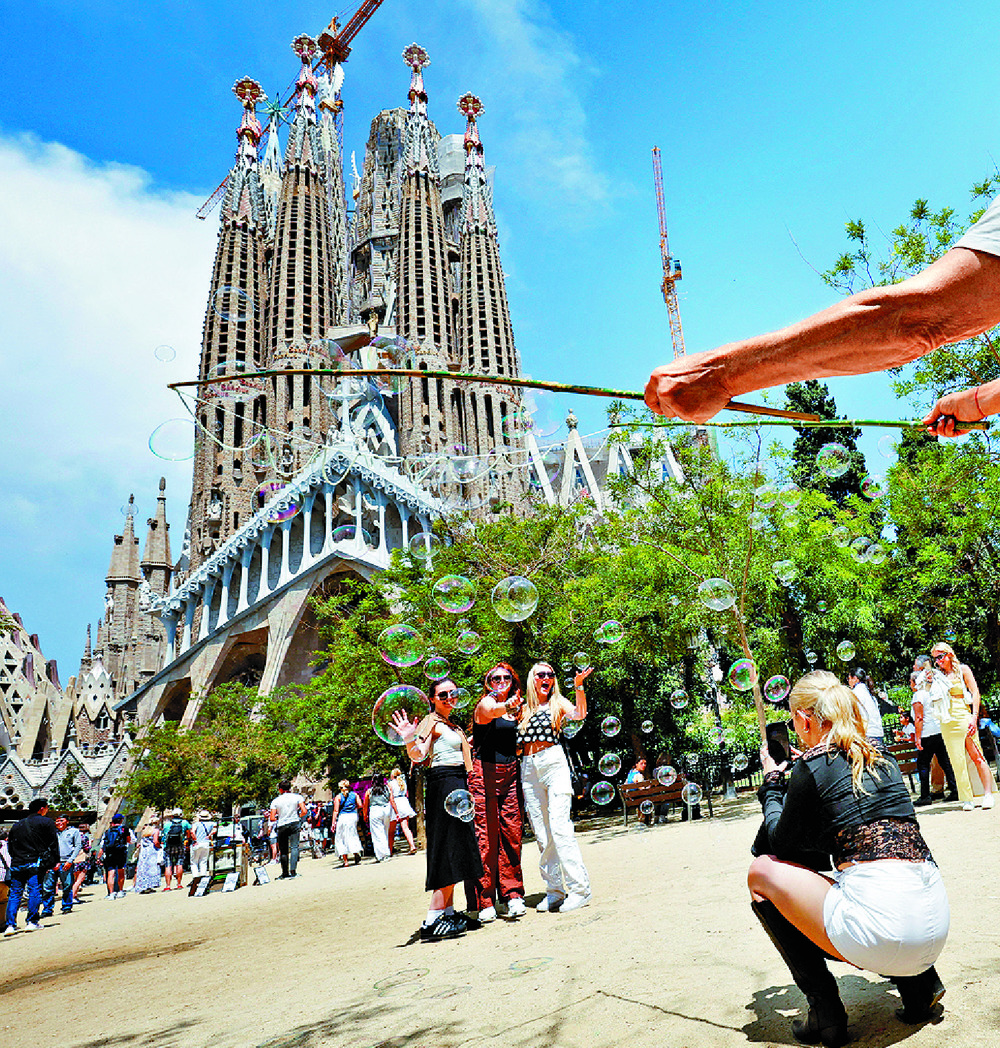
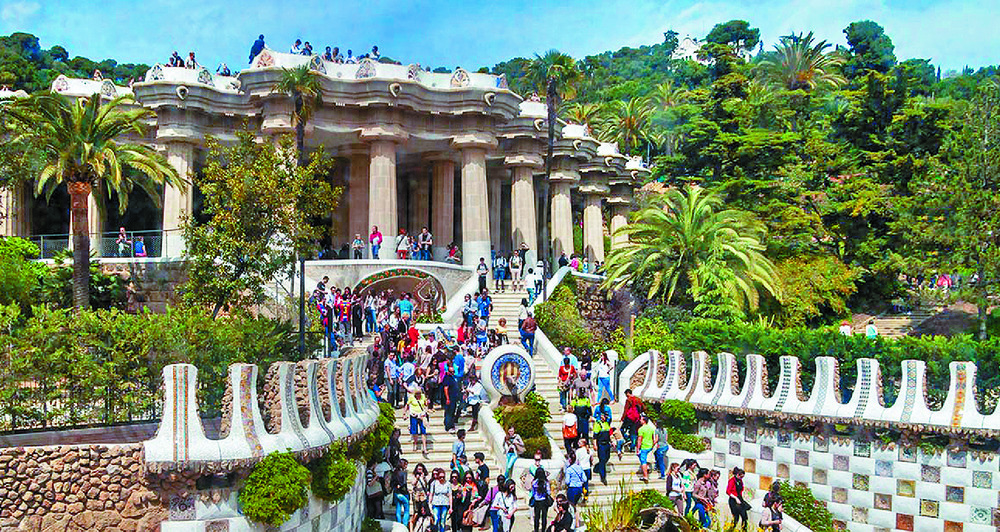
Tourists flock to Park Guell, left, and La Sagrada Familia in Barcelona. The city of 1.6 million people hosts seven million tourists annually.