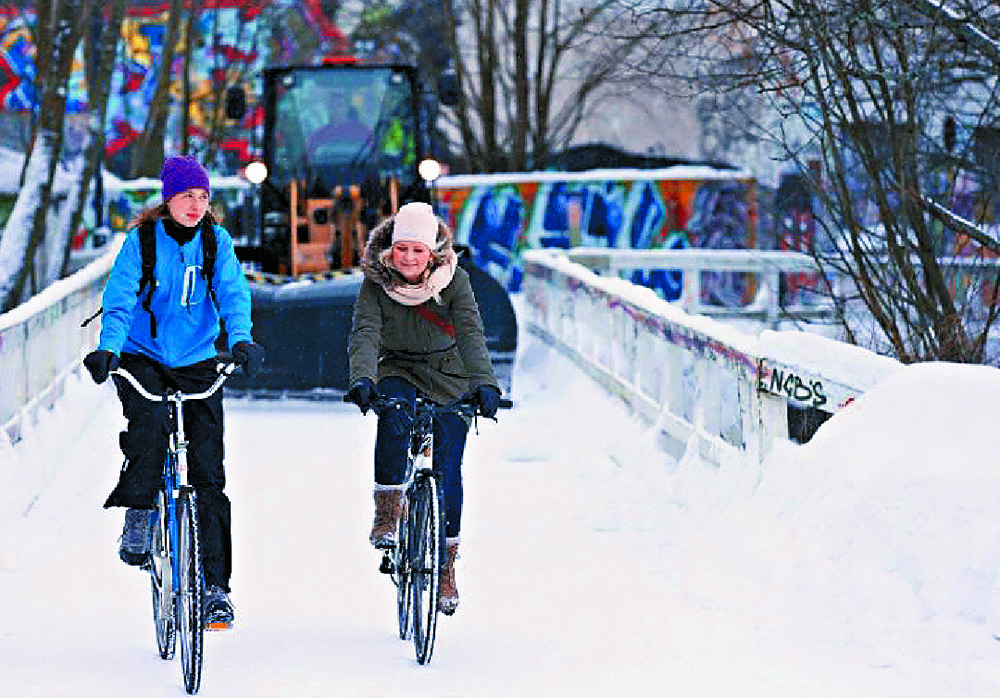
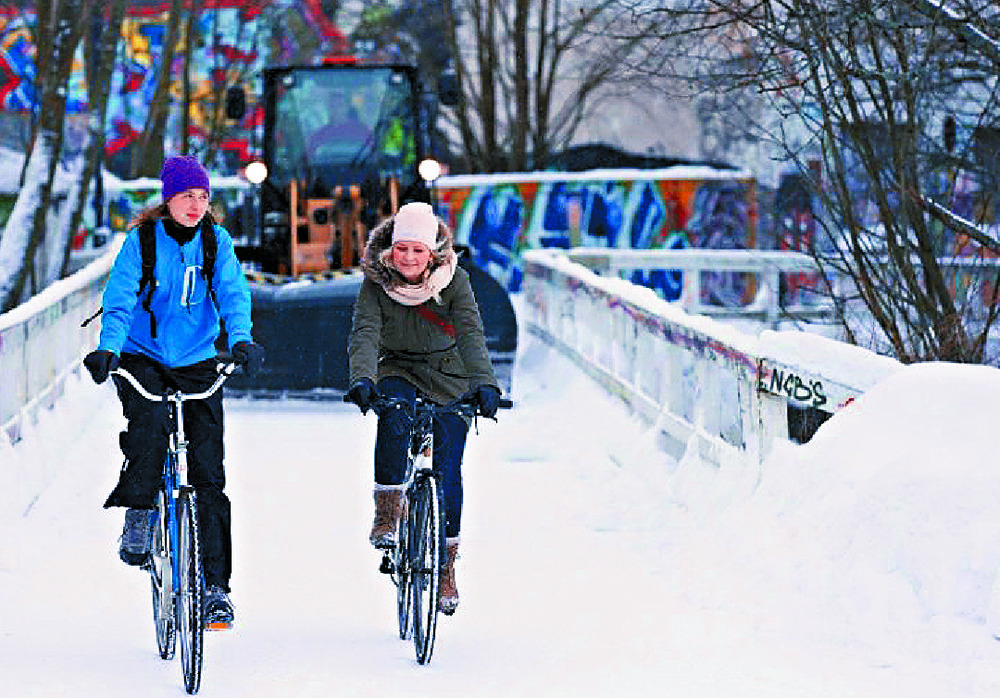
Winter temperatures that drop to minus-25 degrees Celsius do not stop cyclists in the Finnish city of Oulu.
The city which calls itself the "capital of winter cycling" has become a pin-up of sustainable transport, with most children still biking to school at minus-20 degrees.
"I cycle all year around. I don't even own a car," Ari Karjalainen said as he returned home after shopping for groceries.
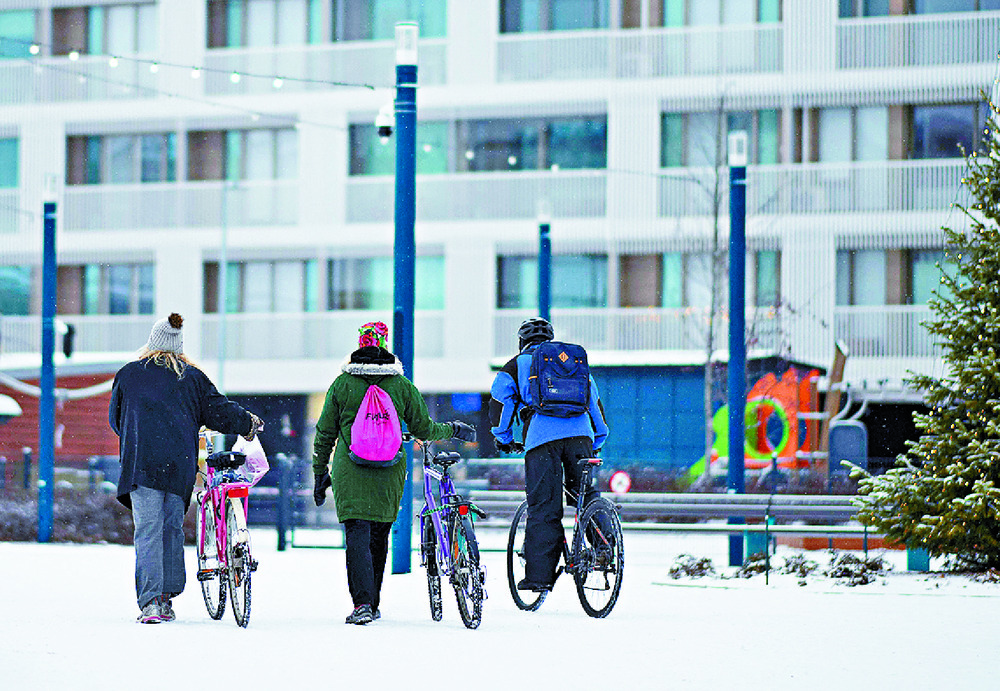
Despite the snow, bike racks are jam-packed in downtown Oulu, with bundled-up locals leaving vapor trails in their wake as they cycle around the city in the icy air.
"Just put on enough clothes," quipped 22-year-old Mimmi Kahkonen when asked how she manages to cycle in the frosty weather.
For many locals, even the term "winter cycling" sounds odd, as biking all year round is so common despite the city being only a little more than 160 kilometers south of the Arctic Circle.
Many cyclists use wider winter tires with better grip, sometimes with steel spikes, but some people bike with the same tires year-round.
"We are so used to the winter that we don't consider it much of a challenge," said Harri Vaarala, one of the city's traffic engineers.
While the seaside city averages five months of snow and below-zero temperatures, a fifth of all journeys within Oulu are done by bike.
Part of what makes this possible is the priority its main bike lanes get over roads for snow plows, said Vaarala. That means 1,000 of the 1,200 students at Metsokangas school bike to campus throughout the winter.
In recent years, the city has opened multiple new "cycling highways" - six-meter-wide roads paved in red asphalt - adding to the nearly 1,000km of existing bike lanes.
According to Vaarala, the city has made "a clear value-based decision" to support cycling, at times prioritizing cyclists over motorists.
"In some cases, we have moved motorways to fit in a good quality bike lane," he said.
When the city sought out contractors for its winter maintenance, one of the conditions was that the snowplow drivers as well as their supervisors had to cycle the routes they maintain. "It gives them a first-hand understanding of how different conditions affect cycling," Vaarala said.
The city also employs a number of "cycling agents" that report weekly on how well the bike lanes are maintained, which directly affects the contractors' bonuses.
To combat snow covering traffic signs, Oulu is experimenting with new technological solutions to make winter cycling safer. In some locations along bike lanes, traffic signs are illuminated on top of the snow using projectors.
Many students bike to school even when it's minus-20 degrees.