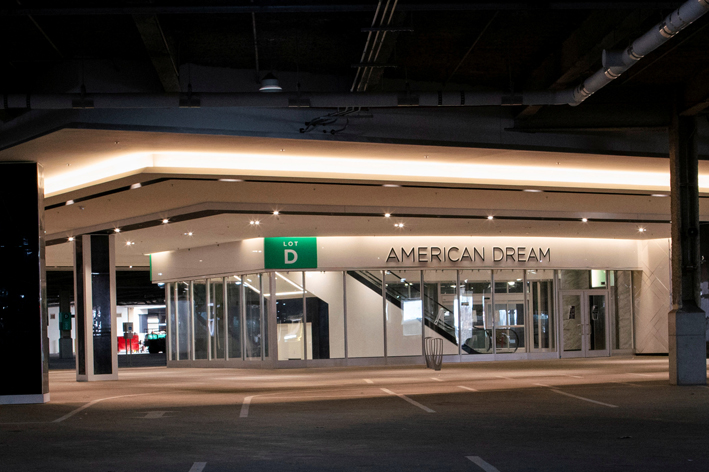
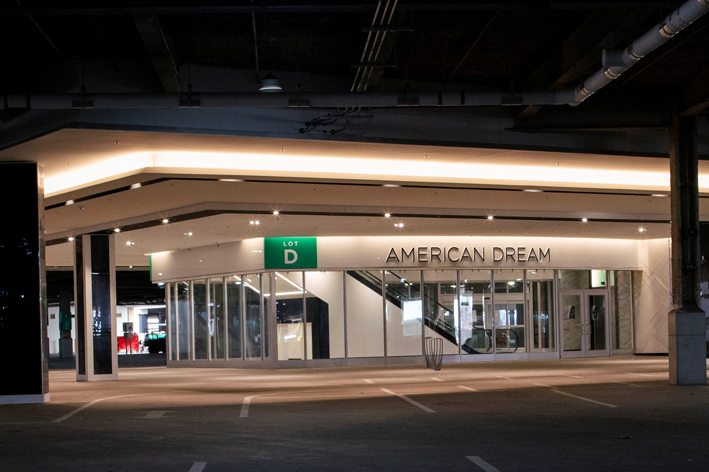
Since its groundbreaking nearly two decades ago, the megamall built in New Jersey's Meadowlands has done little except hemorrhage cash. Now, less than two years after its much-delayed opening, the complex known as American Dream is threatening to dash the lofty ambitions of yet another developer.
The Ghermezian family, which runs some of the biggest and most successful malls in north America, can't keep up with the bills on the shopping and entertainment megaplex, which helped drive its original developer to the brink of bankruptcy and was later seized by lenders from the team that came next.
Revenue from the stores has been so scarce amid the pandemic that the Ghermezians hired legal and financial advisors to help them ease the crushing US$3 billion (HK$23.4 billion) debt load, and perhaps retain some role in running the project, according to people with knowledge of the matter.
The family members aren't the only ones who stand to lose big money.
Lenders, including JPMorgan Chase, Goldman Sachs Group, Soros Fund Management and Starwood Property Trust, could face losses on US$1.7 billion in construction loans. About US$1.1 billion of municipal debt is also backing the project.
"It's been like watching a train wreck that goes on forever," said Neil Shapiro, a New York real estate attorney and senior partner at Herrick Feinstein. "There aren't a lot of projects that lose at least US$3 billion that we're still talking about as projects."
Outwardly, the three-million-square-foot shopping and entertainment complex on about 36 hectares in New Jersey's Meadowlands is almost fully opened, charging weekend crowds as much as US$115 for day passes to the DreamWorks Water Park and US$80 for its Big Snow indoor ski slope. Luxury stores, including Hermes, Tiffany & Co and Dolce & Gabbana, are coming in September.
But it all may be too little, too late for the Ghermezians and their company, Triple Five Group.
They've hired financial advisor Houlihan Lokey and the law firm of Weil Gotshal & Manges to represent them in restructuring talks. Last month, American Dream dipped into reserves to make a US$9.3 million municipal bond payment.
With the pandemic still making shoppers wary, sales at American Dream amounted to just US$139 million in the first two quarters of the year. At that pace, the mall is poised to fall far short of the nearly US$2 billion that a 2017 study projected it would bring in during its first year of operations.
That's jeopardizing the family's hold on their US$548 million equity stake. And they've already forfeited 49 percent stakes in two other megamalls - Mall of America outside Minneapolis and Canada's West Edmonton Mall - that they pledged as collateral to American Dream's lenders. Those holdings, valued at US$680 million in bond documents, were seized back last March when the loans defaulted.
Given their experience with giant retail-and-entertainment complexes, one possible outcome would see the Ghermezians surrender ownership of American Dream while continuing to operate it, said some of the people with knowledge of the situation.
After all, few others are qualified to run the behemoth enterprise, said Anjee Solanki, director of retail sales for Colliers, the real estate services company.
"It's a beast of a project," Solanki said.
A likely scenario is that the lenders grant another 18 to 24 months for sales to increase, if Triple Five kicks in hundreds of millions of dollars of its own cash or gets it from a new equity partner, said Shapiro.
The saga began in 1993 when Mills Corp was seeking to build a massive shopping, office and hotel complex on 80 hectares of wetlands just outside Manhattan. Environmental opposition killed that effort. But Mills' plans were revived a decade later when New Jersey green-lighted a proposal to redevelop another nearby piece of land - the vast parking lot surrounding Continental Airlines Arena.
Mills, which called the project Xanadu, broke ground in 2004; two years later, it was teetering near bankruptcy. Colony Capital, led by Trump ally Tom Barrack, took control in 2007 and fared little better: lenders seized the property in 2010.
By the time Triple Five took over a year later, the project had already consumed US$2 billion.
The Ghermezians, who immigrated to Canada from Iran in 1960, came with their vision of a tourist hub that would lure 40 million visitors a year.
Never mind that malls were steadily losing shoppers to online rivals. Their plan featured a year-round ski slope and an indoor water park with slides, wave pools and tube rides. They added a trampoline park, go-karts and virtual-reality entertainment.
"All the attractions are positioned to push traffic through retail, which is what we're experts at doing," president Don Ghermezian said last July.
Despite the setbacks and Covid disruptions, the Ghermezians are getting tenants. About 100 retailers are open and more than 100 others are coming this year, according to Nuveen, which said that American Dream "appears to be gaining momentum."
State Senate majority leader Loretta Weinberg, who has long expressed concerns about the public investment in the project, said the Ghermezians "seem to have done everything they can against all kinds of odds." This included replacing the exterior of Xanadu, which was widely ridiculed as an eyesore.
"It's not nearly as assaulting on the eyes as the prior one," Weinberg acknowledged. "It's a much better view from the turnpike."