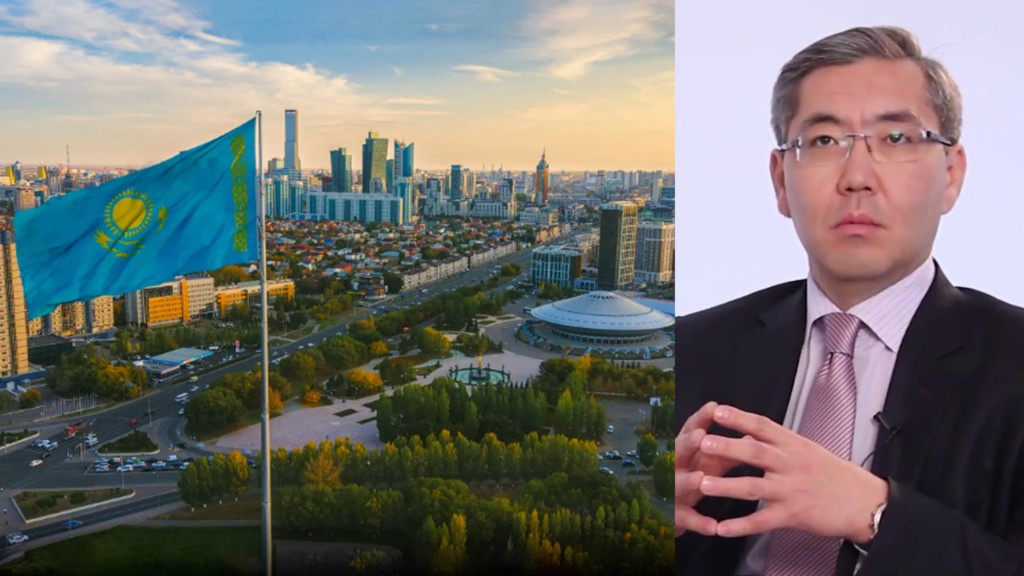
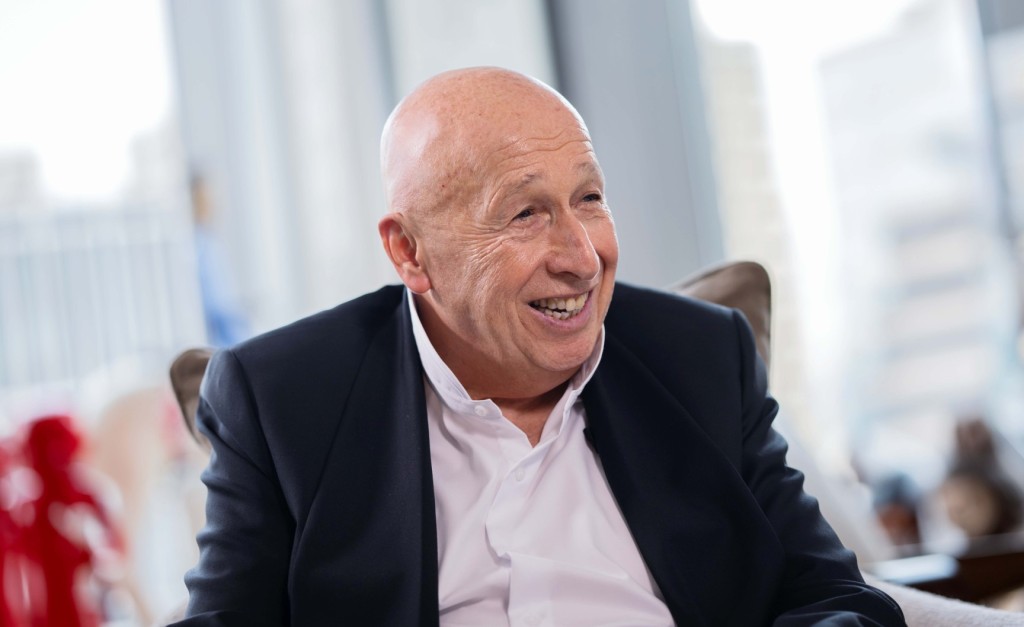
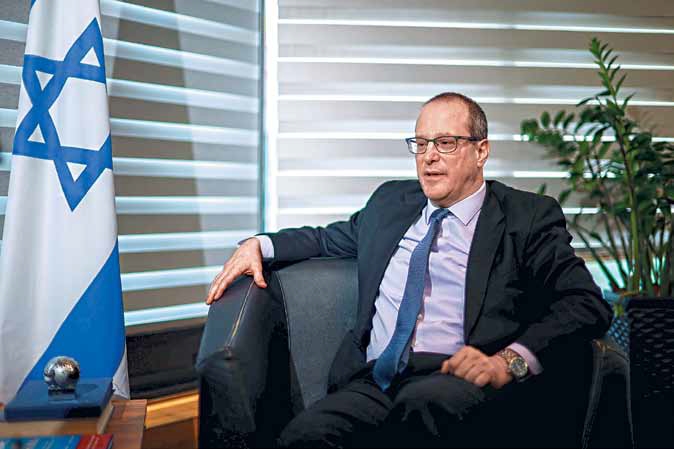
Aidarkhan Kussainov, a member of key Kazakh parliamentary and presidential strategic councils and a former National Bank advisor, believes Hong Kong can play a transformative role in privatizing Kazakhstan’s state-heavy economy – much as it did for mainland China decades ago.
The pitch comes as Kazakhstan wrestles with a paradox: Surging commodity prices have swelled state coffers but also fueled persistent double-digit inflation and an 18 percent base rate. Inflation is forecast to ease only gradually, to 10.4 percent in 2026 from over 11 percent in 2025. Government spending partly contributes to this inflation. The Kazakh tenge also strengthened roughly 13.6 percent against the US dollar in the six months through late April 2026.
“The world is talking about the Middle East. Hong Kong can be an alternative,” the independent economist told The Standard, noting that wealthy Kazakh capital has traditionally flowed to the UAE.
“We do not really need Hong Kong’s money. We need a place where we can raise money with expertise and specialists.”
The surge of commodities including gold, oil, and natural gas has buoyed Kazakhstan’s economy and swelled the National Fund.
But the bounty has a downside. The Asian Development Bank notes growth hit 6.5 percent in 2025, “supported by continued state-led investment.” Kussainov estimates the public sector accounts for 40 to 45 percent of total investment. Kazakhstan has identified 475 entities for privatization by 2030, with a pipeline valuation exceeding US$42 billion (HK$327.6 billion).
“There is no strict relation between commodity prices and our spending … The danger is that we spend too much from the National Fund,” Kussainov said, stressing the importance of fiscal discipline and the risks of commodity price volatility.
The long-term remedy lies in government divestment, freeing up funds to be channeled into economic diversification. The government is targeting US$400 billion in investment by 2029, with US$150 billion foreign-direct-investment, aiming to lift the investment-to-GDP ratio from 14 percent to 23 percent. But a state that dominates the economy cannot simply dictate private-sector innovation – hence the privatization drive and the Hong Kong proposition.
“We have a privatization program. But if you decrease government participation, you lose leverage in forcing investment,” Kussainov explained. Hong Kong’s experience listing China’s state-owned enterprises in past decades offers a tested template: disciplined institutional investors, deep capital pools, and a gradual reduction of state stakes.
Jiaxin International Resources became the first company dually listed on the HKEX and AIX.
China and Russia each account for roughly 30 percent of Kazakhstan’s imports.
The Development Bank of Kazakhstan issued a 2 billion yuan offshore dim sum bond in the SAR.
“Hong Kong, as the world’s premier offshore yuan hub, is a natural venue for such deals. Kazakhstan’s money wants a place to go besides the Middle East and Hong Kong can be that destination,” said Kussainov.
In the works: largest ski resort, casino zones, airports
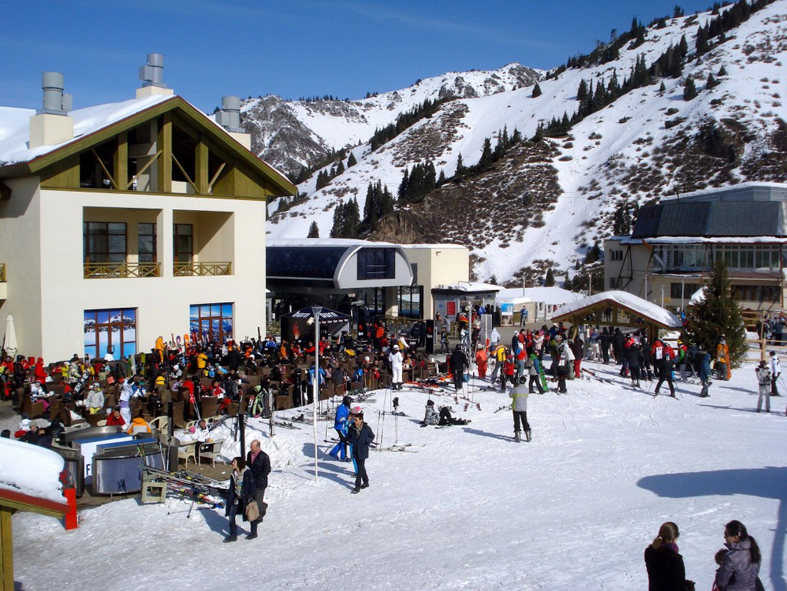
Beyond financial markets, Kazakhstan is making a bold play to diversify its resource-heavy economy by turning its natural landscapes into a major tourism destination, with plans that include building what is touted to be the largest ski resort in Asia and establishing new casino hubs exclusively for foreigners.
“We are planning to build the biggest skiing resort,” said Aidarkhan Kussainov, describing it as a grand scheme that surpasses regional competitors. “It’s a big project … The intention is very ambitious. We will build it with some foreign investors who come.”
The project reflects a broader national priority to develop the tourism sector, which the government sees as a high-potential, non-resource industry. Alongside the mountains, Kazakhstan also wants to attract private investment into hotels and infrastructure.
A ski resort in Kazakhstan.
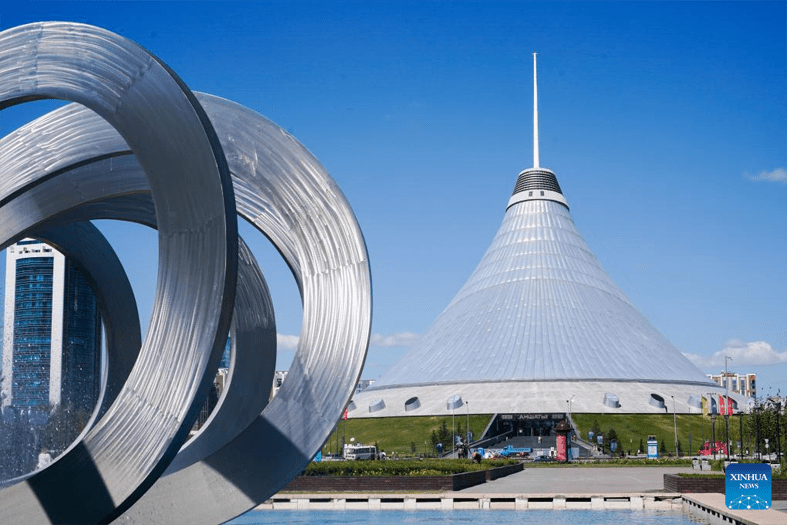
Khan Shatyr Entertainment Center
In a parallel and more controversial move to attract foreign capital, the government has designated several new special casino zones. Kussainov noted that while Kazakhstan already has two casino zones open to its citizens, the new ones are “only for foreigners.” These zones are located in scenic areas, including near lakes and close to the former capital city Almaty and the border with China’s Xinjiang province.
The new casino zones are seen as a magnet for investment from operators and developers, with Hong Kong’s deep experience in building Macau’s gaming industry positioned as a logical source of expertise.
Kazakhstan is also aggressively expanding its airport infrastructure to become a Eurasian aviation hub, with plans to build four new airports and modernize five others by 2028. Key 2026 projects include new airports in Katon-Karagai, Zaysan, and Kenderli, while Almaty International Airport is undergoing a massive multiphase expansion to increase capacity to 40 million passengers by 2050.
Wait for political dust to settle: Build ties first, decide later
Foreign investors should spend the coming months building ties in Kazakhstan but hold off on major decisions until the political dust settles later this year, advises Aidarkhan Kussainov.
“As of today, we do have some uncertainties,” he said, pointing to a political reform package that will reshape governance by autumn. The country is moving to a single-chamber parliament and recreating the office of vice president, with elections expected by September.
“This is not about instability,” Kussainov stressed, noting the banking system is “very stable” and the macro-political environment secure. “But after these reforms, there will be some changes in economic approaches – it could affect certain projects.”