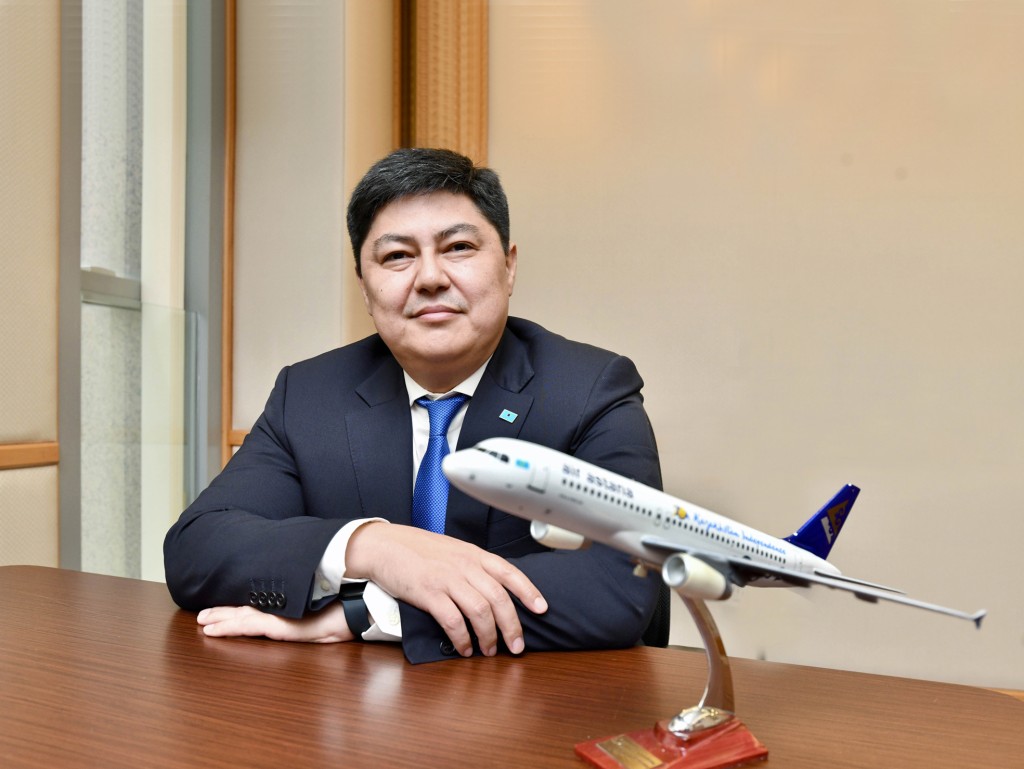
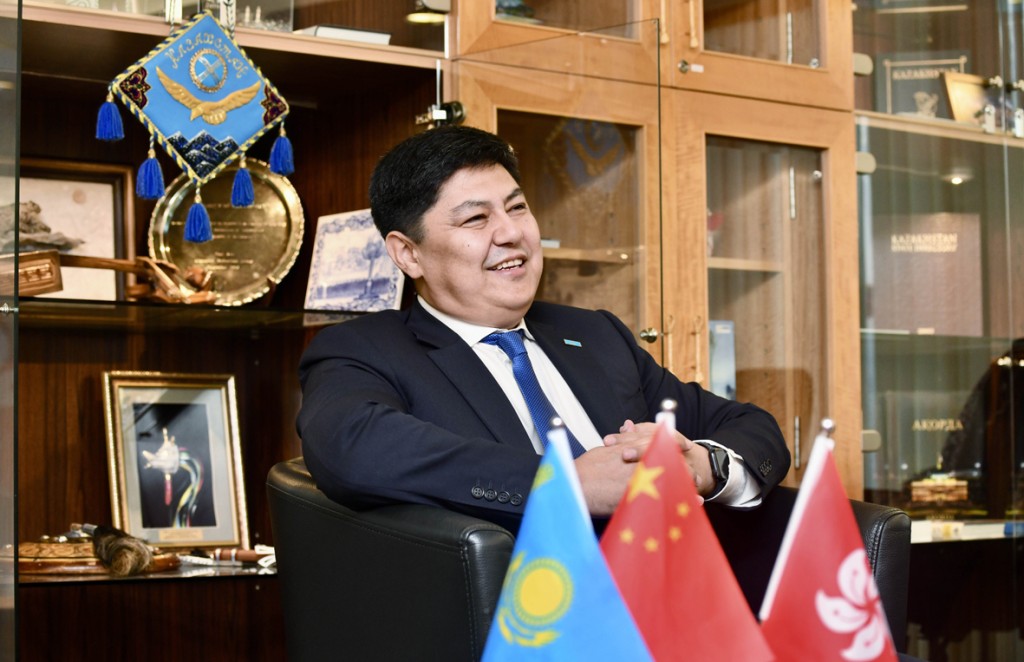
Imagine walking into a supermarket in Kazakhstan, picking up a loaf of bread and a carton of milk, and paying without cash, a credit card, or even a phone – just by placing your hand under a scanner. This is not a scene from the future; it is everyday life in the country, according to the Consul-General of Kazakhstan in Hong Kong, Bauyrzhan Dosmanbetov.
“No need for internet, no need for phone … You just register your hand once, that’s all,” he said in an exclusive interview with The Standard, adding that this seamless biometric payment method is already supported by 90 percent of Kazakh shops.
Powered by the local fintech giant Kaspi.kz, the service is also accessible to tourists. After obtaining an ID number from the consulate in a one-day process, visitors can complete a biometric scan at a local bank to open an account in just 40 seconds.
The evolution of Kaspi.kz began when founder Vyacheslav Kim, the wealthiest man in Kazakhstan, acquired the former Caspian Bank in 2002. Alongside chief executive and co-founder Mikhail Lomtadze, a former private equity investor, they transformed the traditional lender into a Nasdaq-listed tech powerhouse covering retail banking, e-commerce and payments.
The company currently serves over 14 million active users, fundamentally digitalizing the nation’s consumer landscape.
Dosmanbetov shares the ‘pay by palm’ method in Kazakhstan.
Hand-held payments are just the tip of the iceberg for Kazakhstan’s digital transformation. Dosmanbetov shared that 80 percent of government services are now fully electronic, allowing residents to pay taxes in a single click and board domestic flights without a physical passport.
Declaring 2026 the “Year of Digitalization and Artificial Intelligence,” the country aims to become a premier digital hub. With a newly established Ministry of AI and Digital Development, smart solutions are already being integrated across sectors from internal affairs to agriculture.
Building on this digital ease, Kazakhstan is expanding its ambitions to cover global infrastructure with the creation of the Data Center Valley. Located in the northern town of Ekibastuz, the project is set to become the largest data center campus in Central Asia, capable of scaling up to one gigawatt of computing power.
Dosmanbetov noted that the region’s naturally cold climate provides an ideal environment for cooling massive server arrays. More importantly, the valley sits adjacent to the country’s biggest coal-fired power plants, allowing it to offer energy at the remarkably low rate of just 2.5 US cents (19.5 HK cents) per kilowatt.
The project is expected to attract around US$30 billion in investments, and negotiations are underway with global tech giants such as Microsoft and OpenAI.
The major uranium holder is also building two nuclear plants to further boost its energy capacity with Russia’s Rosatom and China National Nuclear Corporation as leading contractors.
He added that Kazakhstan is laying a high-speed undersea fiber-optic cable across the Caspian Sea, which is expected to be completed next year. By linking with Azerbaijan, Turkey, and wider Europe, the project aims to boost digital connectivity and data transit across Eurasia.
Kazakhstan unveils AI-powered Alatau City alongside Central Asia’s largest greenhouse project
Beyond its nationwide digital push, Kazakhstan is forging ahead with landmark urban and agricultural developments, led by the upcoming Alatau City and the region’s biggest greenhouse project, said Dosmanbetov.
Alatau City, an 88,000-hectare AI-powered metropolis, is being built about 50 kilometres north of the former capital Almaty. Planned as a major international hub for Central Asia, it is projected to house around two million residents by 2050.
The city will be divided into four functional zones: a central business and financial district, a knowledge and innovation quarter, an industrial and logistics hub, and a leisure and tourism area.
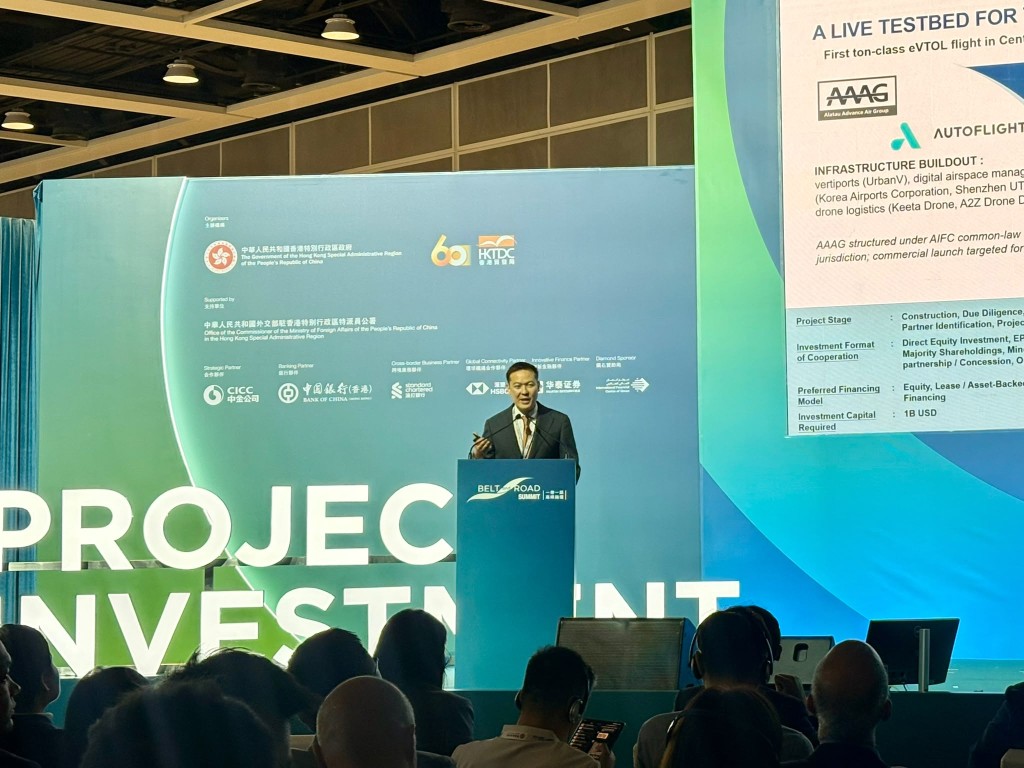
Dosmanbetov noted that the country has signed agreements with Joby Aviation in the United States and AutoFlight in China to launch air taxi services in the city, slashing the transit time between Alatau and Almaty to just 15 minutes.
“In the middle of June, our Deputy Prime Minister will arrive in Hong Kong to promote this city. He’s looking for some investment for some fields in this city,” he revealed.
He added that the country is developing Central Asia’s largest greenhouse in the southern region, constructed by a mainland Chinese firm. Set for completion this year, the facility leverages the nation’s gas and water resources to produce tomatoes, cucumbers, and greens for both domestic and global markets.
By utilizing advanced automation, the greenhouse reduces labor intensity and optimizes output, significantly boosting Kazakhstan’s agricultural export capacity.
Boosted air links, visa upgrades to turbocharge Hong Kong-Kazakhstan tourism, cultural and commercial ties
Cultural exchange, tourism, and transport between Kazakhstan and Hong Kong are deepening rapidly through closer people-to-people and official connections, according to Dosmanbetov.
In the cultural sphere, Kazakh music and film are gaining significant international recognition. In 2021, DJ and producer Imanbek Zeikenov made history as the first Kazakh artist to win a Grammy for Best Remixed Recording with his hit Roses, while the boy band Ninety One, pioneers of Kazakh Q-pop, has found notable popularity in China.
Furthermore, a Kazakh music film is set to feature at the Hong Kong ASEAN Film Festival, with members of the cast scheduled to visit the city for the event.
Tourism is also gaining momentum, as Kazakhstan becomes increasingly famous for hiking and horse riding. The country’s dramatic landscapes have reached global audiences through a prominent nature blogger who has become one of the world’s most-followed content creators.
Youth exchanges are growing, with approximately 1,000 Kazakh residents now based in Hong Kong. During the recent Easter holidays, 90 local secondary school students completed a cultural tour of Kazakhstan.
Dumanbetov revealed that negotiations are underway to resume direct flights between Hong Kong and Kazakhstan, with a focus on expanding cargo operations. Official proposals have been sent to a carrier to establish cargo routes to Europe via Kazakhstan.
While Air Astana currently lacks the aircraft capacity for passenger service to Hong Kong, officials are reviewing a subsidy request from an airline to launch new routes.
Additionally, Kazakhstan is finalizing an agreement to extend visa-free travel for Hong Kong visitors from 14 to 30 days.