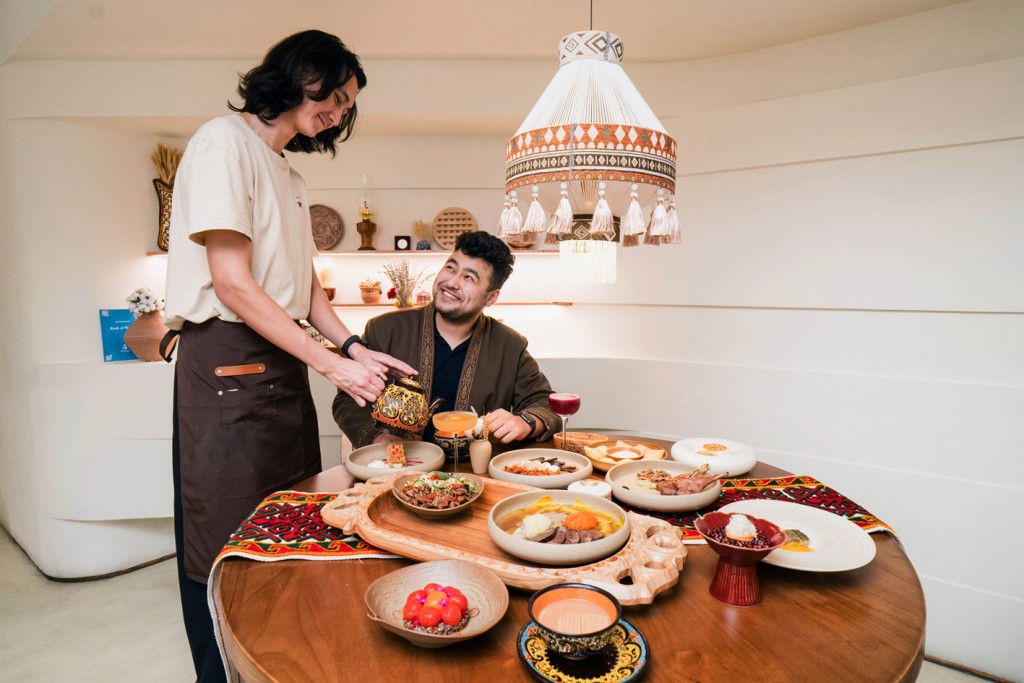
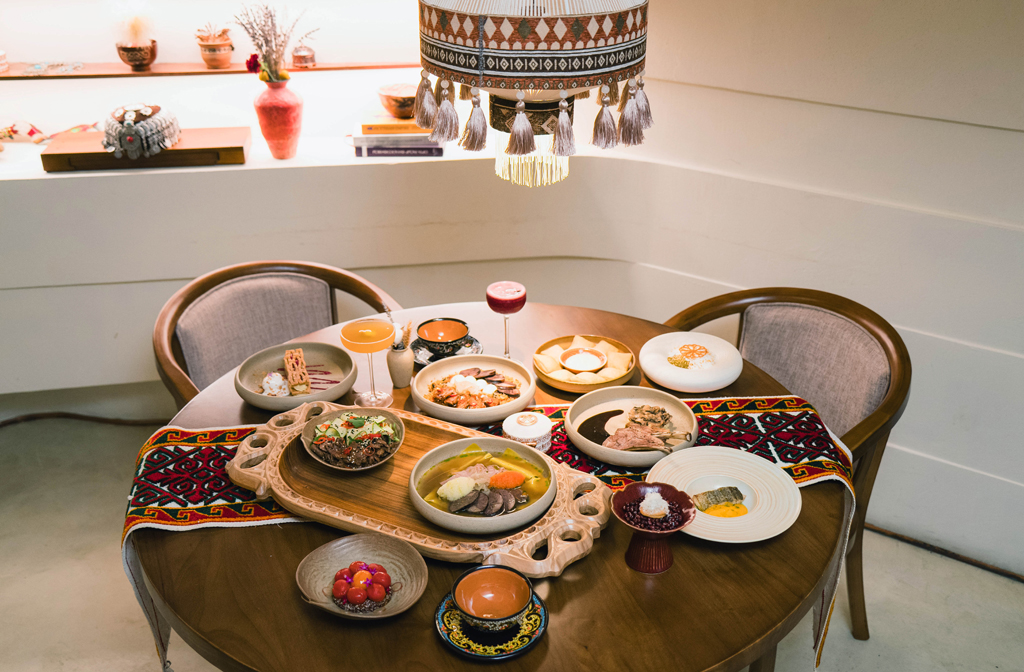
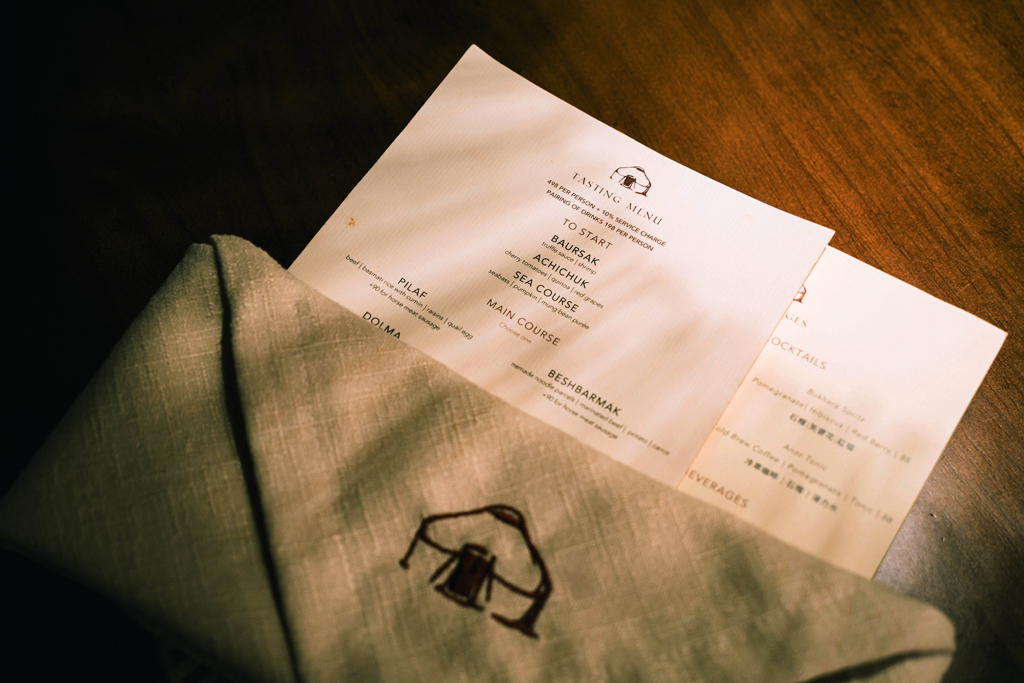
Inside the beige interiors of Yurt, Hong Kong’s first and only Central Asian restaurant, diners are immersed in a rich tapestry of Central Asian culture. As if gathered in nomadic tents also known as yurts, they share warm conversations while tasting flavors from afar.
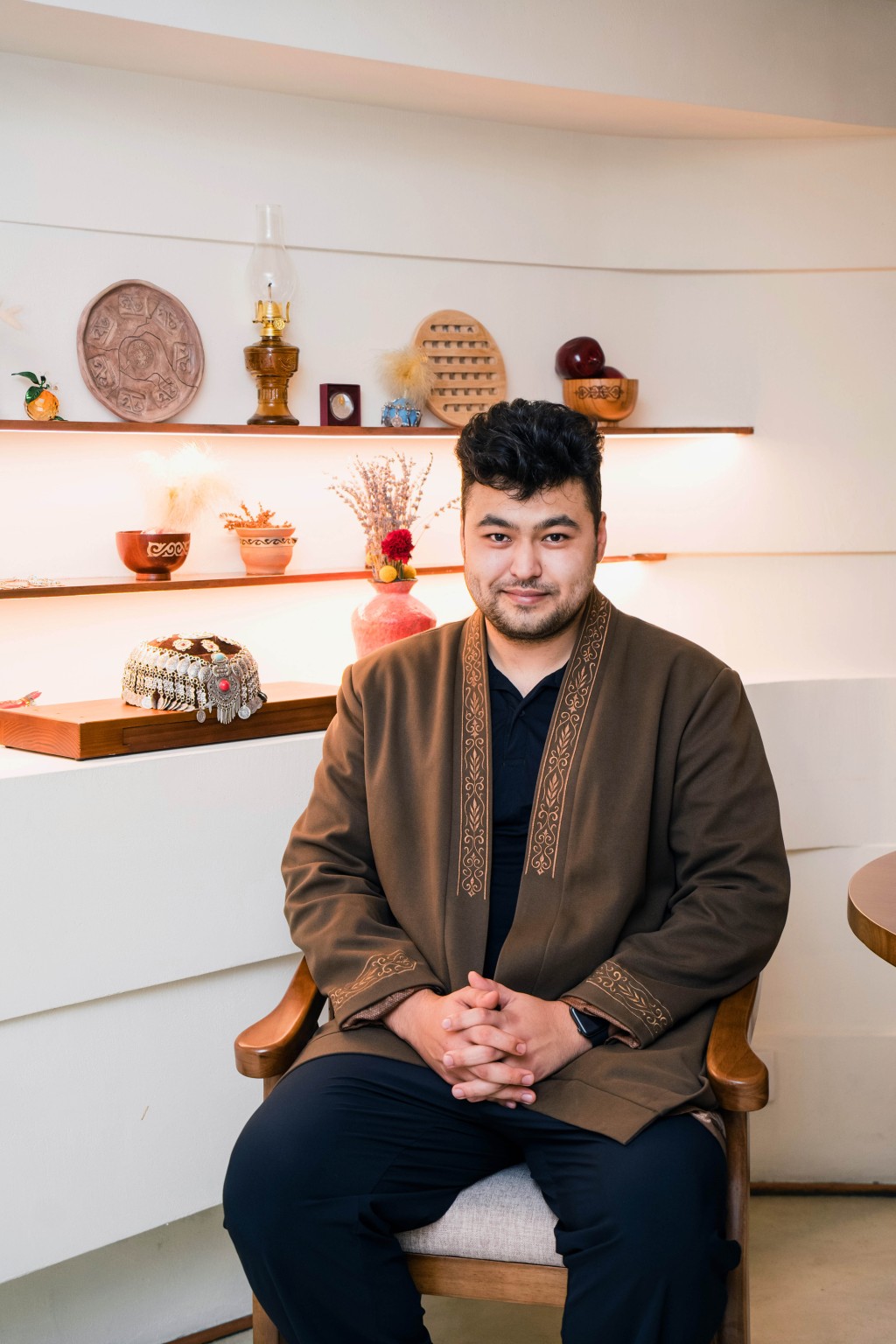
Yurts serve not only as homes for nomads but also as venues for festivals and gatherings, making them central to Kazakh life. At the restaurant in Central, founder Ali Nuraly preserves this spirit, serving hearty, halal dishes from home that are meant to be shared and celebrated.
Ali Nuraly
Muslims make up a majority of Central Asia’s population, Nuraly noted, a fact reflected in the menu alongside a range of non-alcoholic drinks.
The cuisine also features ingredients such as horsemeat, which may be unfamiliar to Hong Kong diners. Surprisingly, it has become a bestseller at Yurt, with Nuraly estimating that nearly 70 percent of local customers are curious to try it. Unlike the Japanese way of preparing horsemeat as sashimi, Central Asians do it differently.
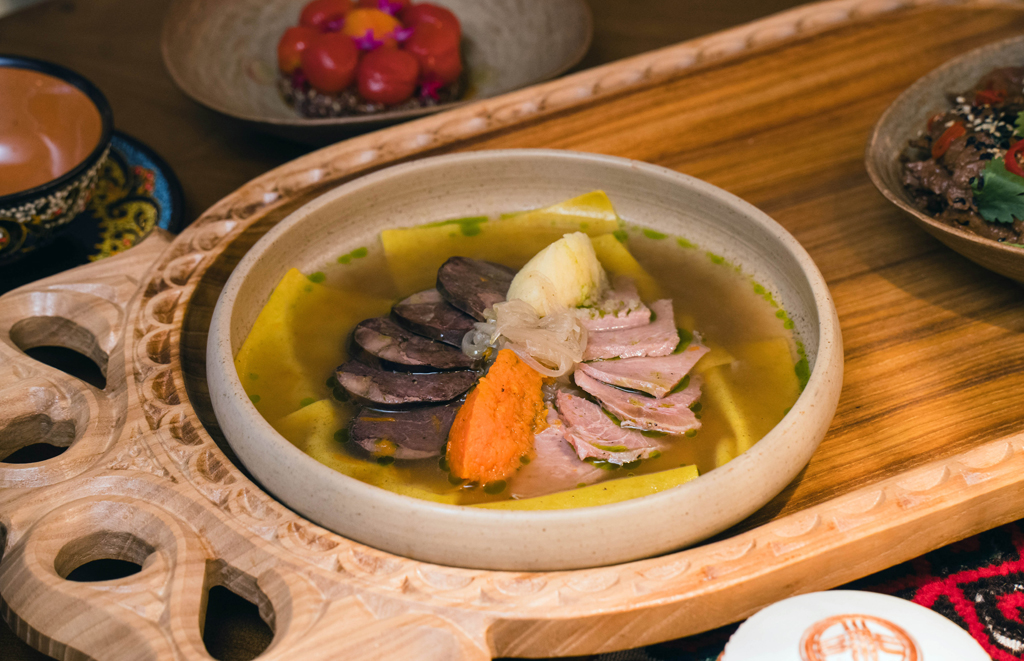
Nuraly places the national dish, Kazakh beshbarmak, on the table. Beshbarmak – meaning “five fingers” in Turkic languages and referring to the tradition of eating with bare hands – is to him a celebratory meal. Beneath cuts of beef and horsemeat sausage lie flat noodles in broth. The table quickly fills with other staples such as fried dough known as baursak. When guests are invited to dine with a Kazakh host, Nuraly said, it is often a sign of a feast to come.
The Yurt restaurant brings Central Asian cuisine to Hong Kong, including beshbarmak.
The beshbarmak dish is also dear to Nuraly. While studying in Istanbul during university, his mother would cook the dish whenever he returned home. “It’s giving me this warm feeling that I’m back at home, and now I can have it almost every day.”
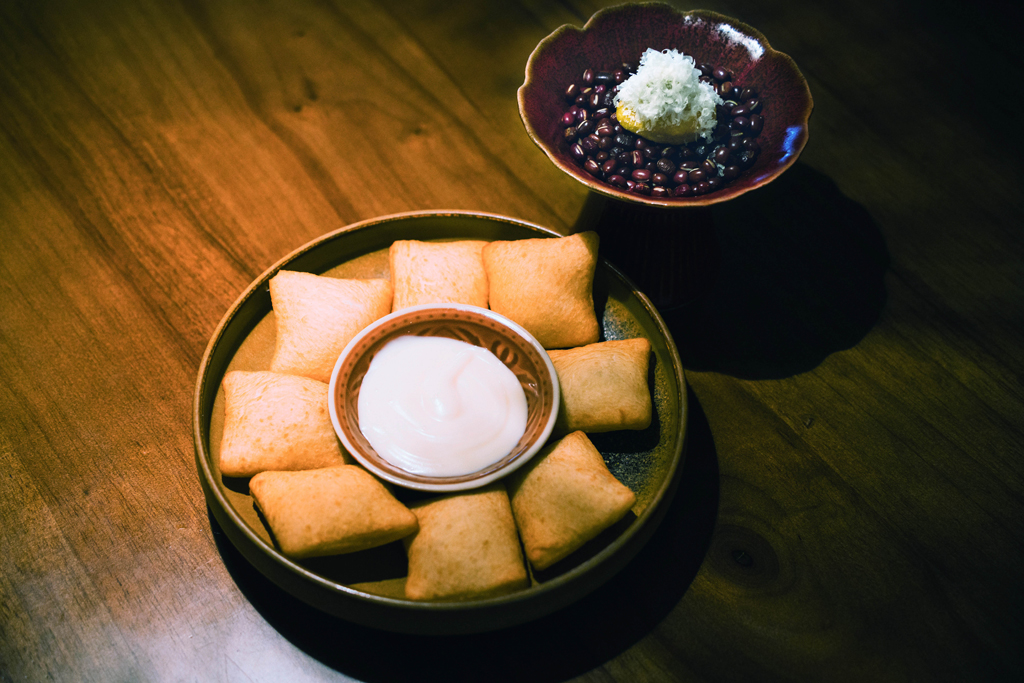
For baursak, there is another story to it – one rooted in something sacred across Central Asia. Drawing on the region’s nomadic vast steppe culture, where encounters with others are unpredictable, there is a belief that a guest is sent by God and should not be let go without at least a bite of bread.
The Yurt restaurant brings Central Asian cuisine to Hong Kong, including baursak.
Throwing away bread is considered taboo. “You cannot do anything bad to the bread,” Nuraly said. Shaped by its history as a labor-intensive staple and former trade good – as well as the belief that wasting food is a sin – bread is treated with great respect.
Not all Central Asian cuisine is the same, however. Pilaf, for example – a braised rice dish from Uzbekistan and Tajikistan made with beef, carrots, chickpeas, and spices – is widely cherished across the region, including by Nuraly. In May, during a visit by the Uzbek prime minister to Hong Kong, Nuraly prepared pilaf in an iron cauldron known as a kazan and served it to the official.
Beyond Kazakhstan, Uzbekistan, and Tajikistan, Central Asia also includes Kyrgyzstan and Turkmenistan, where culinary influences draw from Persia, the Middle East, Europe, and China. Nuraly believes there are more distinctive flavors ready to be explored. “I’m more focused on Kazakhstan, but Central Asia is not only about Kazakhstan. We’re trying to represent all other Central Asian countries,” he noted.
Mocktails at Yurt also carry stories – from Almaty, the former capital of Kazakhstan known for its apples, to the famous pomegranates of the ancient city of Bukhara.
To learn more about his culture, Nuraly hires Central Asian students in Hong Kong, who explain the traditions behind each dish and bring Kazakh hospitality to life.
How a Kazakh brings home goods to Hong Kong
Looks like an orange yet sour to the bite – Ali Nuraly holds up an Uzbek lemon, describing it as “sweeter than the usual lemon.”
Originally from Kazakhstan, sourcing distinctive ingredients from Central Asia – including this uniquely grown citrus – has become the 23-year-old’s specialty. He studied trade and management in Turkey and later completed a master’s degree in international business in Paris. Nuraly then worked briefly in Almaty and Abu Dhabi for his family business, exporting agricultural products to Gulf countries.
Having then traveled to Singapore, Kuala Lumpur, and Guangdong, he came to Hong Kong two years ago to place business roots in the city, a “gateway,” he said, to the mainland and wider Asia-Pacific markets, and opened Yurt last December.
“I felt like Hong Kong is the city where I want to live,” he added, recalling time spent in Sham Tseng beaches and his appreciation for historic sites such as the Western Market and the University of Hong Kong. He first learnt about the city through his father, who previously had an office here and encouraged him to visit.
But Nuraly soon realized, as he was distributing homegrown goods, that Central Asian ingredients were largely unfamiliar to many in Hong Kong. He wanted to change this perception by stepping into the food and beverage industry, saying, “The first step was opening our own restaurant to show that this region (Central Asia) has a good source of products and culinary traditions.”
Despite having no prior experience in opening a restaurant, Nuraly turned to his family business in southern Kazakhstan, along the Silk Road, to source ingredients. “We have apple gardens, we have our own beehives,” he said. “We [import] horse meat directly from my family farm…slowly, we increase the amount of products we bring in here from Central Asia.”
He also noted the impact of China’s Belt and Road initiative. “I can see with my eyes how many containers go in daily through this [route],” Nuraly exclaimed. “Every year, Hong Kong [holds] some forums and [takes] some actions to promote this project. And quite a big part of this project is going through Kazakhstan.”
With support from the local community and the Hong Kong Tourism Board, he believes the city is a great destination to grow his business. However, he had faced a fair share of challenges, noting “coming to a new city where you don’t know anyone, you don’t know the rules, [and] how the market works.”
He also noticed that Central Asian communities remain underrepresented in Hong Kong, though more restaurants centered around Central Asian cuisine are emerging in this part of the world, including Sandyq in Beijing, which opened in late 2025.
There have also been more Chinese tourists, including Hongkongers, willing to visit Nuraly’s home. Passenger traffic from China to Central Asia grew by 59.3 percent in 2025 compared to the previous year, according to the Civil Aviation Administration of China.
At Yurt, Nuraly also hosts art painting and bouquet-making workshops, offering locals another way to experience Central Asian culture. “Flowers are our language of showing our emotions,” he said, recalling how flower shops line the street corners in Kazakhstan. The modern tulip traces its origins back to Kazakhstan, where more than 30 wild species still grow naturally across the steppe.