In the digital age where information is summoned at the click of a button, some consider libraries – seen as repositories of physical books – obsolete. But if "libraries" are redefined, one may come to a very different view.
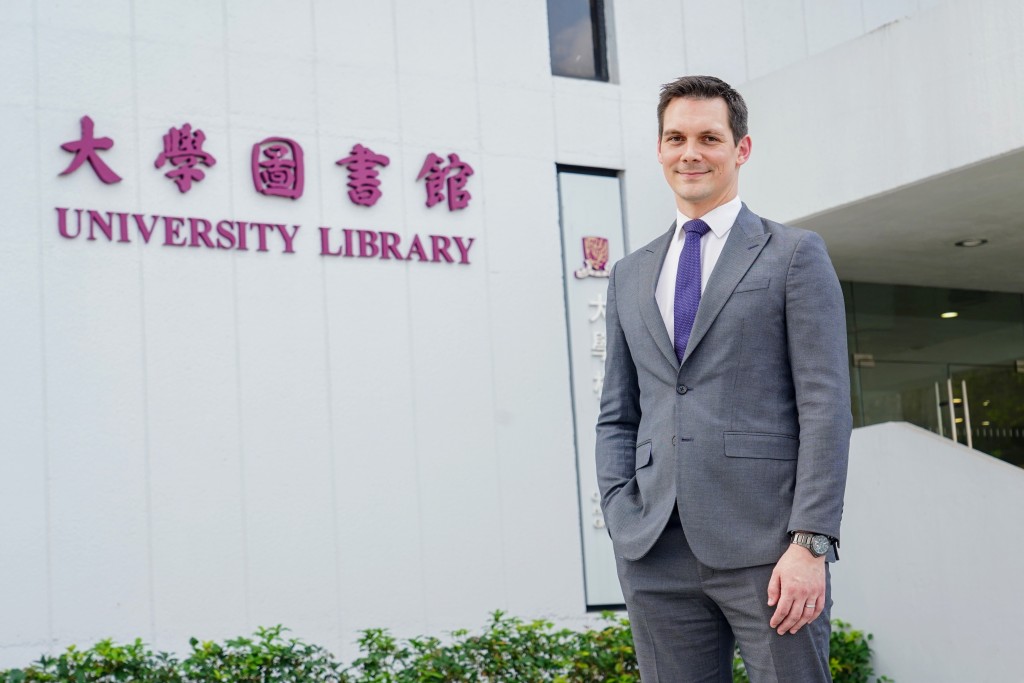
Reimagining the library lies at the heart of the work of Benjamin Meunier, university librarian at the Chinese University. Having overseen operations at the University College London Library in the United Kingdom for over 16 years, Meunier brings extensive experience in the strategic development of libraries to Hong Kong, where he also serves as vice chair of the Guangdong-Hong Kong-Macau University Libraries Alliance and chair of the Pacific Rim Research Libraries Alliance Steering Committee.
"The number of loans of print books has been steadily declining for the last 20 years," Meunier observed at CUHK. "The footfall in libraries, however, has been steadily increasing. So even though people are not coming into the library to borrow books as much as they used to, people are still coming into the library. That's an interesting concept, because many people think libraries are doomed as people don't read books anymore."
Why do people go to libraries if not to borrow books? A case study of UCL Library may edge us closer to the answer. "In 2019, we opened the UCL Student Centre, which is a six-story building with a thousand study spaces and zero physical books," Meunier recounted.
"Two days after the opening, it was full – completely full."
For Meunier, the key takeaway is this: "Learners crave places that are inspiring, and where you can feel you're a member of a community. Libraries have the ability to provide inspiring environments open to everyone, regardless of background. When people feel they're part of a community of learners, even if they're studying by themselves, they feel part of a wider endeavor."
More than mere storage spaces, modern libraries can shoulder greater missions of fostering community and inspiration. Strides have been made at CUHK Library, of which Meunier provided The Standard an exclusive tour.
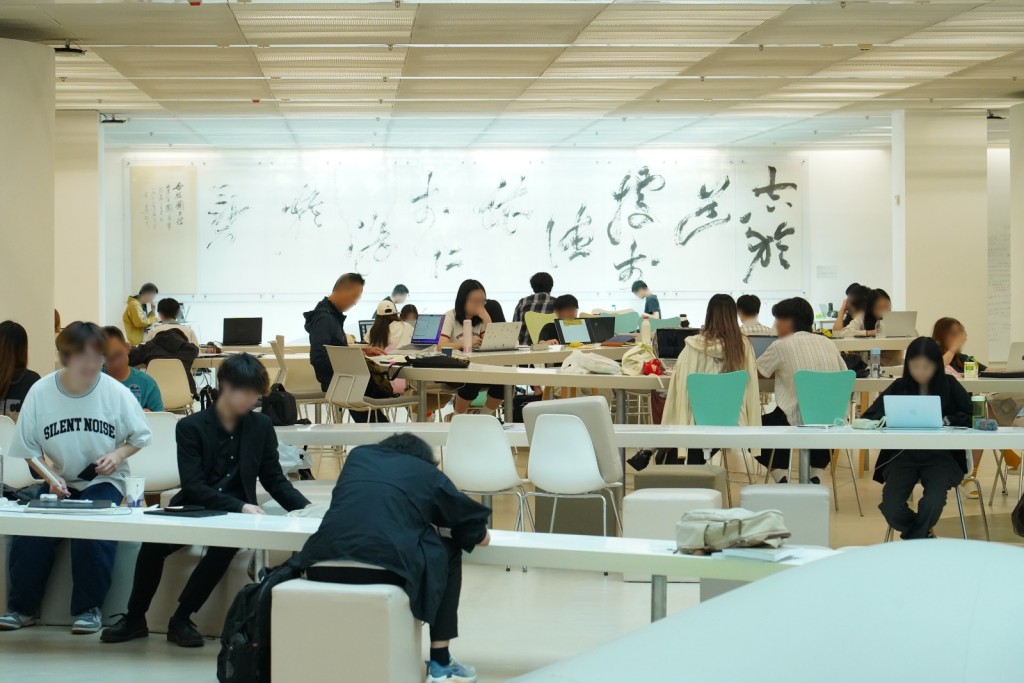
The Learning Garden at CUHK Library offers diverse study and social spaces for students.
On the lower ground floor is a Learning Garden, a sprawling area of diverse study and lounge spaces where students were seen studying, conversing or resting in their own ways. "It's open 24 hours, so students can get food and drinks and relax here," said Meunier.
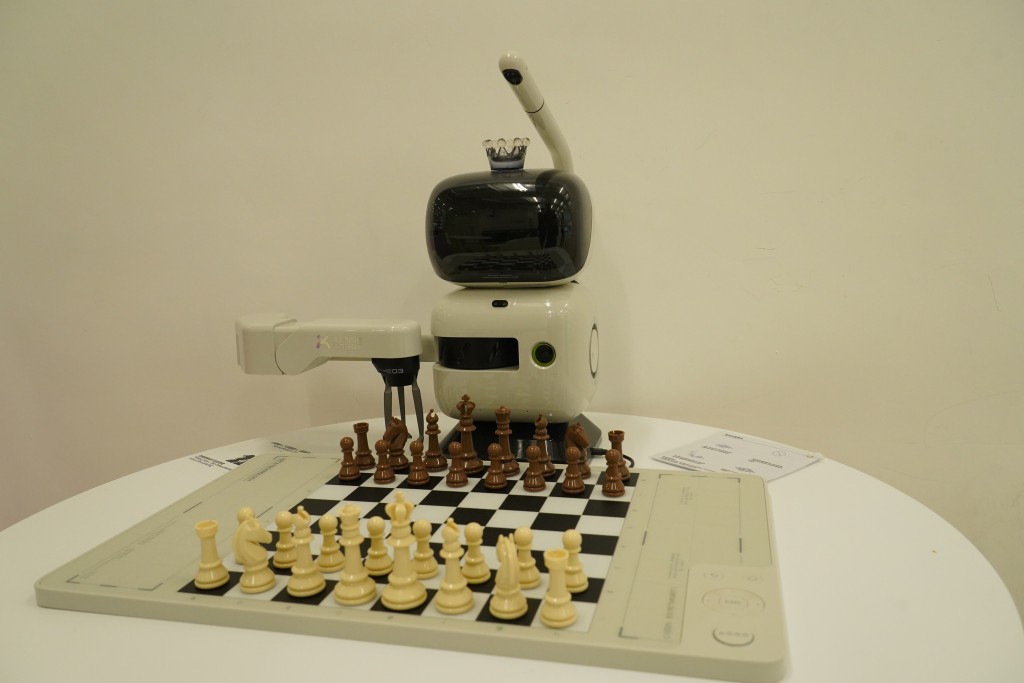
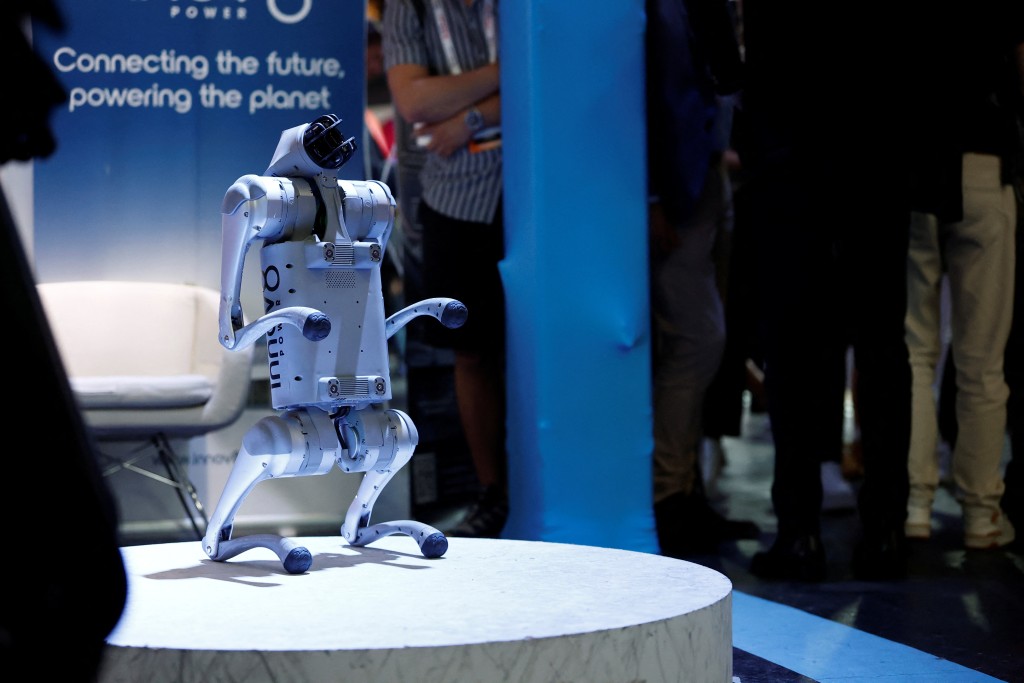
A chess machine was perched at one corner, which Meunier explained was developed by SenseTime, an AI company spun out from CUHK. "Students can play chess against a robot, and crank it up to be as hard as they would [like]."
SenseTime, an AI company spun out from CUHK, developed this chess machine now perched at the university's library.
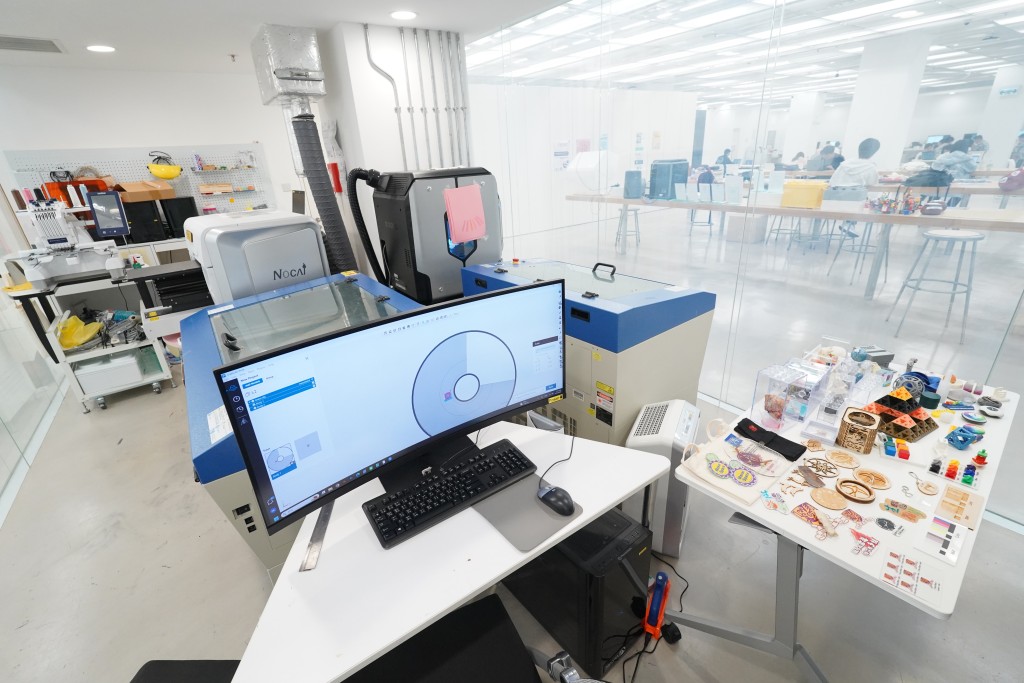
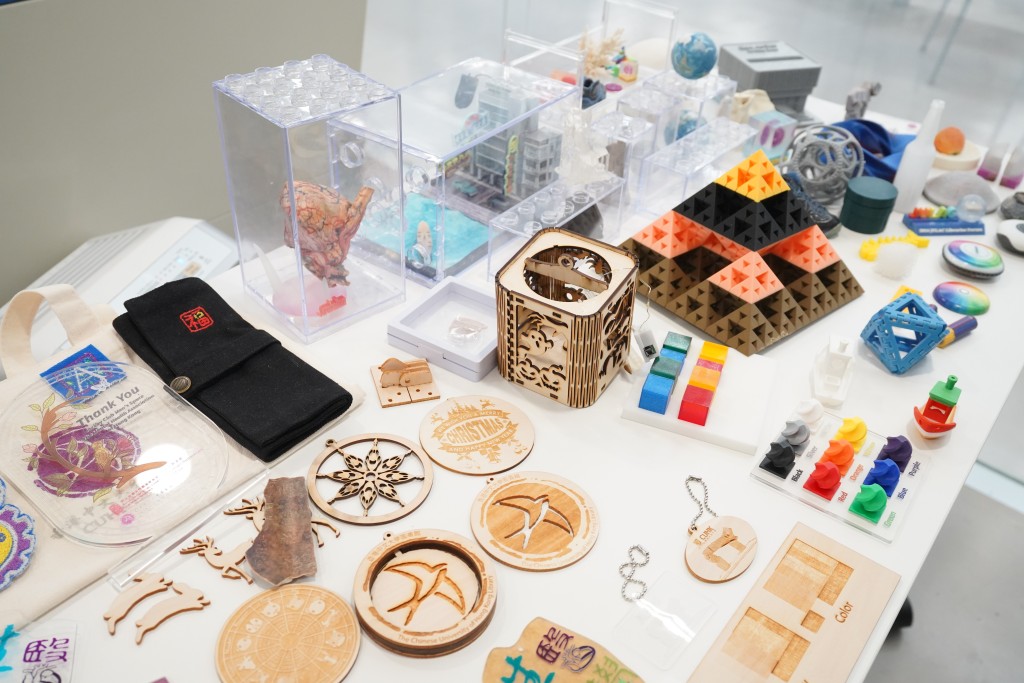
Within the Learning Garden, a Makerspace offers students hands-on access to an array of innovative technologies, spanning from film production, augmented reality and virtual reality to 3D printing, laser cutting, and more.
Carol Kong, creative learning librarian at CUHK, said workshops on how to use the facilities are held regularly, and showed us the creative works students made with them.
Makerspace bring tech facilities such as for 3D printing and laser cutting within students' reach.
Creative works made by students using the facilities in Makerspace
"It really transforms students' ability to take an idea and turn it into something real," said Meunier, taking us back to the capacity of libraries to inspire.
In this regard, Meunier feels galvanized by the advanced development of libraries in China. Last April, he coordinated a visit by a delegation of the International Federation of Library Associations and Institutions to China, dropping by the Beijing Library – winner of the IFLA/Baker & Taylor Public Library of the Year Award 2024 – and other notable libraries in Shanghai and nearby areas.
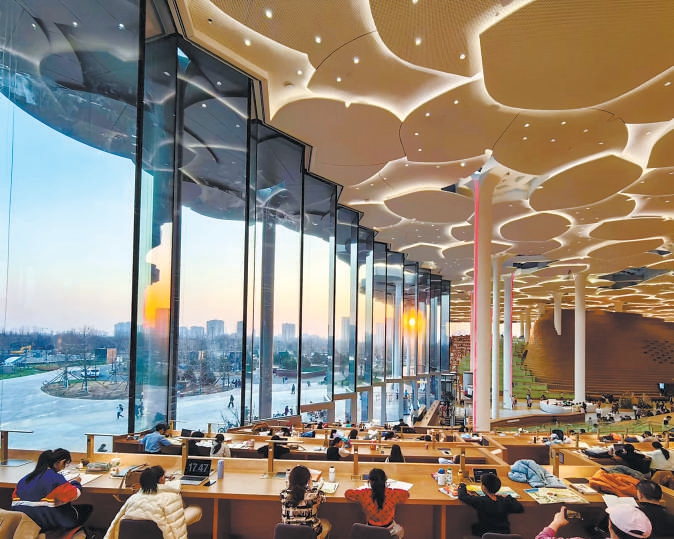
"What was really striking were the scale and the level of creativity and workmanship" of those Chinese libraries, Meunier said. On the Beijing Library, he recalled: "It's got ginkgo tree-like pillars, and the roof is beautifully laid out in a canvas of ginkgo leaves. Inside, there were robots, performances of traditional Chinese music, and lots of LED screens. They have a room of the metaverse with screens everywhere under your feet, above your head, around you. You can create an avatar, and there's a big head on the wall; you can ask the head a question, and it will answer you."
"It feels like you are going 10 years forward in time," he praised.
A fusion of stunning architecture with multidimensional cultural spaces and green design, Beijing Library won the IFLA Public Library of the Year award in 2024. IFLA
One lesson that can be learnt from libraries like this is "being bold," he said. "That's something which libraries in the Chinese mainland, in terms of the level of ambition, feels beyond what's possible today."
On the roles future libraries can play, his advice was: "Push forward, notwithstanding the constraints in which we operate, and dare to imagine. Make sure that we maximize that human potential of imagining."
Only then, said Meunier, will we progress "from the digital age into an 'imagination age.'"
HK university libraries, presses promoting 'open access' to research
Another role that modern libraries can play, on top of keeping books on their shelves, is to facilitate the dissemination of research – for free – which the wider public would normally be unable to access otherwise.
"That movement we call 'open access,'" Meunier said.
"Traditionally, a lot of research tends to be published by a very small number of publishers. [As a reader], you have to pay a lot to access the content; and as an author, you have to pay a lot to make your text available for free," he explained.
"When a lot of this can be done for a reasonable cost using digital platforms, it becomes less clear what the payment is for. So, many countries have been working to enable open access, to benefit society."
China is one of them. At the G20 summit in Rio de Janeiro in 2024, President Xi Jinping announced the launch of the "Open Science International Cooperation Initiative" with the aim of channeling more global scientific research to the Global South. Open access was also one of the goals outlined in the country's recent 15th Five-Year Plan.
In Hong Kong, the University Grants Committee has implemented an "Open Access Plan" since 2021, enabling open circulation of peer-reviewed journal articles arising from Research Grants Council-funded projects.
For Meunier, the city's efforts should not stop there. Two years ago, he asked his team to look into the proportion of Chinese-language content in the global database of open access books. The answer staggered him.
"It was 0.004 percent," he revealed.
That was hardly in step with the efforts of Chinese research institutions and the global agenda in publicizing research, he thought. So he brought together the libraries and university presses of CUHK, the University of Hong Kong, and City University to provide free, public access to books published by the three institutions – a project called "Open Books Hong Kong." As of now, 63 books have been released under the initiative.
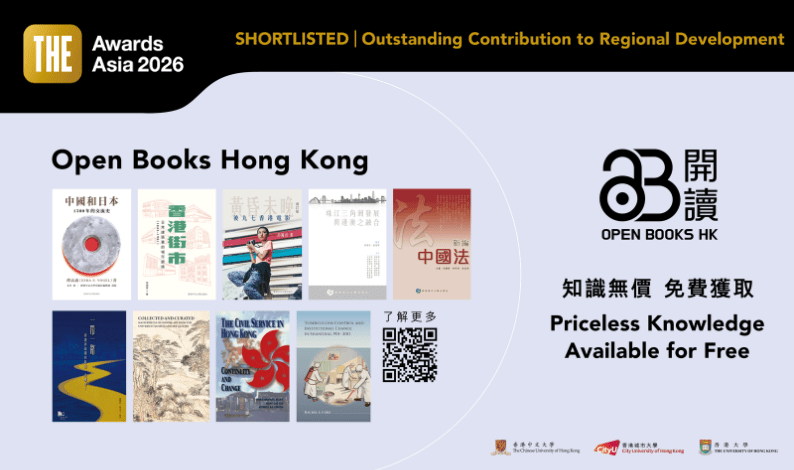
Open Books Hong Kong was shortlisted for the Outstanding Contribution to Regional Development award by Times Higher Education Awards Asia in 2026. CUHK
"We've now multiplied by more than 10 the number of Chinese-language books in the open access database," Meunier stated. "Of those 63 books, over a million downloads [have been recorded], with roughly 65 percent of readers from mainland China, 20 percent from Hong Kong and Macau, and the rest from around the globe."
In recognition of its pioneering role in advancing open knowledge in the region, the Times Higher Education Awards Asia – widely dubbed the "Oscars of tertiary education" – shortlisted Open Books Hong Kong for the Outstanding Contribution to Regional Development award in 2026. It was the only multi-institutional project that made the list.
Downloadable by anyone, these expert-written and peer-reviewed books under the scheme not only help foster public knowledge, but also provide great encouragement to researchers who could now reach a much broader readership, Meunier said.
Living with AI: a librarian's crusade for human intelligence
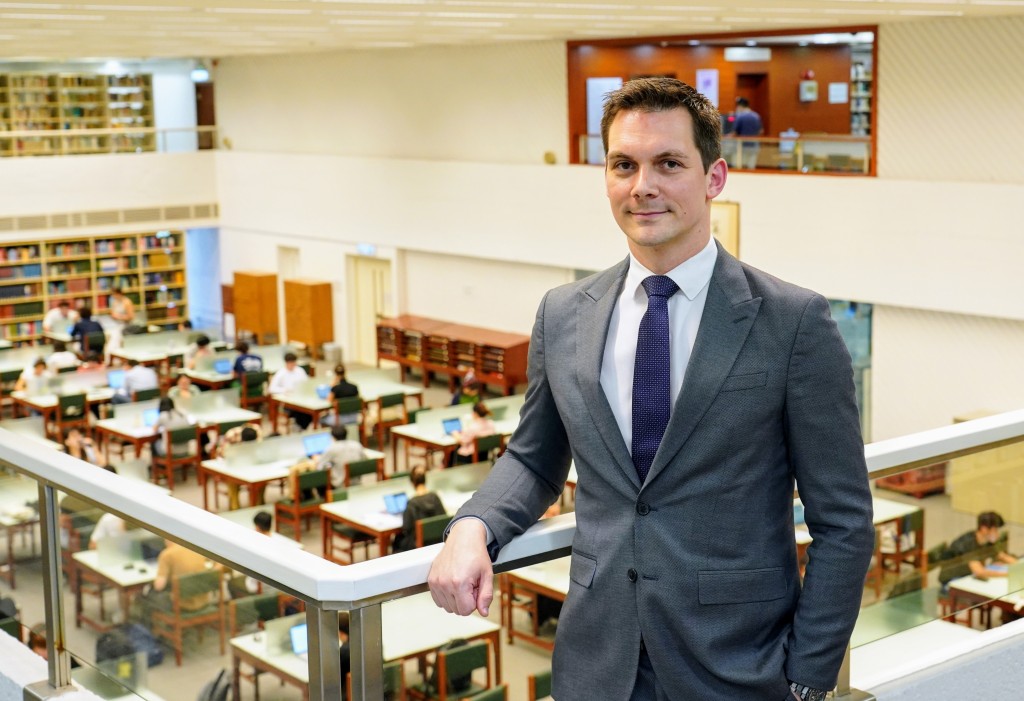
Benjamin Meunier
A librarian's relationship with artificial intelligence is not necessarily as clear-cut as a simple for or against. In Meunier's case, it is more nuanced.
From the standpoint of cultivating intelligence, AI could be bad news insofar as people increasingly outsource their thinking to it. Meunier illustrates this with a metaphor of the satellite navigation system: "If the battery runs out, you have no idea how to get [to your destination]."
"We've become less competent because it's so easy to rely on technology; 99 percent of the time it gets you where you want to be, but you lose that navigational ability."
Applied to the growing reliance on AI, "the risk is not being able to assess whether the information you retrieve are from trustworthy sources or not," he said.
"If you can't do that, it's very easy to be manipulated by people who control the information being fed to users," he suggested. "Without the skills to search for data from trustworthy sources, you're really handicapped in an information world."
Meunier pointed to a disturbing truth about the body of knowledge that AI is trained on: "Most of it is social media," like X and Reddit, he said. "AI learns what kinds of answers it should give based on these big data pools. Now, that is not ideal."
That is where libraries come in: to foster AI literacy, to which university libraries around the world are devoting more resources, Meunier noted. As much as it is risky, AI is undeniably a key engine for knowledge consumption today.
At CUHK Library, students are given training to understand what AI tools do, how they form answers, and how some of them are embedded within search engines and may facilitate research, if used wisely.
Meunier also highlighted the annual CUHK Data Hack, a 48-hour hackathon at the library where students and staff hone in their digital skills – including in AI – by devising innovative solutions for sustainable-development goals. It testifies to AI’s potential for – as well as libraries' ever-evolving role in facilitating – the optimization of human capability and living.