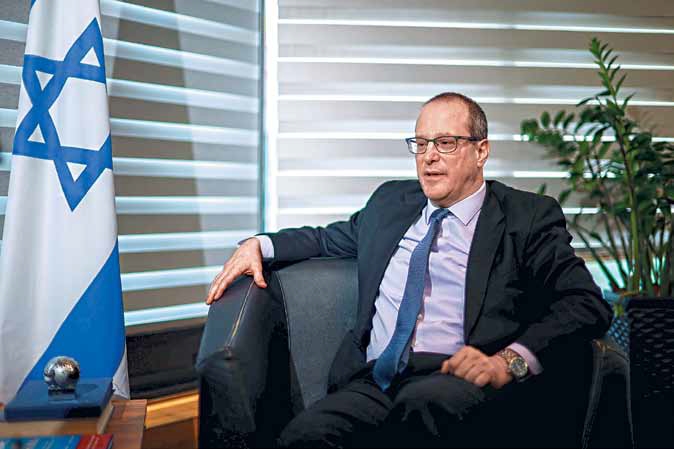
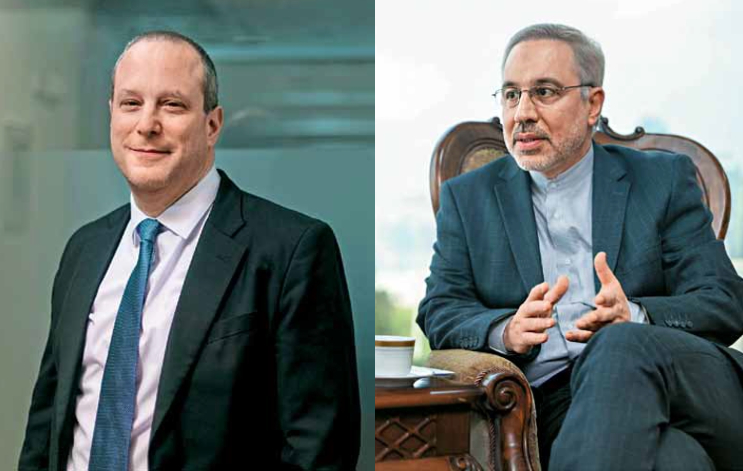
Israel’s Consul General Amir Lati accused Iran of spreading terrorism through proxies including Hamas, Hezbollah, and the Houthis – while expressing hope Tehran might return to its moderate pre-1979 path.
Conflicts between Israel and Iran have lasted for more than four decades and tension has been escalated in recent years. Lati called October 7, 2023, “the biggest terrorist attack in our history” – the single day where the most Jews were slaughtered since the Holocaust. “A terrorist organization from Gaza entered Israel with a pure desire to murder, rape, and abduct,” he said. Israel declared war on Hamas the following day.
Lati blamed Iran as the “puppeteer” behind the proxies. “The most fundamentalist, jihadist organizations in the Middle East are operated
by one single party – Iran.”
Noting that Israel and Iran had diplomatic relations before 1979, Lati said, “We had an embassy in Iran. Who knows, maybe in the future.” But since the Islamic Revolution, Iran has become “one of the most extreme regimes in the world” that “explicitly calls for the ‘annihilation’ of our country.”
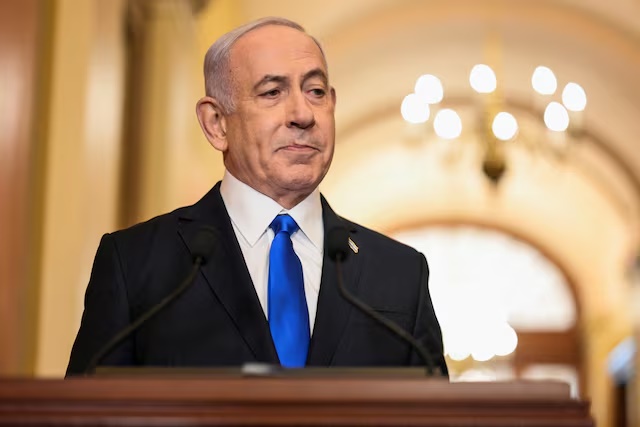
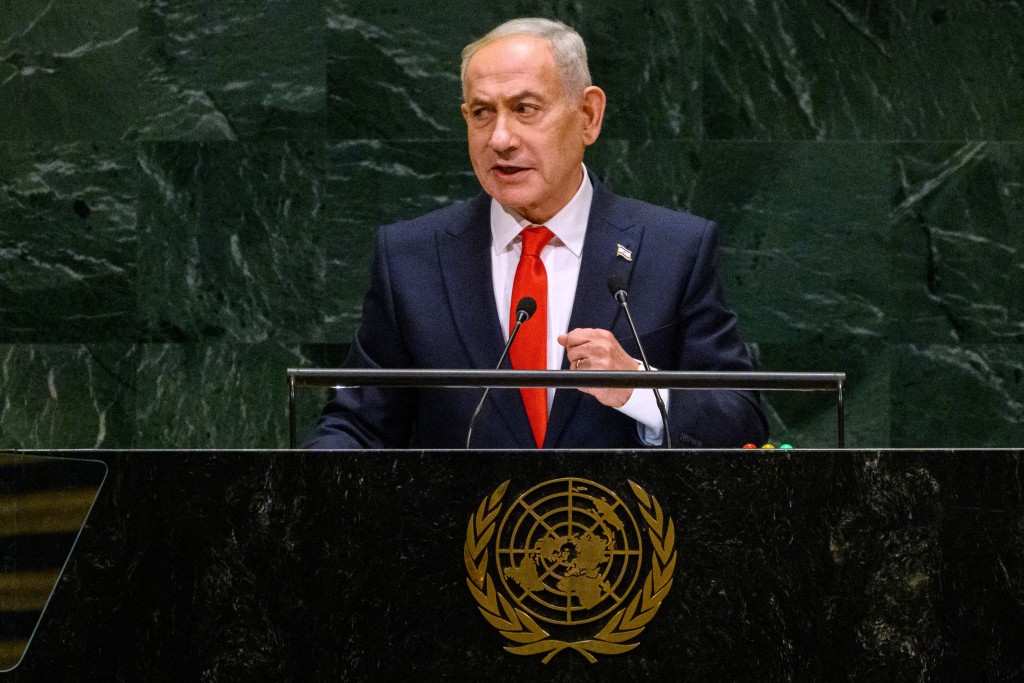
Asked about Israel’s strike that killed former Supreme Leader Ali Hosseini Khamenei, Lati said: “He stated – ‘Israel is a tumor that should be removed.’ It was our obligation to make sure this would not happen.” He insisted strikes target military objectives, not civilians.
“It’s a government that explicitly calls for the ‘annihilation’ of our country and we see our government’s role to protect its territory and its civilians. This is where we are now. We hope that these endeavors would lead to a more stable and peaceful Middle East.”
Lati hopes for internal change in Iran. “We hope Iran will become more moderate again. We hope Iran will not be a threat to Israel.”
He rejected the notion of a religious war. “It’s not a war between religions. Global terrorism threatens all humanity.” Jews, Muslims, and Christians share Abrahamic roots, he said – but that does not change dealing with a regime that has “vowed to destroy our country.”
Asked if he has spoken to his Iranian counterpart, Lati said there is “no contact whatsoever” – but remains hopeful: “The big hope with Iran is that someday there will be a shift and a change.”
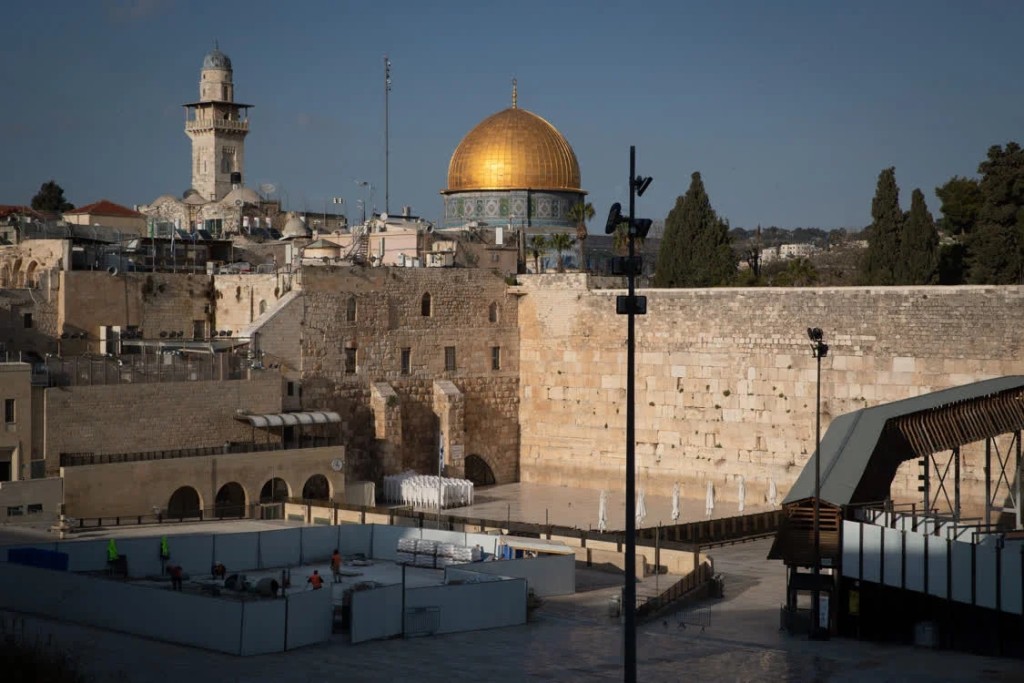
Jerusalem is a holy city for Judaism, Islam, and Christianity. (Xinhua)
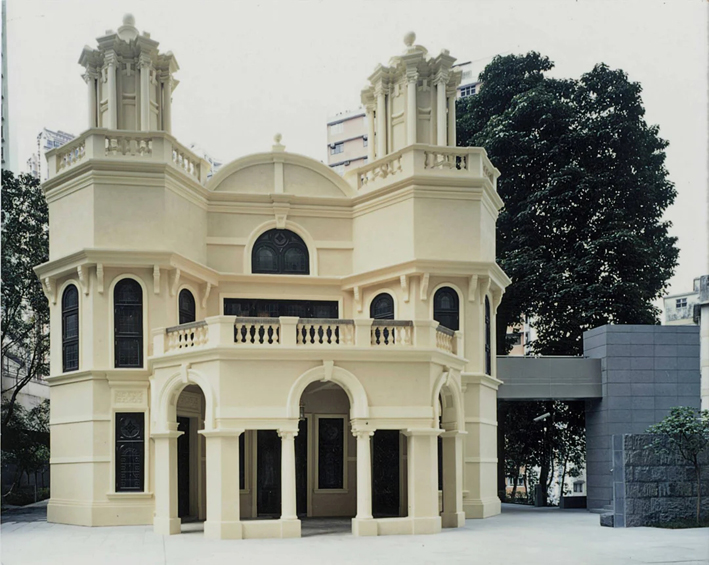
Ohel Leah Synagogue on Robinson Road has more than 124 years of history.
Tech and cultural ties remain the focus
Despite regional turmoil, Amir Lati says his mission's core priorities—economic, technological, and cultural cooperation—remain unchanged as he concludes a five-year post.
With 27 years of diplomatic experience, Lati emphasized that Israel's high-tech ecosystem continues to drive bilateral ties. "There are 9,000 tech companies in Israel, 1,500 deep-tech companies, accounting for over 55 percent of our exports," he said. The consulate's role, he added, is to "build bridges" between Israeli innovation and the Chinese market.
Despite the absence of direct flights—down from 12 in 2019—trade remains robust. China is Israel's second-largest trading partner, and Israel is one of Hong Kong's top Middle Eastern trade partners. Lati revealed that a major Chinese company is currently negotiating to acquire a leading Israeli agricultural irrigation firm. He also noted that four of Israel's top ten best-selling car brands are now Chinese, with no tariffs applied.
Acknowledging a "more challenging" and "sensitive" period in recent years, Lati stressed a long-term view. "You have to be a marathon runner," he said. "We have to look at our joint targets for the long-term." Tourism has dipped, but Lati remains optimistic, recalling that 77,000 Israelis visited Hong Kong in 2018. "We can go back there," he said. "The potential is still there."
From Kaifeng to Hong Kong: 1,000 years of Jews in China – a diplomat’s personal connection
Amir Lati is a diplomat who calls China home.
Over a 27-year career, Israel’s Consul General has spent 14 years in Chengdu, Shanghai, and Hong Kong. His children grew up here and they all speak Mandarin. Lati was a student in Beijing on scholarship.
Jews have come to China for over 1,000 years – from Kaifeng in the Song Dynasty to Shanghai and Hong Kong. After WWII, thousands of Jewish refugees who found shelter in Shanghai moved on, but many families put down roots in Hong Kong.
Today, Hong Kong is home to 3,500–5,000 Jewish people, with an Israeli community of over 1,000. The city has four active synagogues – the main one is Ohel Leah, built in 1901–1902. Lati highlighted Jewish contributions, with many buried in the Jewish cemetery in Happy Valley. Carmel School in Hong Kong is one of Asia’s largest Jewish schools.
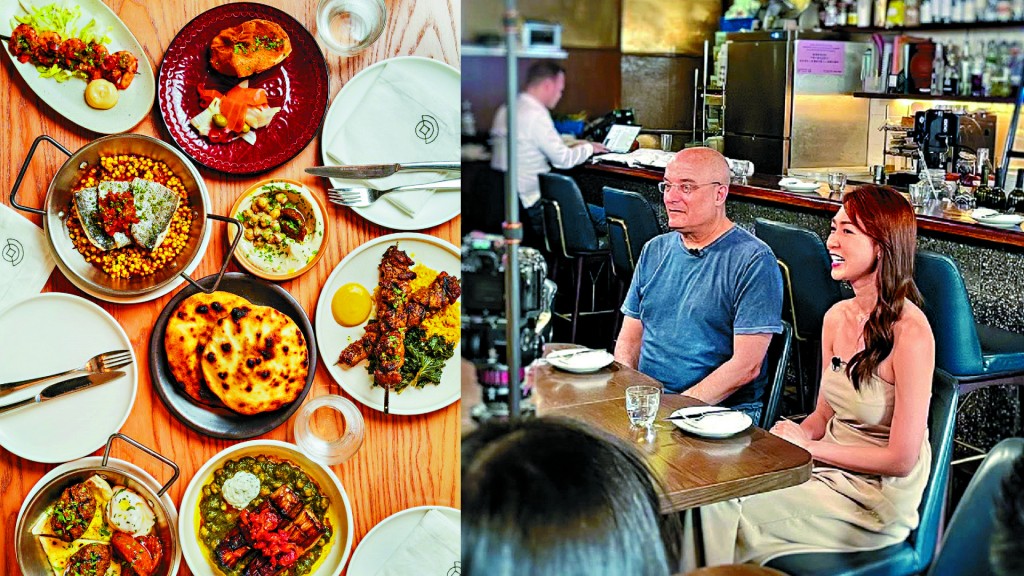
His consulate dedicates to cultural programming – a Jewish Film Festival (founded 1999) and a joint Passover-Easter celebration. Last year, he invited Israeli celebrity chef Gil Hovav – greatgrandson of the man who revived Hebrew – to visit Hong Kong.
Though a kosher-keeping Jew who avoids pork and shellfish, Lati called Hong Kong a gastronomic paradise. “Mapo tofu, spicy hotpot … If I dined at a different restaurant every day, I still couldn’t try them all.”
Kosher food – such as grilled chicken with hummus, shawarma, and challah bread – follows Jewish dietary laws. Kosher options are available at Seven Zero and Sabra (Jewish Community Centre on Robinson Road) and at Mul Hayam Glatt Kosher Restaurant (Kehillat Zion synagogue in Tsim Sha Tsui East).
Lati stressed business ties with Hong Kong and the mainland, citing Israel’s high-tech ecosystem in healthcare, green tech, and water management. A Chinese company is negotiating to buy an Israeli agricultural irrigation firm. Chinese cars have penetrated Israel’s market – four of the top 10 best-selling brands are Chinese.
Lati finishes his posting in four months. “I will come back,” he said.
Lati invited Israeli celebrity chef Gil Hovav to Hong Kong last year, where he tried kosher dishes at Francis, a Middle Eastern restaurant.
Israel and Iran: from ancient allies to open war
Despite decades of tension, Israel and Iran indeed had positive roots.
In the 6th century BCE, Persian King Cyrus the Great allowed Jews to return to Jerusalem and rebuild their Temple. He is the only non-Jew called a “messiah” in the Hebrew Bible.
From 1948 to 1979, under the pro-Western Shah, they formed a quiet alliance – oil for Israeli technology and intelligence, united by Arab enemies.
The 1979 Islamic Revolution ruptured ties and all relations between the two countries were cut.
Since the 1980s, the conflict has escalated from shadow war to open fighting. Iran was reported to build its “Axis of Resistance” by supporting
Hezbollah and Hamas. Israel was reported to target Iran’s nuclear program with assassinations and cyberattacks. The two nations remain in a state of war, marked by major attacks.
The Israeli Consulate: security comes first
Making an appointment with the Israeli Consulate required submitting a copy of my identity card.
Upon arriving at the Israeli consulate, a security guard checked my name and ID card. An X-ray machine examination followed – standard for consulates. But then came the lockers. Even my bag and a simple pen had to be stored away before entry. My mobile phone, however, was allowed in – but only because an exemption had been specifically applied for.
When it came time to photograph Consul General Amir Lati, the blinds had to be pulled down. An officer explained that these tight security measures have been in place since 2001 – a direct response to the 9/11 attacks in New York.
“This is not new,” she said. Lati was friendly and started the conversation in Mandarin. Within the 90-minute meeting, around 15 minutes were spent on security checks.
Read More:
Foes in the Middle East, fans of Hong Kong
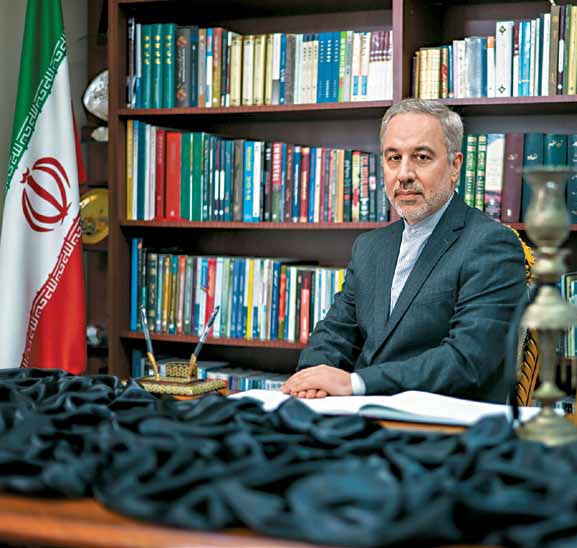
Iran's CG: ‘Iran and the Middle East don't need imported security, US tells big lies'
𝗙𝗼𝗹𝗹𝗼𝘄 𝘁𝗵𝗲 𝗰𝗼𝗺𝗺𝘂𝗻𝗶𝘁𝘆 𝗼𝗳 𝗧𝗵𝗲 𝗦𝘁𝗮𝗻𝗱𝗮𝗿𝗱↓