Read More
Matt Spetalnick, Michael Martina President-elect Donald Trump's choice of Tulsi Gabbard as US intelligence chief has sent shockwaves through the national security establishment, adding to concerns that the sprawling intelligence community will become increasingly politicized.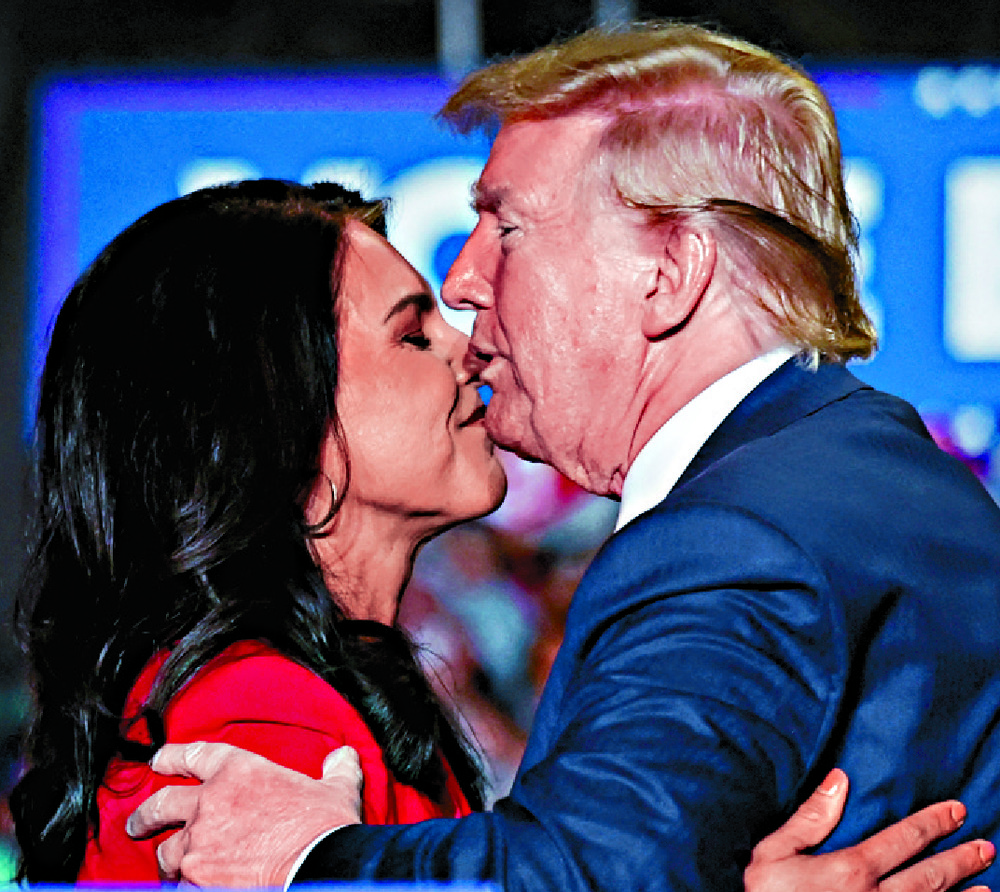
and Humeyra Pamuk
ADVERTISEMENT
SCROLL TO CONTINUE WITH CONTENT
Gabbard, a former Democratic congresswoman who lacks deep intelligence experience and is seen as soft on Russia and Syria, is among high-level picks that suggest Trump may be prioritizing personal allegiance over competence.
Among the risks, say current and former intelligence officials and independent experts, are that top advisers could feed the president-elect a distorted view of global threats based on what they believe will please him and that foreign allies may be reluctant to share vital information.
Randal Phillips, a former CIA operations directorate official who worked as the agency's top representative in China, said that with Trump loyalists in top posts, "this could become the avenue of choice for some really questionable actions" by the leadership of the intelligence community.
A Western security source said there could be an initial slowdown in intelligence sharing when Trump takes office in January that could potentially impact the Five Eyes intelligence alliance.The worry for US allies is that Trump's appointments all lean in the "wrong direction," the source said. Inside and outside the US intelligence network, much of the anxiety focuses on his choice of Gabbard, 43, given her views seen as sympathetic to Russia in its war against Ukraine.
While Trump has made some conventional personnel decisions such as that of senator Marco Rubio for secretary of state, the choice of Gabbard, a US Army Reserve officer, surprised even Republican insiders. She is likely to face tough questioning in her senate confirmation hearings.Gabbard, who left the Democratic Party in 2022, has stirred controversy over her criticism of President Joe Biden's support for Ukraine, which has prompted some critics to accuse her of parroting Kremlin propaganda.
She also spoke out against US military intervention in the civil war in Syria under former president Barack Obama and met in 2017 with its Moscow-backed President Bashar al-Assad, with whom Washington severed all diplomatic ties in 2012.The selection of Gabbard has raised alarm in the ranks of intelligence officers unsure of how tightly she holds some of her geopolitical views, whether she is misinformed or simply echoing Trump's Make America Great Again followers.
"Of course there's going to be resistance to change from the 'swamp' in Washington," Gabbard said in a Fox News interview. She said voters had given Trump "an incredible mandate" to move away from Biden's agenda but offered no policy specifics.A senior European intelligence official said agencies on the other side of the pond "will be pragmatic and ready to adapt to the changes" and that there is "no panic in the air for now."
A European defense official described Gabbard as "firmly" in the Russia camp. "But we have to deal with what we have. We will be attentive."A British government official said it would be watching to see whether Gabbard's nomination was confirmed.
Philip Ingram, a former intelligence officer in the British military, said her comments about Russia "will set alarm bells ringing around the world" and her appointment could impact how intelligence is shared. Intelligence officials could be "more selective in the level of detail they are willing to pass on," including in how they protect sources and phrase information, he said.Some analysts said concerns about Gabbard could be tempered by Trump's choice to head the CIA: John Ratcliffe, a former congressman who served as director of national intelligence at the end of Trump's first term.
Though close to Trump and expected to offer little pushback against his policies, Ratcliffe is not seen as an incendiary figure and could act as a counterbalance to Gabbard in his post atop the No 1 spy agency among the 18 that she would oversee.But some analysts said that by attempting to install Gabbard with other controversial loyalists, including congressman Matt Gaetz for attorney general and Fox commentator and military veteran Pete Hegseth for defense secretary, Trump is showing he wants no guardrails to his efforts to remake federal institutions.
Democratic critics were quick to pounce not only on Gabbard's views but what they see as her lack of qualifications and the potential the new administration could deploy intelligence for political ends.The Office of the Director of National Intelligence was created after the September 11, 2001, attacks to fix what was seen as a lack of coordination between those organizations.
"She isn't being put in this job to do the job or to be good at it. She's being put there to serve Donald Trump's interests," said Adam Smith, the ranking Democrat on the House armed services committee.After leaving the Democratic Party, Gabbard became increasingly critical of Biden and grew popular among conservatives, often appearing on far-right TV and radio shows, where she became known for supporting isolationist policies and showing disdain for "wokeness."
Shortly after Russia launched its invasion of Ukraine in 2022, Gabbard wrote in a social media post: "This war and suffering could have easily been avoided if Biden admin/NATO had simply acknowledged Russia's legitimate security concerns regarding Ukraine's becoming a member of NATO."Rubio, a former Trump rival turned supporter, defended Gabbard's nomination, describing her as a "revolutionary pick that has a chance to really make a positive change."
But some other Republicans were more non-committal.Asked about Gabbard's qualifications, senator John Cornyn, a member of the intelligence committee, said: "We're going to do our job, vet the nominees and make a decision. That's a constitutional responsibility of the senate."
To become director of national intelligence, Gabbard must first be confirmed by a majority of the 100-member senate, where she could face headwinds.Trump's fellow Republicans have a 53-47 majority in the chamber starting in January and been eager in the past to back him, increasing the likelihood that she will secure the post.
"Our friends are watching as closely as our foes, and they are asking what this all means for the pre-eminent player in global intelligence collection and analysis," said one former US intelligence officer who worked in some of the world's hotspots.REUTERSTulsi Gabbard embraces Donald Trump last month, four years after seeking the Democratic Party presidential nomination. REUTERS
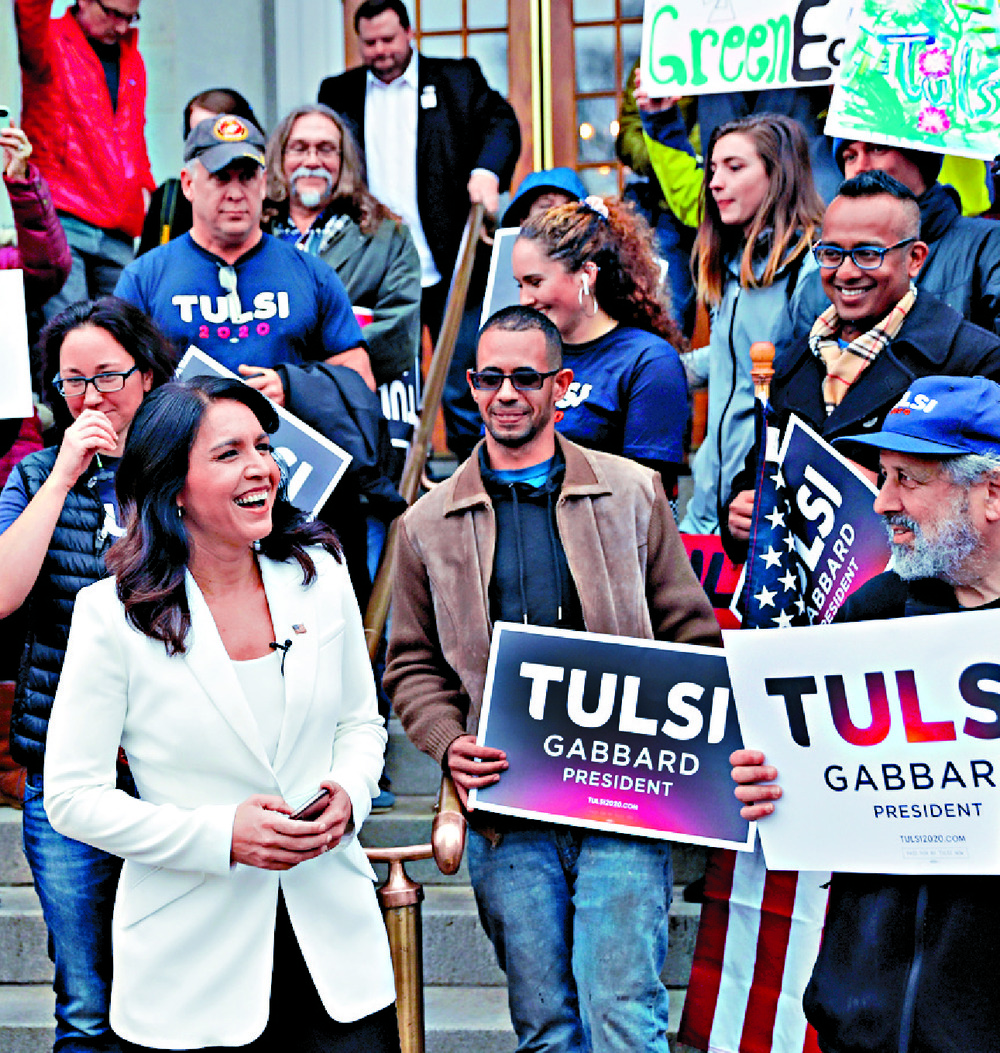
Four years ago, Tulsi Gabbard sought the Democratic Party presidential nomination. REUTERS
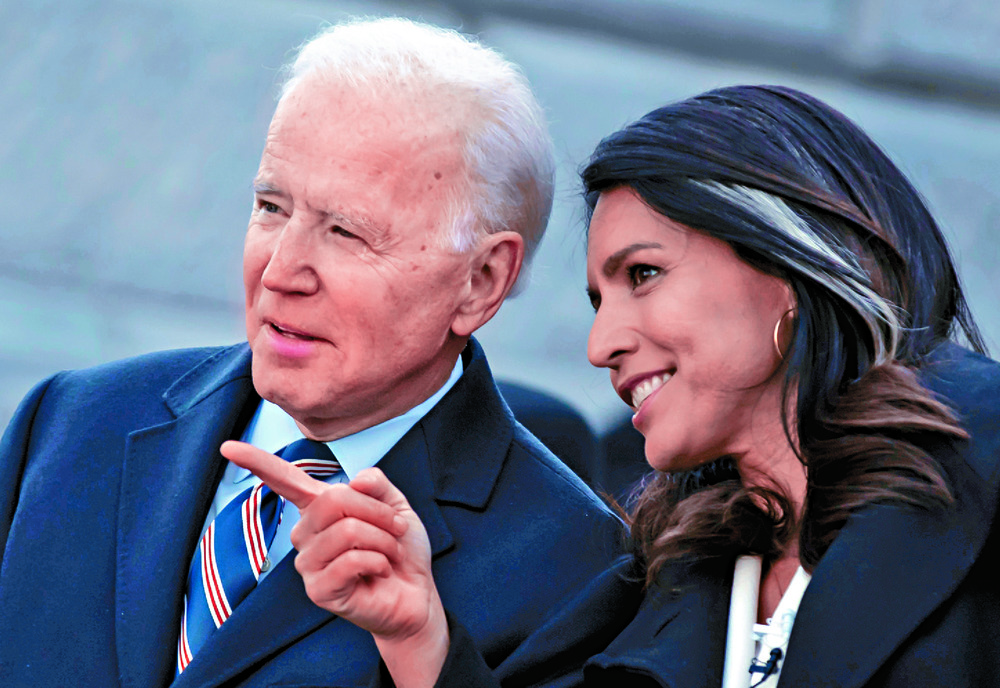
Tulsi Gabbard hobnobbing with fellow Democratic Party candidate and eventual President Joe Biden back in 2020. REUTERS