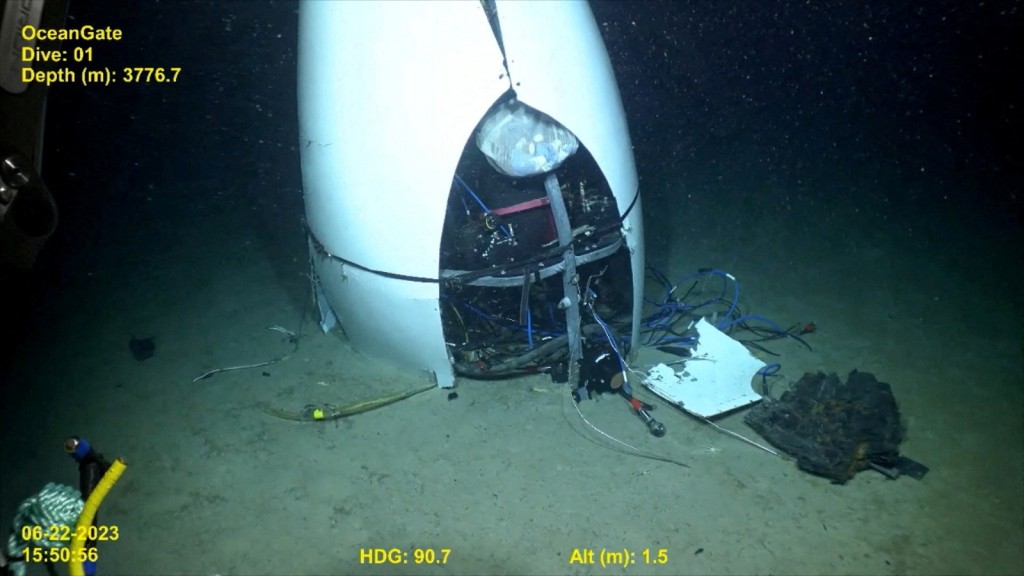
Readers may remember that in an article I wrote in July 2023, I described the incident of a deep-sea submersible vessel, Titan, during a diving mission in the North Atlantic to see the wreck of the Titanic which occurred in June that year. It carried a total of five persons, including the chief pilot and chief executive Stockton Rush of OceanGate – which owned and operated the vessel – an accompanying expert and three paying passengers.
The dive resulted in a catastrophic implosion on descent, killing all in the vessel. An investigation by the US Coast Guards was published in July this year and revealed a horrific case, pointing out to a lot of weaknesses and breaches which led to this tragedy.
The report is over 300 pages long and, as expected, comprehensive in its findings, analyses and conclusion. Most of the details are too technical for the common reader, but I can help to explain a few salient pieces of information for sharing.
Reading the report is like reading a horror story of what not to do in running a company involved in submersible vessel research and operation. It almost broke every rule of safety.
Among many weaknesses and failures picked up by the experts who conducted the investigation, the following are some alarming statements from the report: inadequacy of structural engineering analyses; failure to follow Boeing’s manufacturing and testing specifications; insufficient understanding of carbon fiber materials properties; use of untested/uncertified acrylic windows; insufficient understanding of adhesives joints for deep sea applications; OceanGate’s toxic safety culture; lack of formal pilot training or appropriate credentialing; failure to properly trouble shoot the hull after acoustic events/safety culture; misinterpretation of paying passengers as mission specialists; improper storage and transportation of Titan.
The verdict of the cause of the incident was the loss of structural integrity of the vessel.
The main issues are the designer’s failure to address fundamental engineering principles critical for ensuring safety and reliability for such inherently hazardous environment, and improper material selection and manufacturing process and structural analyses and testing.
The repeated use of Titan without due inspection and repair after a series of incidents that could have compromised the integrity of the hull and other critical components added to the risks leading to this implosion.
Material testing revealed that there were voids between adjacent layers of the five-layer carbon fiber structure of the main hull. This explains that a loud bang heard at a previous dive was the result of delamination between the outer and inner layers.
But despite this incident being reported to Rush, who was not in that mission, he chose to direct no further investigation, claiming that the noise was likely due to a shift in the vessel’s position within its frame.
Adhesives used to bond the carbon hull to the titanium segments had detached from the entire forward segment. This is judged to be due to repeated cycles of thermal and pressure stresses suffered from various previous missions, which could have aggravated the delamination to stress the brittle adhesive joint, leading to the implosion.
Titan was stored outdoors in Newfoundland, Canada, without cover. Repeated freeze-thaw cycles have cause moisture to enter the pressure hull, causing it to expand and contract, opening up the cavities in the carbon fiber structure and degrading the integrity of the hull. Together with other stresses imposed during transportation, it caused further delamination.
The vessel was not certified according to US law nor by any other jurisdiction. Rush claimed that he intended the vessel to be certified in the Bahamas but apparently this had never been implemented.
The inadequate corporate governance procedures allowed Rush not to seek input from his board members, who were sidelined. The report states that, if Rush were alive, he would have likely been charged on many counts of breaches of the law, as he appeared to have failed to execute the expected governance duties to ensure safe design, manufacture, operation and maintenance procedures.
The report points out that even in the modern world, some engineering facilities can still escape the established fine net of safety precautions protected by law and guarded by professional ethics.
The innocent public can be misled to believe that all these safety precautions would be in place when they use them for work or leisure. The law is intended to protect the public, but it still requires professionals and leaders of organizations to observe some basic principles of ethics to achieve this. Failure in instituting such principles will easily lead to incidents that will be too expensive to bear.
Veteran engineer Edmund Leung Kwong-ho casts an expert eye over features of modern life