China is renowned for its ability to build large-scale infrastructure projects, and the announcement of the commencement to construct the largest hydropower station in Tibet is big news.
To understand why China plans to build this hydropower station, let us examine the current trend of electric power requirement in the world.
The ever-increasing demand for electric power with industrialization started in the last two centuries, but recently there is an increasing need to power electric vehicles and AI applications which are the fast-growth areas. These two recent demands alone create the acute need for more power, which will be difficult to meet with the present power supply capacity.
There is an urgent need to plan new power stations and the associated transmission systems, but executing such plans require a time span of at least 10 years. That is why effective long-term planning is necessary.
With the desire to reduce carbon emission from fossil fuel power stations and the reluctance to build new nuclear power stations due to geopolitics, renewable energy sources appear to be the most practical option. Wind and solar energy power stations are already expanding with full force but the growth of hydropower, limited by available locations, has not kept up with the pace.
Finding suitable sites to build hydropower is always difficult. There are not a lot of places in the world that have the availability of a huge volume of water at a high altitude drop to provide the necessary potential energy mass to make construction of a hydropower station feasible.
But even when a suitable location for hydropower has been located, the infrastructure must be in place before it can be built. Road access is vital to allow machinery and workers to access the site, and transmission lines built over long distances to reach consumers in urban areas require new technology.
It was only in the last decade that reliable technology such as ultra-high voltage transmission systems became available for commercial operation.
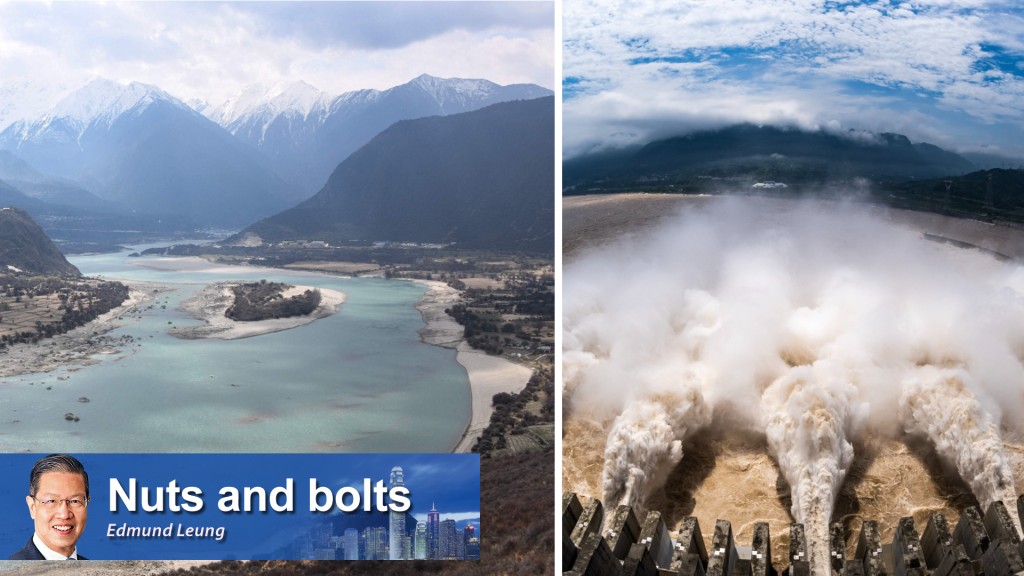
The Yarlung Zangbo River, which flows through the foothills of the tall Himalayan mountain range, is one of the largest rivers in China. The huge water volume and the mountainous terrain offers a lot of potential to build a large hydropower plant, but the area was previously not developed and not accessible.
The meandering river takes a sharp turn at the eastern rim of the Tibetan plateau, dropping some 2,000 meters along the long elbow bend.
Engineers analyzed that if a portion of the water can be diverted before it flows through the sharp bend by causing them to flow at a much shorter horizontal distance to drop the same 2,000 meters directly through a short path with tunnels, it could release a huge amount of potential energy for electricity generation.
This is ecologically much more acceptable than building a dam to create an artificial lake for a water reservoir that will hold a huge amount of water to power turbines. It would also dispense with the need to submerge a large piece of land upstream of the dam which could affect the flora and fauna in that area.
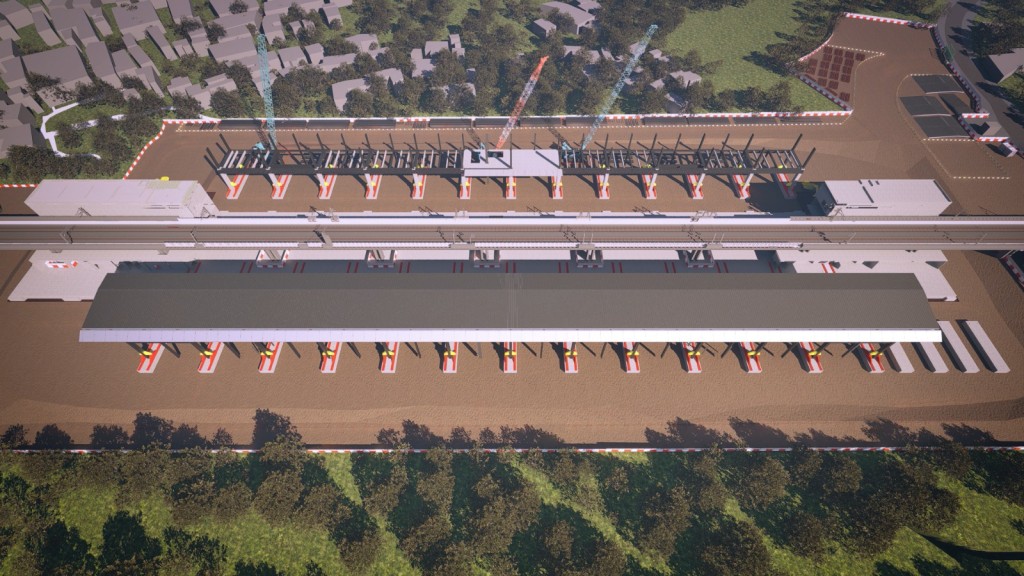
A careful and stringent process of planning, involving extensive geological studies of the terrain, was conducted to establish the feasibility of building tunnels and caverns to house the machineries without affecting the stability of the mountain soil. And with an advanced schedule to build a road system for access to that area, the plan to build this largest hydropower plant was finally approved for construction last month.
But that is not the end of the story. Present technology involving water turbines limits their ability to operate with pressure difference over 500 meters, as the immense pressure will cause certain components to break.
A scheme was devised with a five-stage cascading series water turbine system, each harnessing less than 500 meters of water drop. With connecting water tunnels, and a series of caverns, they can work in tandem, producing 60,000 megawatt total power output, some three times the size of the Three Gorges.
The annual electricity output is estimated to be 300 billion kilowatt hours.
The budgeted total capital expenditure of the project is in the order of 1.3 trillion yuan (HK$1.42 trillion), but based on the current power tariff, this cost can be recovered within 20 years, confirming its financial feasibility.
Furthermore, there is a plan to build 12 more hydropower plants of smaller capacity downstream, potentially releasing another 20,000MW additional capacity, adding an additional one trillion kilowatt hours per year to the total power output.
China currently generates about 40 percent of the world’s total electrical power output. With this new hydro power plant in operation, it will allow China to continue to be the largest power producer in the world for the foreseeable future.
When completed, it will not only provide ample power to meet the anticipated growing demand but will allow for export to neighboring countries to fuel their economic development.
Furthermore, as there is no diversion of water course downstream, water will continue to flow at the same volume downstream of the hydropower plant, all the way to the ocean. There will therefore be no adverse effect to the ecology and water supply security to those regions and neighboring countries at all.
Long-term planning for a country is vital, and apart from economic planning, infrastructure planning must be executed at the same time to fuel economic growth.
But in planning such infrastructure, ecological effects must be carefully considered to ensure no disruptions to other regions downstream to safeguard their sustainability. After all, we should be responsible to the citizens not only of our country, but of our neighboring countries too as we live in the same world.
Veteran engineer Edmund Leung Kwong-ho casts an expert eye over features of modern life