(Part three of three)
In this third and final column I consider Hong Kong’s legal future and outstanding issues up to 2047 threshold.
The sceptics and cynics have certainly been proved wrong. With the National Security Law now large having done its job, Hong Kong has rapidly regained its stability and social calm and, like an irksome pebble removed from a shoe, the western-style democracy movement has been cast aside, forgotten.
The legal system, with the Common Law at its center, is also flourishing again with Hong Kong home to 1,700 registered foreign lawyers and over 80 foreign law firms.
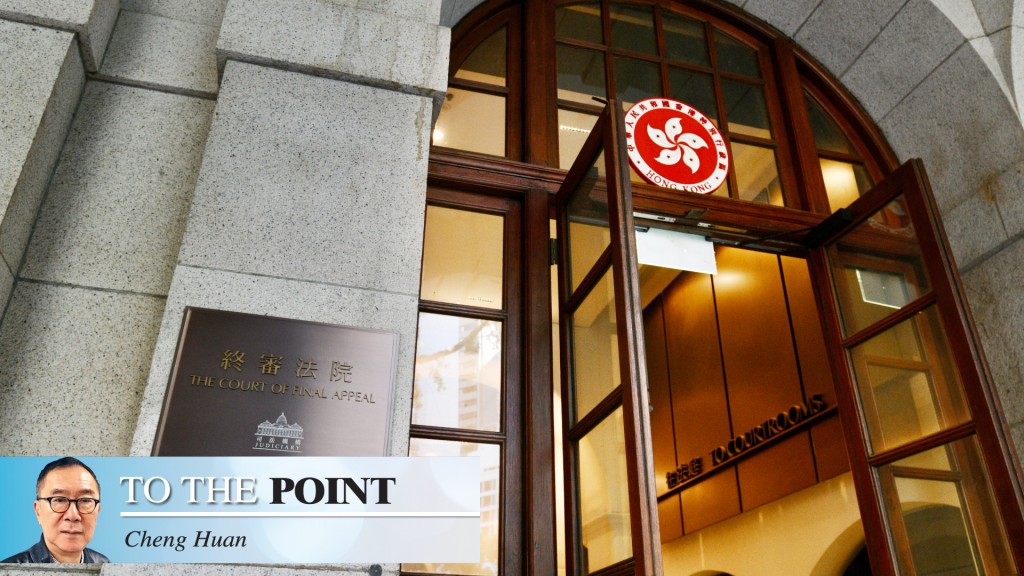
But, as Henry Litton, a very respected, and now retired, permanent judge of the Court of Final Appeal has warned, the local judiciary needs to prepare for the possibility that mainland law prevails.
There is a danger, he says, that by not readying ourselves for the changes to come, we are sleepwalking towards 2047.
For the likelihood is that two legal systems – the SAR’s and the mainland’s – will need to be either fully integrated or arranged so that they operate seamlessly side by side.
For many years senior mainland officials have often referred to ‘Xi Jin Ping’s thought on the rule of law’ and emphasizing the cardinal principle that we must “stay on the path of the socialist rule of law with Chinese characteristics.”
A legal official of the communist party, Chen Yi Xin, even specified that China “will not copy the models and practices of other countries, nor will it follow the so-called ‘constitutional government,’ ‘separation of powers,’ or ‘independent judiciary’ of the West.”
The late premier Premier Li Keqiang, himself a law graduate of Beijing University, once told the National People’s Congress that “We will ensure that the central government…firmly upholds the principle that Hong Kong and Macau should be governed by patriots” and then reiterated that Hong Kong’s future will be as a part of the Greater Bay Area and one of the nine southern cities which are to be developed as “innovation powerhouses.”
Hong Kong, he said, will retain its status as an international city but one that is fully integrated with the Greater Bay Area.
In 2020 Zhang Xiao Ming, then deputy director of the State Council’s Hong Kong and Macau Affairs Office, confirmed that judicial reform in Hong Kong would be necessary but he did specify how apart from repeating that “People who love the country and Hong Kong will govern Hong Kong, and people who are anti-China and cause trouble in Hong Kong are out.”
But, judging by the speeches by mainland officials, it is my belief that Beijing prefers Hong Kong to initiate reforms that are acceptable to Beijing.
Such is the clear implication of ‘Hong Kong people ruling Hong Kong.’
As for 2047, there are only 22 years to go, and I hear many people – lawyers, businessmen, even judges – ask the same question: “What will happen to the legal system after 2047?”
The investor activist David Webb recently posed the question: which legal system should youngsters starting their legal education study? Will proficiency in mainland law be essential after 2047?
Webb also worried about the 2047 deadline’s implications for contract law and land leases. Businesses, he said, need to know what will happen. If bankers, lawyers and businessmen do start to worry about this, I am sure that the mainland and SAR governments will take action.
But 22 years should be plenty of time. After all, Hong Kong’s Basic Law wasn’t promulgated until 1990 – a mere seven years before the handover.
What’s more, the Basic Law has no expiry date – it could go on for ever.
The only part of the Basic Law that needs attention is Article 5 which, although it does not state an expiry date and does not mention what will happen after 2047, it does mention the 50 years:
“The socialist system and policies shall not be practised in the Hong Kong Special Administrative Region, and the previous capitalist system and way of life shall remain unchanged for 50 years.” So that will certainly need attention before 2047.
As for land sales on 50-year leases, they can easily be dealt with by a repeat of the pre-1997 expedient of extending their terms for another 50 years.
Changes are definitely coming but they will be carefully crafted so as not to harm Hong Kong’s prosperity.
Cheng Huan is an author and a senior counsel who practices in Hong Kong