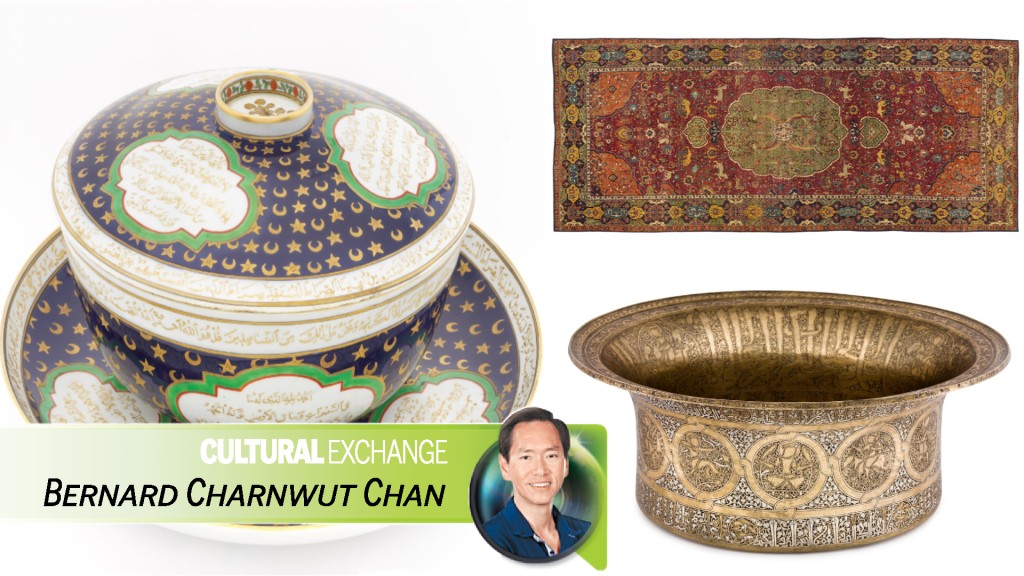
The Wonders of Imperial Carpets: Masterpieces from the Museum of Islamic Art, Doha exhibition at the Hong Kong Palace Museum offers a captivating glimpse into the rich artistic connections between China and the three great Islamic empires of the early modern era: the Safavid dynasty of Iran, the Ottoman Empire of Türkiye, and the Mughal Empire of India.
This exhibition invites visitors to explore how these empires, renowned for their cultural and artistic achievements, were profoundly influenced by centuries of exchange with China.
The exhibition traces these interactions back to the seventh century, when trade routes such as the Silk Road and maritime networks acted as essential pathways for the exchange of goods, ideas, and culture.
Chinese ceramics, silk, and other luxury items reached the Islamic world, where they were highly valued not only for their craftsmanship but also for their artistic influence.
These exchanges went beyond economics; they were profoundly cultural, with Chinese motifs, techniques, and aesthetics inspiring artisans across the Safavid, Ottoman, and Mughal empires to innovate and incorporate these elements into their distinct styles.
Similarly, Chinese artists were exposed to new ideas, materials, and decorative traditions through contact with the Islamic world, fostering a dynamic and reciprocal dialogue that shaped and enriched artistic traditions on both sides.
This blending of influences ultimately resulted in the creation of remarkable works of art that reflect a shared heritage of creativity and mutual respect.
The centerpiece of the exhibition is a collection of imperial carpets, masterpieces of craftsmanship and design that once adorned the courts of the Safavid, Ottoman, and Mughal dynasties.
These intricately knotted works, along with ceramics, metalwork, manuscripts and jades, reflect the strong connection between these empires. Patterns on some carpets and textiles reveal Chinese artistic influence.
Through approximately 100 treasures from the Museum of Islamic Art in Doha, as well as objects from the Palace Museum in Beijing, the exhibition highlights Hong Kong’s role as a cultural bridge. It emphasizes not only historical connections but also the lasting significance of cross-cultural dialogue in today’s world.
This journey through art and history shows how trade, migration, and diplomacy fostered a shared artistic heritage that continues to inspire and connect us.
Bernard Charnwut Chan is chairman of Tai Kwun Culture & Arts Co Ltd