Read More
Henry Siu
ADVERTISEMENT
SCROLL TO CONTINUE WITH CONTENT
The University of Hong Kong's medical school has developed an artificial intelligence model to assess Chinese patients' potential 10-year cardiovascular disease risks.
Using patients' clinical statistics, the new model can come up with disease prevention strategies, rate health records, tailor disease management plans for patients in different conditions, and assist cardiologists and pharmacists in formulating long-term medication.
Dubbed P-CARDIAC -- personalized cardiovascular disease risk assessment for Chinese -- the AI model incorporates over 120 risk factors to predict patients' 10-year CVD risk in seconds. It has been in development since October 2022.
"Prediction and prevention is the best way to mitigate CVD and reduce disease burden," said Yiu Kai-hang, clinical professor at HKU's cardiology division.
"Doctors might not be able to diagnose patients with all high risk factors in a short time of communicating with them, but this model generates the prediction on the screen automatically, helping us to reduce our burden to identify high-risk patients and offer personalized treatment to each patient," he said.
Heart and circulatory diseases cause some 20.5 million deaths globally, with 58 percent of these deaths occurring in Asia.
"Cardiac and cerebrovascular diseases consistently rank among the top five causes of death in Hong Kong, while male patients and older patients have higher risk. This can be explained by the aging problem," Yiu said.
Many risk-assessment scores available globally are less sensitive to the Chinese population since data are based on Westerners, said Celine Chui Sze-ling, assistant professor of HKU's School of Nursing and School of Public Health.
The HKU research team hopes the model benefits not only Hongkongers but also Chinese around the world.
The model, which biotechnology firm Amgen Hong Kong spent HK$3 million to develop, is the city's first public-private partnership for big data applications and is supported by the Innovation, Technology and Industry Bureau, Chui said.
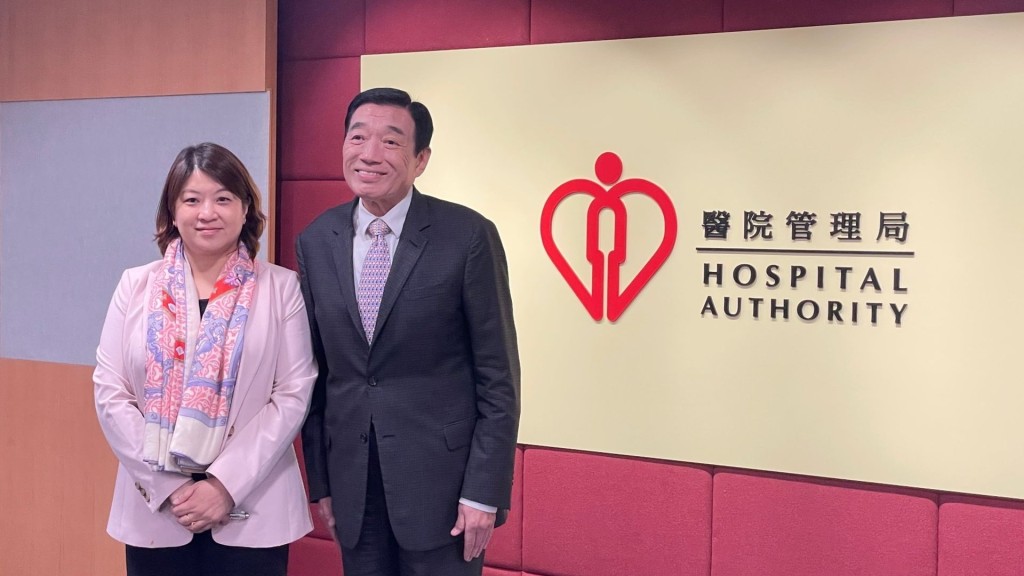
She said 300,000 cardiovascular patients' health records from the Hospital Authority were collected to develop the prototype, with datasets stored in a protective server in HKU.
A pilot study was conducted on 15 patients while seven pharmacists and volunteers completed a questionnaire on how the model worked. Some 80 percent of the patients said the model helped them understand the risks of CVD, according to the study's results.
HKU will recruit some 3,000 patients from six public hospitals - Queen Mary Hospital, Queen Elizabeth Hospital, Kwong Wah Hospital, Princess Margaret Hospital, Tuen Mun Hospital and Pok Oi Hospital - for a two-year clinical study starting in the fourth quarter this year. Researchers hope the model can be used regularly in public hospitals to lower medical costs.
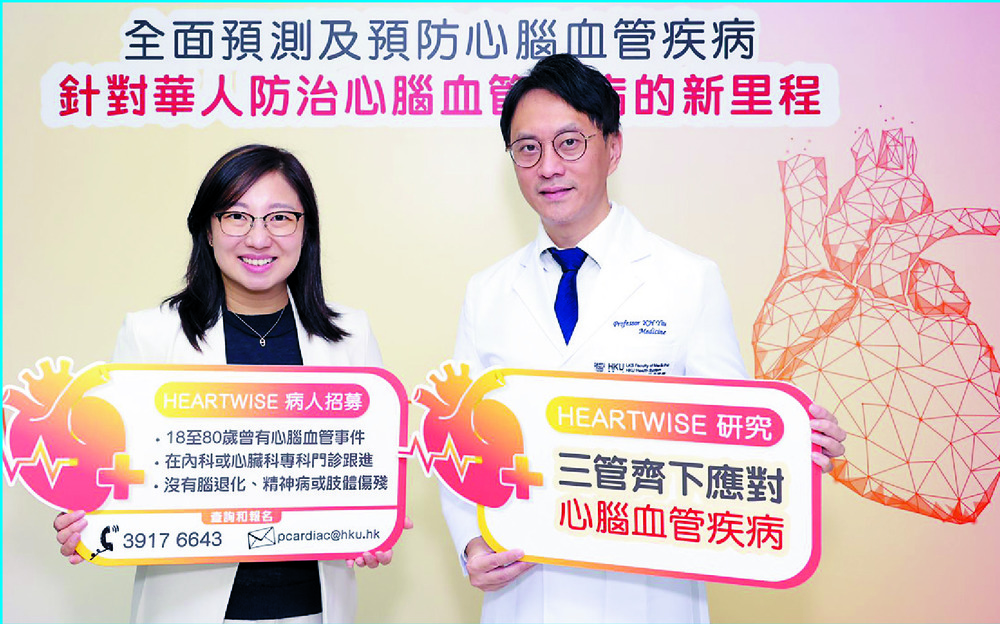
Many risk-assessment scores available are based on Westerners' data, says Celine Chui, who is part of the research team with Yiu Kai-hang.