Read More
Adelyn LauOne project, led by associate professor Jack Wong Wing-tak from the School of Life Sciences, aims to create resilient and nutritious climate-smart soybean varieties. 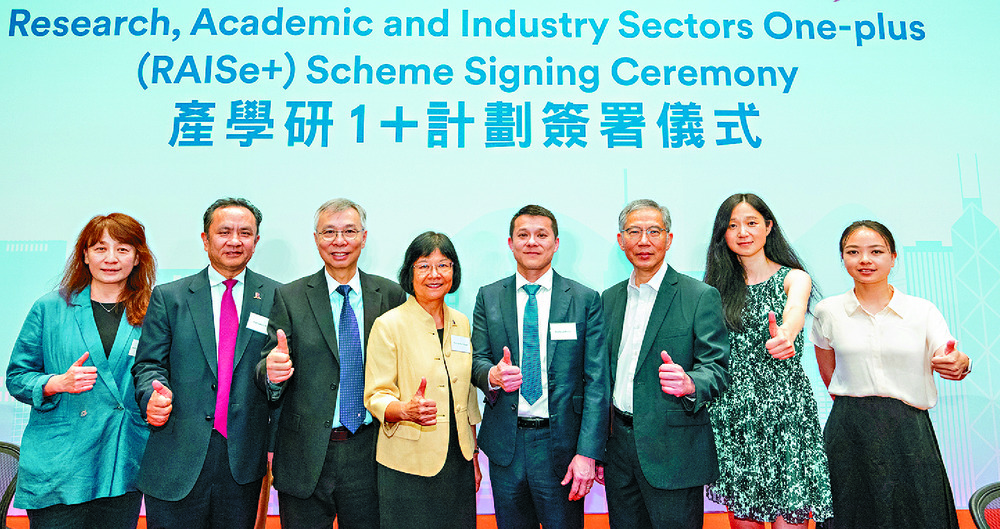
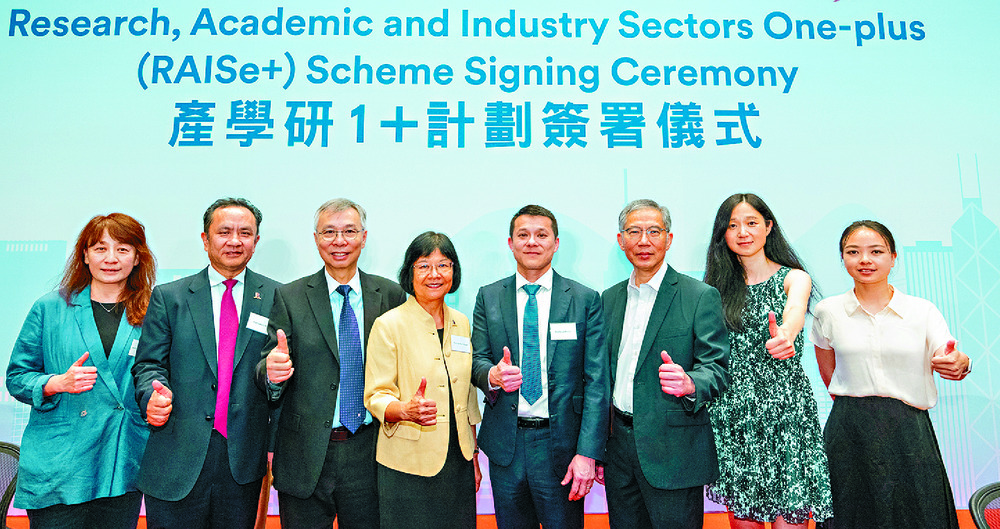
Chinese University researchers are developing innovative technologies to address global challenges in food security and health care, with several projects funded through the government's Research, Academic and Industry Sectors One-plus Scheme.
ADVERTISEMENT
SCROLL TO CONTINUE WITH CONTENT
The plan is to send soybeans and rhizobia (nitrogen-fixing bacteria) to the International Space Station.
"We hope the research can also lead to environmental assessment and smart agricultural systems, innovative biofertilizers, functional foods derived from soybeans and a database," Wong said.
They will also collect existing soybean germplasm and soil microbes for further study. An AI-powered Internet of Things system will be used to monitor the growth of soybeans and soil microbes in various environments, including harsh conditions.
Another project, led by electronic engineering professor Zhao Ni, is aimed at developing intelligent wearable sensing technology for early detection and diagnosis of cardiovascular diseases.Users will be able to pair devices with a personalized AI-powered "virtual doctor" to enable real-time cardiovascular disease prediction and diagnosis, using a unique human-and-sensor-in-the-loop approach.
Mechanical and automation engineering professor Samuel Au Kwok-wai and his university spinoff Cornerstone Robotics are working on an affordable and effective surgical robotic platform to make robotic surgery more accessible worldwide.Surgeons control a robot's movements using a console, and the platform has been tested on over 100 patients in the past four years, reducing, for example, the duration of a traditional laparoscopic prostatectomy from four to within two hours.
Other projects cover a wide range of areas, including 3D vision-driven robots for adaptive and safe human-robot interactions, personalized advanced therapeutic products, engineered osteochondral tissue cartilage regeneration therapy, silicon photonic integrated circuits for sensing and optical interconnects, and network coding for next-generation networks.