Read More













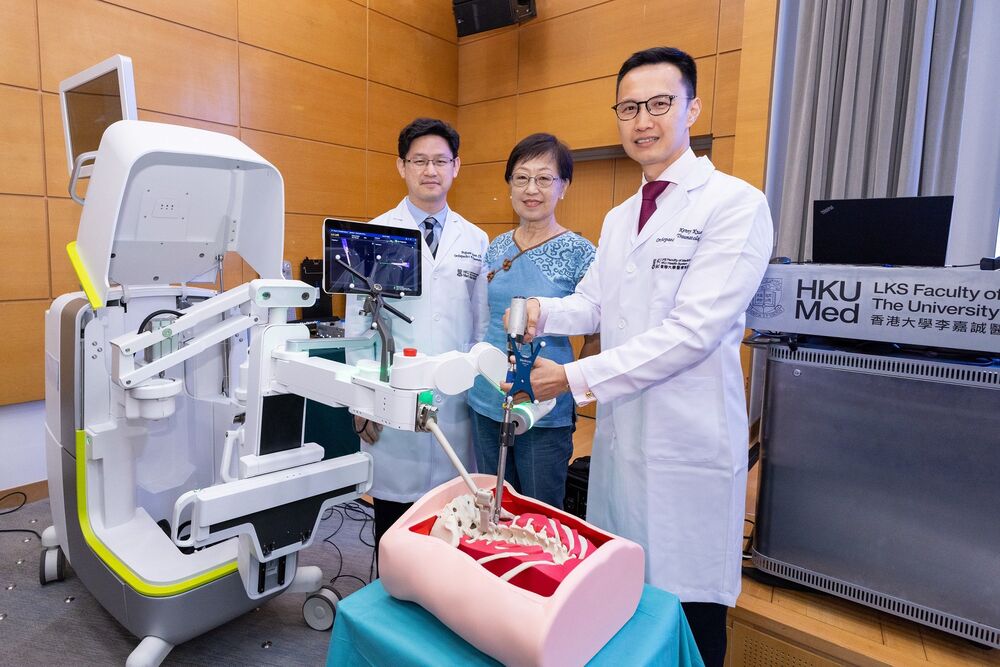
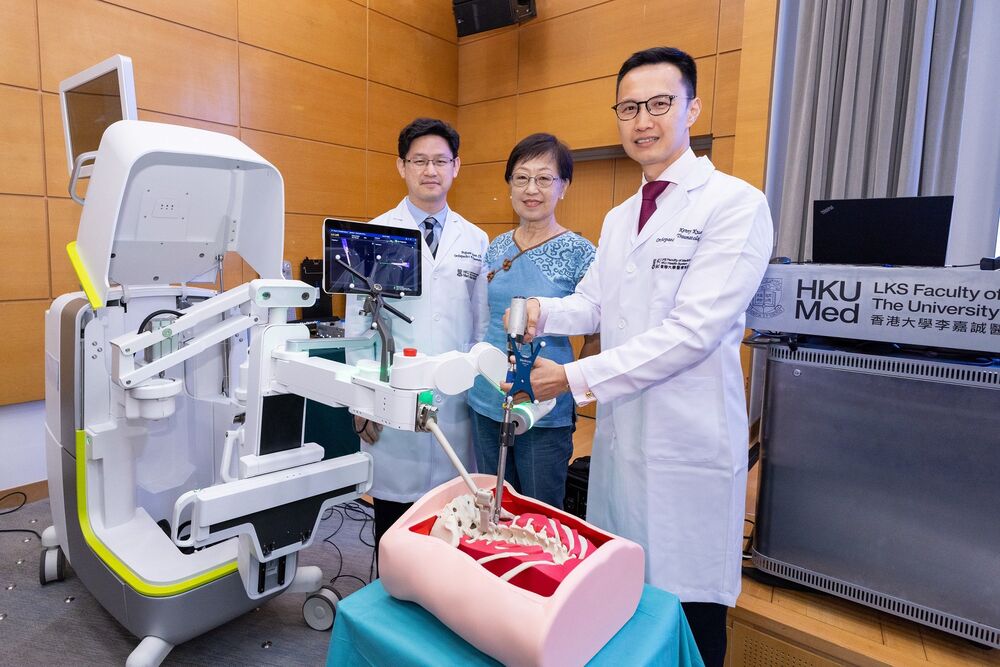
The University of Hong Kong's medical school has pioneered the use of robotic technology in spinal surgery, becoming the first institution in the world to employ a robotic arm to assist surgeons during procedures involving spines.
Kenny Kwan Yat-hong, chief of the spine surgery division in the department of orthopedics and traumatology, said "the robotic guidance system lets surgeons execute surgeries according to preoperative plans and insert spinal implants with greater precision and less difficulty."
Spinal fusion surgery often requires instruments, which is crucial in treating conditions like scoliosis, a common spine deformity among children, as well as adult issues such as back pain, spinal instability or deformities, and spinal fractures, he said.
Traditionally, surgeons would use a freehand technique to insert screws into the spine, relying on anatomical knowledge, surgical experience and intraoperative X-ray checks. This method, however, did not achieve 100 percent accuracy.
The new technology allows a surgical team to utilize preoperative planning software to determine the optimal implant strategy for the best possible correction.
The guidance system also provides real-time images of patients' spines, enabling surgeons to accurately implant the screws.
Also, the use of the robot arm can reduce radiation exposure during the surgery.
"While the traditional method requires at least one X-ray per spinal segment to confirm a position, the robotic system only needs two X-rays," Kwan said, adding that this allows surgeons to focus more on the critical soft tissue release, which is essential for successful spinal fusion surgery, ultimately improving the surgical outcome.
Since the arm's introduction in October 2023, 20 robot-guided spinal procedures have been performed at Queen Mary and Duchess of Kent Children's hospitals.
One such patient, a 72-year-old woman with degenerative kyphoscoliosis and chronic back pain, underwent a spinal fusion surgery with the robot arm, which reduced the time spent on inserting screws from 40 minutes to just 10.
While the surgical team has had to adapt to the new technology, as the robot arm's guidance sometimes conflicts with their clinical experience, the benefits of the robotic system in terms of improved precision, reduced radiation exposure, and enhanced focus on critical surgical steps have been significant.