Read More





UK denies BN(O) visas to Hongkongers with protest convictions: report
23-09-2026 18:59 HKT
Mid-Autumn early release tier list sparks debate among Hong Kong workers
25-09-2026 14:31 HKT
Three new eco-friendly ferries equipped with breastfeeding facilities will soon be setting sail between Central and outlying islands, Secretary for Transport and Logistics Lam Sai-hung said.
"These new vessels, passed to Sun Ferry and Hong Kong and Kowloon Ferry, will be put into operation next month, serving routes between Central and Cheung Chau, Mui Wo, and Peng Chau," he said.
The government has allocated over HK$5.7 billion to support the replacement of 47 ferries, as part of an effort to promote sustainability in the industry.
The subsidy will be implemented in two stages, with yesterday's launch of the three vessels marking the onset of the first stage, which sees 22 ships replaced.
"Sun Ferry and Hong Kong and Kowloon Ferry have been dedicated to operating six main island routes," Lam said. "In 2023, the total passenger volume for the island routes operated by both ferry companies reached a high of 16.4 million, with an average daily passenger count of nearly 45,000 people traveling between Hong Kong and the outlying islands."
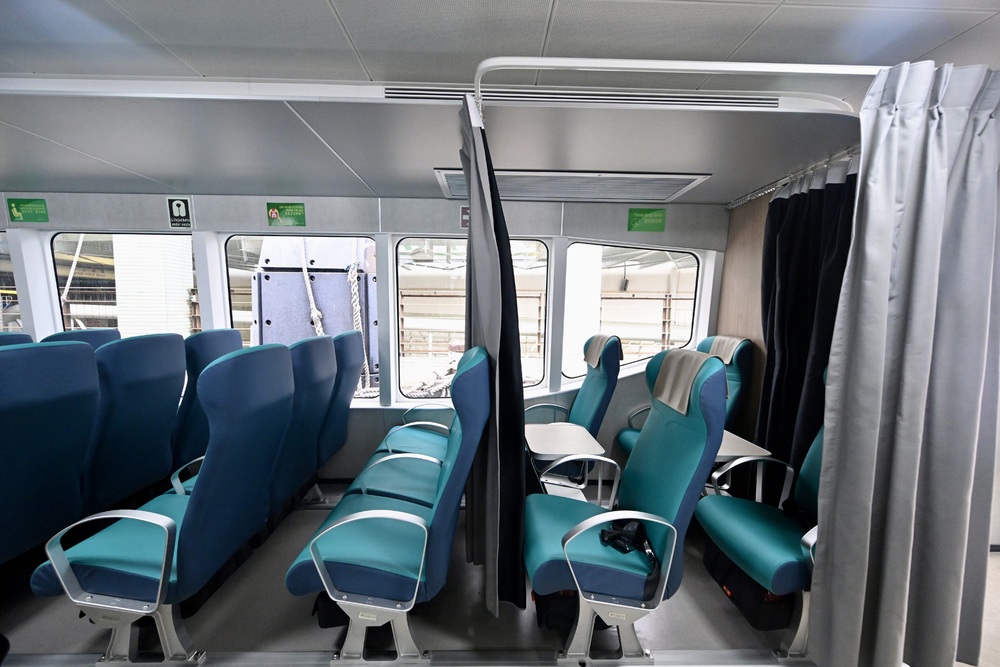
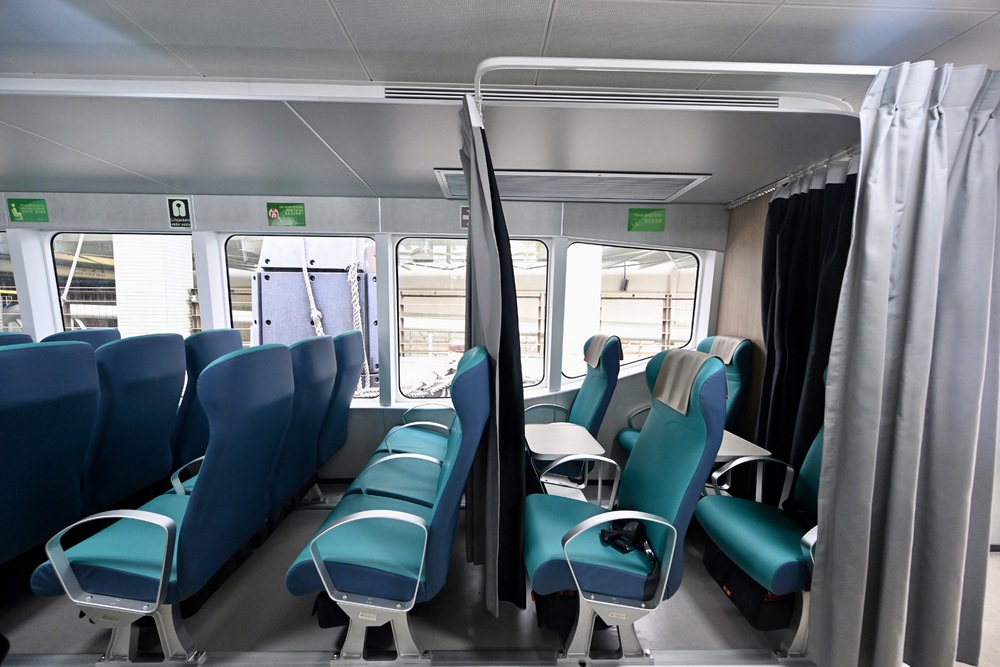
The ferries boast features designed to enhance passenger experience: pet-friendly seats, breastfeeding seats with curtains for privacy, accessible toilets, luggage placing areas, and phone charging facilities for select seats.
The two high-speed vessels operated by Sun Ferry, named Xin Ming Zhu II and Xin Ming Zhu VIII, are constructed using ecofriendly materials such as lightweight carbon fiber and aluminum alloys.
"To reduce the weight of the hull, we have utilized lightweight materials such as carbon fiber and aluminum alloys," Lam said. "The engines of these vessels meet level three, the highest standards set by the International Maritime Organization, effectively minimizing the emissions of nitrogen oxides."
An exciting development is the introduction of pet-friendly seats. The bows and sterns of Sun Ferrry's two vessels feature a total of 12 dedicated seats for passengers with pets, a privilege previously limited to conventional ferries.
The ships also provide ample space in the middle of the cabin for large pieces of luggage.
Crews are also well catered for, with each rest area in the ships' front sections having a shower room, a small kitchen, sofas and six beds.
The third ship, HKK 1, owned by Hong Kong and Kowloon Ferry, has increased its seating capacity from 400 to 450 seats.
Like the Sun Ferry vessels, it is constructed using lightweight carbon fiber.
Its front section has a row of dedicated seats for passengers with pets, along with additional exhaust vents to prevent animal odors from affecting other passengers.
It also has luggage racks and wheelchair seats.
"All these new facilities are designed with a people-centric approach, aiming to cater to the diverse needs of individuals as much as possible," Lam said.
The two ferry operators expect around half of the replacement ships to arrive before the end of the year.
"The adoption of more eco-friendly vessels is also a growing trend," Lam said. "Through this program, we hope to subsidize outlying island ferry companies in purchasing new ships, enhancing the passenger experience while promoting environmental conservation."