China's central bank says it will cut the reserve requirement ratio for banks by 0.5 percentage points from February 5 to unleash more liquidity and help the economy, spurring stock markets in Hong Kong and the mainland to rebound for a second day.
This came as Financial Secretary Paul Chan Mo-po said he has no plans to fully remove stamp duties on stock trading although local officials proposed to take further measures including reviewing the current stock trading spread to boost the liquidity of the equity market.
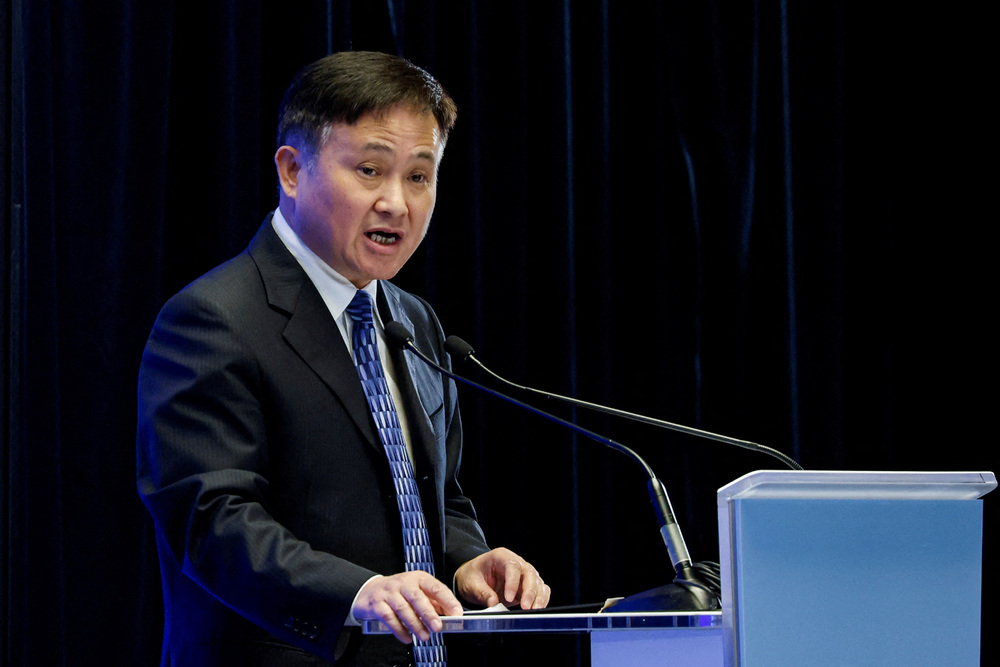
Pan Gongsheng, governor of the People's Bank of China, said the cut in the RRR - or the amount of cash that banks have to keep in reserve - will provide 1 trillion yuan (HK$1.1 trillion) in long-term liquidity to the markets.
The PBOC will also cut relending and rediscount interest rates by 0.25 percentage points for the rural sector and small firms from today.
The reduction follows earlier cuts of 0.25 percentage points for all banks in September and March last year.
It is rare for the central bank governor to preempt an RRR cut by revealing it in a news conference. Usually, the State Council, China's cabinet, will hint at the move first, and then the PBOC will follow with an announcement on its website.
But Pan's remarks came as investors's sentiment is dire after Hong Kong and mainland stocks hit fresh lows earlier this week.
Hong Kong's benchmark Hang Seng Index rebounded by 545 points - or 3.6 percent - to close at 15,899 yesterday after Pan spoke.
The Shanghai Composite Index also saw a V-shaped rebound to close 1.8 percent higher to be above 2,800 points.
Chinese technology giant Tencent led the rise, jumping 3.6 percent. State-owned companies also enjoyed a rally as China Unicom climbed 8.3 percent.
Still, the HSI and SSE suffered from a year-to-date loss of 6.7 percent and 5.2 percent.
In increasing the local stock market's liquidity, Secretary for Financial Services and the Treasury Christopher Hui Ching-yu said the Hong Kong government will roll out more measures.
But Chan yesterday at least rejected the idea of full removal of the stamp duties on stock trading. The government earlier reduced such levies to 0.1 percent.
Meanwhile, analysts believe the RRR cut will have limited impact on the broader economy although it will help boost sentiment in the short term.
"An RRR cut helps sentiment in the sense that the action seems more decisive," said Kevin Net, head of Asian equities at Tocqueville Finance. "But some investors may use this as an exit opportunity if there is such short-term market rebound."
Editorial: Beijing bazooka clue lifts markets
Pan Gonsheng