
Read More






The Sha Tau Kok Frontier Closed Area will be further opened up to visitors early next year in a process that will also allow people wishing to do so to register online, Secretary for Security Chris Tang Ping-keung said.
People will now be able to visit the north-most area of the SAR, except for Chung Ying Street, after its closure in the 1950s.
Tang said yesterday Sha Tau Kok is a place with a special significance to the SAR and its future.
"Not only does it epitomize Hong Kong's modern history, it also represents opportunities for the future integration and development of Hong Kong and the mainland," said Tang.
"People will become witnesses to history as we reopen the area gradually," he added.
The Sha Tau Kok pier was reopened as part of the first stage last June with the aim of facilitating tourism development and the Northern Metropolis development strategy.
In a six-month trial scheme, local tour groups and individuals were allowed to visit the pier and travel to and from scenic locations such as Ap Chau, Kat O and Lai Chi Wo.
Tang said his team is actively preparing for the second stage of the reopening.
"The first stage of reopening Sha Tau Kok pier facilitated visits to the outer islands. The scheme has received positive feedback," he said early this month.
"Sha Tau Kok is a beautiful place with strong historical and cultural significance. Our team is looking forward to its opening up to let people experience its uniqueness," he added.
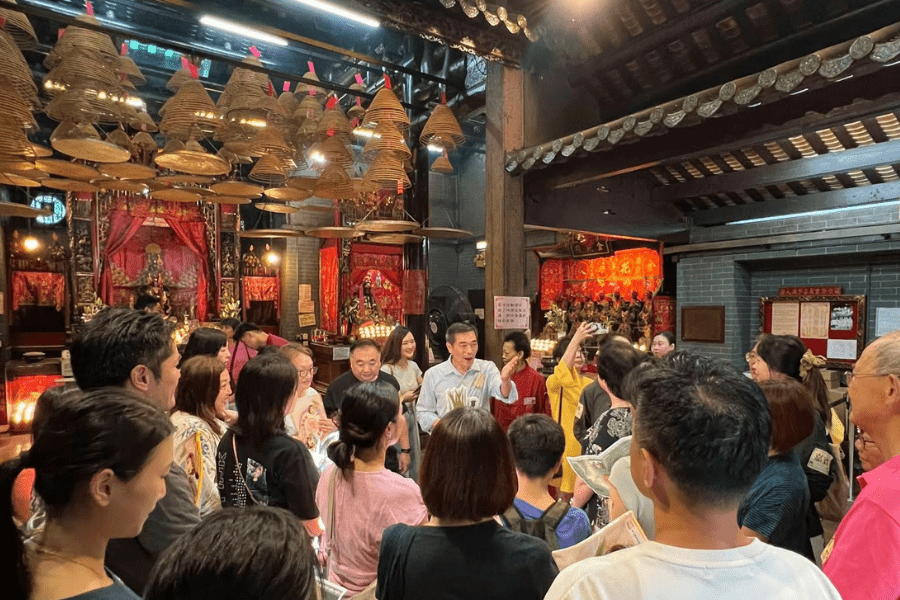
Lee Koon-hung, chairman of the Sha Tau Kok district rural committee, said the second stage would allow for a daily quota of 1,000 visitors, of which 700 would be in escorted tours and the rest individual travelers. Visitors to Hong Kong were also welcomed.
Chung Ying Street was set as the border street between Hong Kong and Shenzhen.
The 250-meter-long street was divided into two sides, one regulated by Shenzhen and one regulated by the colonial government.
Since 1951, Hong Kong residents were only permitted to enter with a Closed Area Permit, while visitors had to have a guarantee from a resident.