Read More
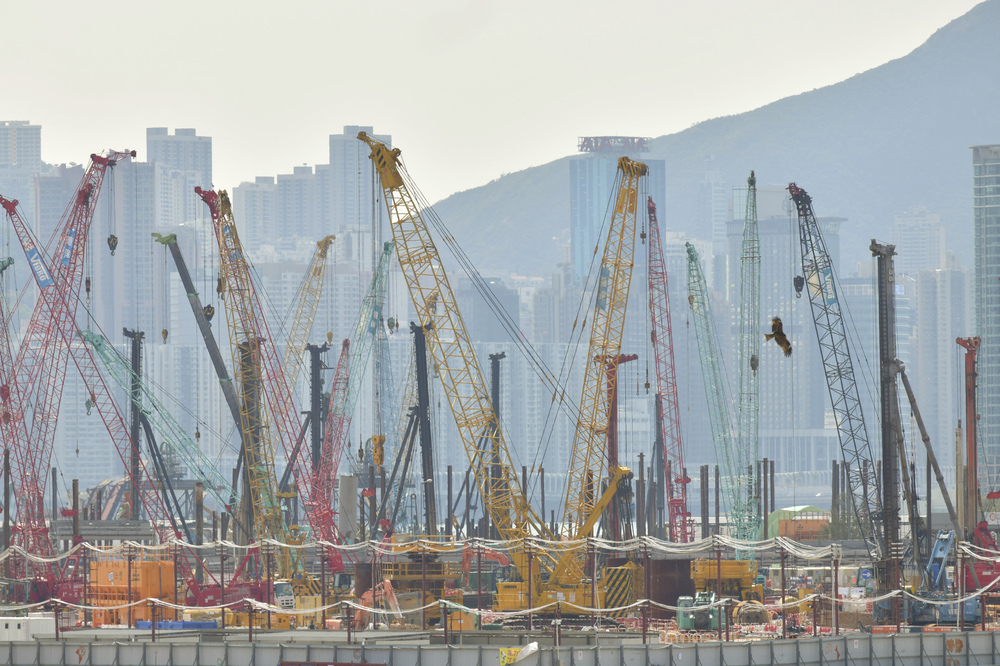
Thousands of workers - mostly from the mainland - could be brought in for the construction and logistics industries under plans to offset an acute manpower shortage that is causing projects to miss deadlines.
ADVERTISEMENT
SCROLL TO CONTINUE WITH CONTENT
Proposals will be revealed within months, Secretary for Labour and Welfare Chris Sun Yuk-han said yesterday.
But legislators criticized the slow response of authorities in tackling the severe brain drain, with Liberal Party chairman Peter Shiu Ka-fai saying: "Singapore has 600,000 to 700,000 nonlocal laborers. In Macau, 150,000 of 400,000 workers are nonlocals. We only have 5,200 in Hong Kong, and employers across all sectors find it extremely hard to replenish manpower."
Partymate Tommy Cheung Yu-yan added in a plea to Sun: "The four major industries looking after tourists - retail, catering, hotel and taxi drivers - are all lacking manpower.
"Please act quickly. We have no time to lose. We need 40,000 more people in the catering industry. Even though your proposal may not help a lot it should still be done as soon as possible."
Cheung suggested authorities allow Greater Bay Area workers to take jobs in Hong Kong so they could travel to the city daily and not need to be away from families or to face high rents.
SAR authorities are indeed highly concerned about a worker shortage, Sun said.
"The Labour and Welfare Bureau will implement a special scheme to import care workers for residential care homes in June, and applications from residential care homes will be processed with greater flexibility," he said.
That scheme is expected to appeal mostly to mainlanders as Hong Kong offers better pay than they can get in their hometowns.
Sun said when the Construction Industry Council released a manpower forecast last month the Development Bureau immediately indicated it would refer to the data to assess how to help the sector with a multipronged strategy.
That includes leveraging local workers, stepping up with training and bringing in nonlocal workers and productivity-lifting measures.
"We will set a quota capped at 7,000 [nonlocals] including 4,000 in use already," Sun said, referring to nonlocal care workers.
"We can add 3,000 more in a flexible manner, but this scheme is only applicable to care-home workers now."
The Development Bureau will lead policy planning for the construction industry and the Transport and Logistics Bureau will be in charge of proposals in its areas of interest.
The proposals for bringing in construction and logistics workers will take reference from the scheme to import care workers for homes.
And instead of having to go through the Labour Advisory Board, approvals will be granted by a designated task force to speed up the process.
That will take effect in the second half of the year.
The Development Bureau will also host a recruitment day in the mainland and the construction industry will be invited to join the effort.
Sources said authorities are not ruling out importing labor for other sectors as the city strives to revive the economy.
In a statement later yesterday, a Development Bureau spokesman said the aim is to complete a policy study by mid-year and to present comprehensive measures to address manpower needs in the construction industry.
A Construction Industry Council spokesman welcomed the measures. The shortage has plagued the industry in recent years, but the problem is expected to become more serious in the next five years, he said.
Eddie Lam Kin-wing, president of the Hong Kong Construction Association, said sites are severely short of workers.
"We don't have enough hands to finish projects," he said. "The problem of manpower shortage did not only emerge today.
"In the future we see more and bigger projects. Manpower shortage will definitely affect our plans to complete work on schedule."
The short-term solution is to bring in workers from outside, he added.
But Labour Advisory Board member Lam Wai-kong said he has not been informed about additional importation and he has approached authorities to learn details. He said authorities should not turn to importation as the ultimate solution without addressing existing problems such as poor working environments.
"And even if we have to bring in nonlocal labor the board should still act as a gatekeeper," he said.
jane.cheung@singtaonewscorp.com
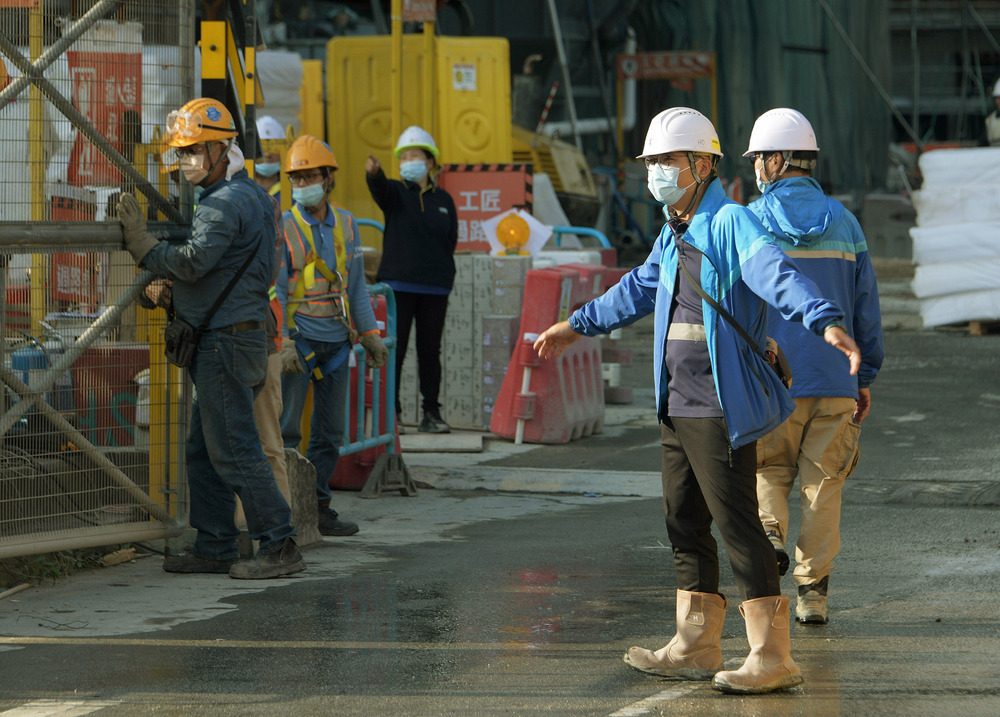
The thousands of workers will mostly come from the mainland, says Chris Sun, inset. SING TAO