A study by Chinese University of Hong Kong has identified a previously underappreciated role of mangroves in removing nitrogen pollutants, estimating the ecological value of this function at more than US$8.5 billion annually.
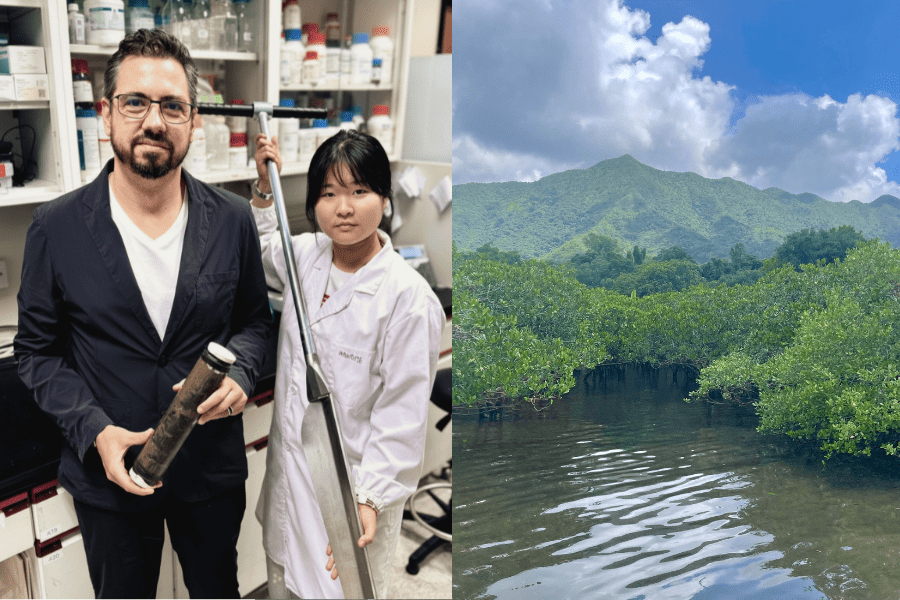
The research, led by Benoit Thibodeau, Assistant Professor of the Department of Earth and Environmental Sciences and the School of Life Sciences, and PhD candidate Wang Ziyan, was published in the journal Earth’s Future.
While mangroves are widely recognized for their role in absorbing carbon dioxide—known as “blue carbon”—the study highlights their capacity to remove large amounts of reactive nitrogen, a function the researchers describe as “blue nitrogen.” Despite covering less than 0.1 percent of the world’s land area, mangrove forests remove an estimated 870,000 tonnes of nitrogen pollutants from coastal waters each year.
The study comes as human-generated nitrogen emissions have surged dramatically over the past century, contributing to algal blooms, coastal dead zones, and damage to fisheries and water quality. Mangroves help mitigate these impacts by converting harmful nitrogen compounds into inert gas through microbial processes in waterlogged sediments.
The research estimates that the annual value of this nitrogen purification service exceeds US$8.5 billion, more than 12 times the value of mangroves’ carbon sequestration credits.
By analyzing 51 published studies and additional datasets from 42 mangrove sites worldwide, the team found that mangroves could remove up to five million tonnes of nitrogen annually, offsetting about 3 percent of global human-generated reactive nitrogen.
Thibodeau said that while “blue carbon” has demonstrated mangroves’ importance in climate mitigation, “blue nitrogen” is emerging as a powerful mechanism for improving water quality and protecting coastal ecosystems.
Wang added that mangroves perform a dual role in sequestering carbon and purifying water, offering “stronger reasons to protect them.”
The researchers recommended incorporating nitrogen removal into existing ecosystem service frameworks, including the development of a combined carbon–nitrogen credit system to generate economic returns from mangrove conservation.
They pointed to the Greater Bay Area as a potential pilot region, given its extensive coastal development and significant mangrove coverage.
The study also noted that current nitrogen removal represents only about 15 percent of mangroves’ theoretical capacity, suggesting significant room for enhancement through conservation and restoration efforts.
According to the study, even nutrient-poor, high-salinity mangrove systems exhibit strong nitrogen removal capacity.
The team added that a better understanding of these processes could help guide future mangrove management and optimize investment in nature-based solutions.