Read More
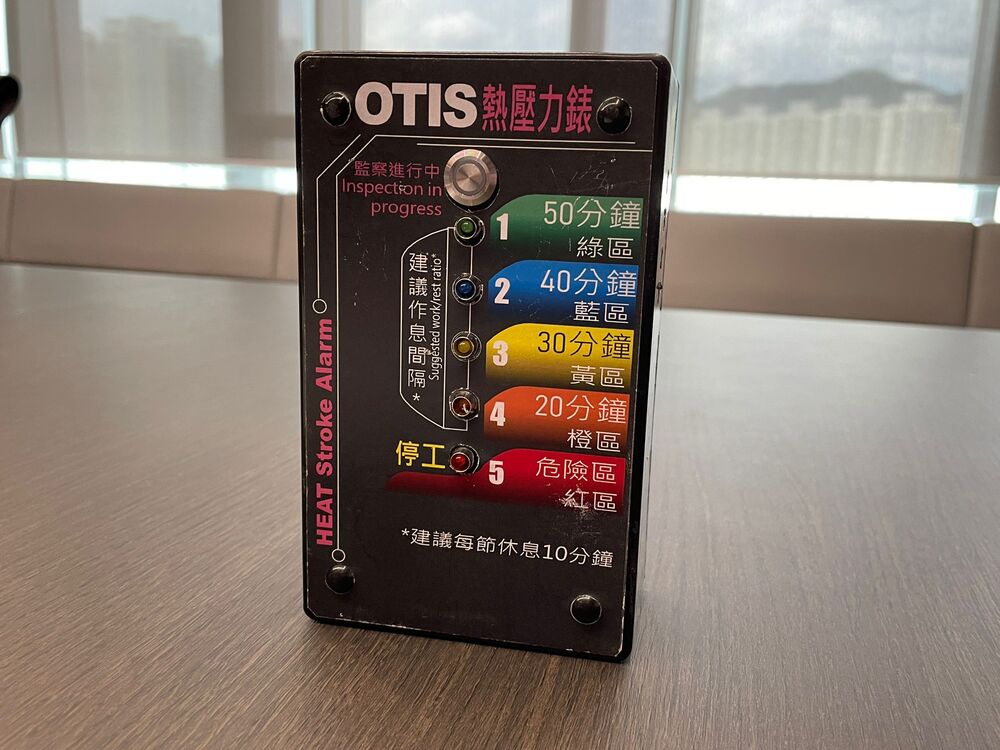
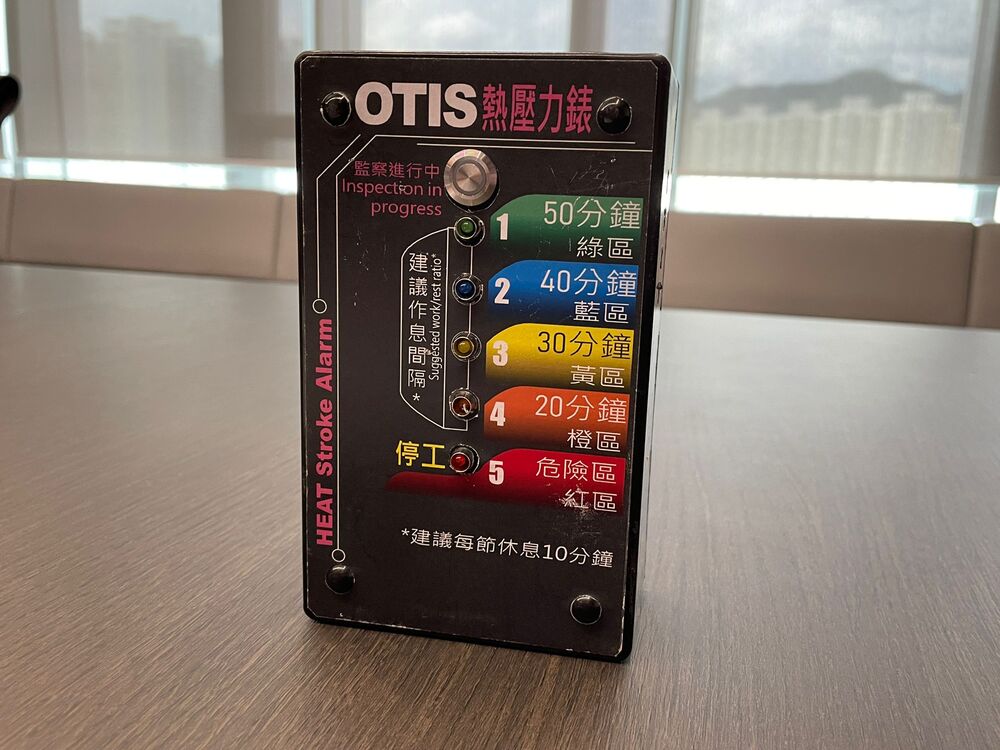
Engineers of a major elevator company have developed a heat stroke alarm using cloud-based technology to enhance workplace safety, as in recent years the city has been experiencing hotter summers and more scorching days due to climate change and urbanization.
ADVERTISEMENT
SCROLL TO CONTINUE WITH CONTENT
Otis Hong Kong is currently applying for a patent for the heat stroke alarm.
"A majority of our staff work in lift shafts or machine rooms, where temperatures can be a few degrees Celsius higher than outdoors," said Stephen Chu Tat-fung, safety officer of service field operation.
He added that "the 'real' temperature the body perceives is called the heat index, which combines air temperature and relative humidity." This is "normally higher than the temperature reported by the Observatory."
The heat stroke alarm automatically checks the heat index at regular intervals. If it exceeds a certain value it informs the working team through the cloud in real time and reminds them of the relevant working guidance through a mobile application.
The alarm device also uses LED lights with five different colors to show five heat hazard levels.
For example, when the heat index reaches 39 to 49, the yellow LED light representing level three will turn on, and workers will be reminded to work under the shade, get 10 minutes' rest after 30 minutes' work and drink a glass of water every 14 minutes.
Elevated work should be stopped when the orange light is on - when the heat index is 50 to 53 - and workers will be notified to rest 10 minutes after 20 minutes' work as well as drink water every 10 minutes.
And if the red light is on, representing level five, workers are required to stop all work and drink one quarter liter of water.
"The device's energy consumption is low, using a single 2AA battery that can last for over 100 days - the whole summer," Chu said.
The Hong Kong Observatory measured 21 very hot days in July, the highest ever number of very hot days in a month.
Hong Kong will see more extreme hot weather in the future, according to research that the Chinese University collaborated on with other institutions. If greenhouse gas emissions are not reduced, it is predicted that extreme hot weather will occur almost daily from May to August, and might also occur in April and September.