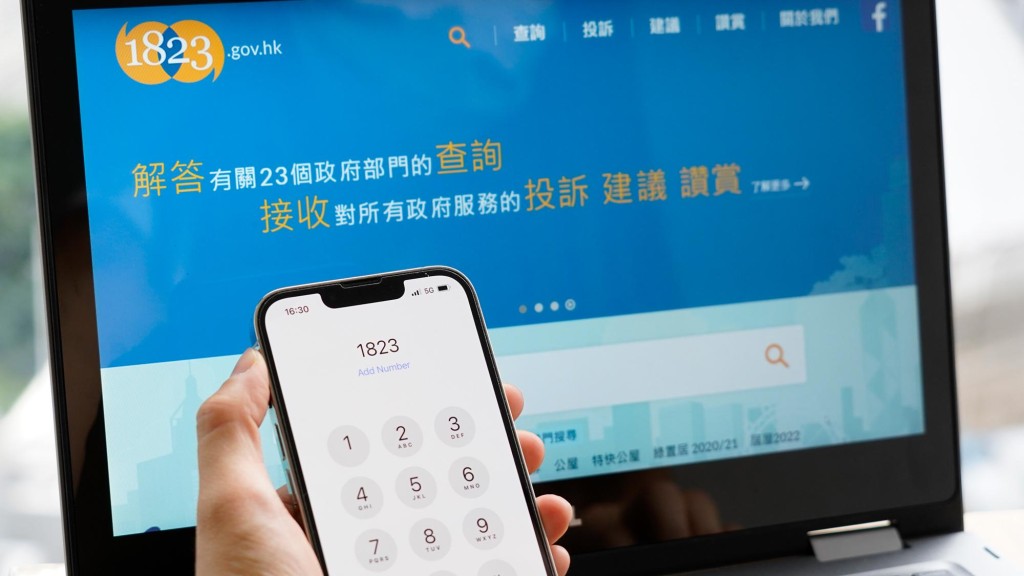
Hong Kong’s first Five-Year Plan is expected to run to more than 100 pages across six chapters, with a revamp of the government’s 1823 Contact Centre drawing on the mainland’s 12345 government service hotline among the measures under consideration, according to sources.
The details emerged ahead of Wednesday’s unveiling of the Five-Year Plan and Chief Executive John Lee Ka-chiu’s final Policy Address of his current term.
Sources said civil service matters would account for roughly a quarter of one chapter, covering areas including the use of artificial intelligence and management of the government workforce.
A new approach to handling public complaints is also expected to be proposed, taking reference from the mainland’s 12345 government service hotline.
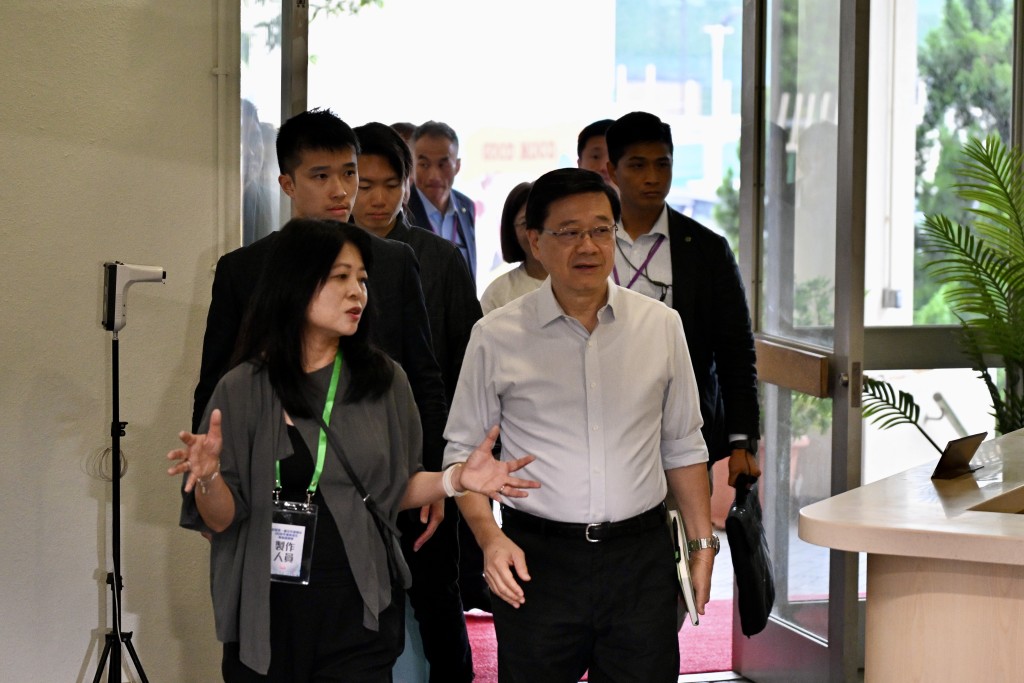
The proposal follows Lee’s visit to the 1823 Contact Centre on August 26, where he was briefed on the use of AI to speed up the handling of public enquiries, requests for assistance and complaints.
Lee said at the time that 1823 handled a large volume of cases linked to everyday issues including environmental hygiene, roads, noise and building management.
He asked the Digital Policy Office to continue leading the contact center in adopting AI and other technologies to improve efficiency.
The DPO has already announced four AI Efficacy Enhancement Projects for 1823 — “Call Assistant,” “Email Extraction,” “Prioritisation of Departments’ Replies” and “Dashboard” — which are expected to be rolled out this year.
The projects are designed to automate call summaries, extract information from emails, flag cases requiring priority handling and consolidate complaint data for government departments.
Lawmakers call for broader role for 1823
Federation of Hong Kong and Kowloon Labour Unions chairman and lawmaker Lam Chun-sing said 1823’s role in handling complaints was still largely focused on referring cases to the relevant departments, leaving some residents unclear about the progress of their cases or which authority was responsible.
Residents seeking updates through the hotline could also find themselves referred back to the department handling the case, he said.
Lam said a single-window model could give 1823 a stronger coordinating and monitoring role, allowing cases to be followed through without repeated back-and-forth between departments.
DAB lawmaker Elaine Chik Kit-ling similarly said 1823 often served primarily as a dispatch point for cases rather than providing continuous follow-up or facilitating a prompt resolution.
Referring to a recent visit to Beijing’s 12345 hotline service center, she said the mainland system could offer useful examples of how technology and AI could improve public services while reducing staff workload.
Lawmaker Joephy Chan Wing-yan also supported expanding 1823’s functions, having previously proposed that Hong Kong draw on the mainland model by introducing services such as sign-language video support, dedicated business consultation and enhanced multilingual assistance.
Tsoi Koon-lung, president of the Hong Kong Chinese Civil Servants’ Association, said mainland 12345 hotlines could also be used to identify recurring public concerns and escalate them to senior officials.
“AI helps staff answer faster and gives them room to step away for a break,” he said, questioning whether Hong Kong’s system provided comparable support for frontline staff.