Read More











Three arrested over missing fire door frames in public estate lift overhaul
16-10-2026 20:10 HKT

Credit card fraud hits foldable iPhone Duo launch
17-10-2026 12:23 HKT


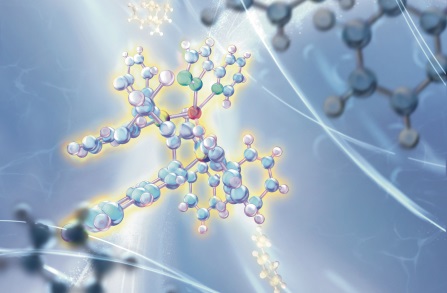
HKU chemists have developed a light-driven method for building three-dimensional molecular structures that could help researchers design new drug candidates.
The team, led by Professor Jian He from HKU’s Department of Chemistry, focused on bicyclo[2.1.1]hexanes, or BCHs, compact 3D structures being explored as alternatives to flat benzene rings commonly found in medicines.
Benzene rings are useful in drug design but can sometimes contribute to poor water solubility or less favorable interactions with biological targets. BCHs may help improve properties such as solubility, selectivity and metabolic stability.
Using newly developed copper-based photosensitizers and visible light, the researchers found a more controlled way to form BCHs while reducing unwanted polymerization.
The technique also works with a broader range of starting materials and gives chemists greater control over how chemical groups are arranged.
He said the method could “open new opportunities” for more diverse drug candidates and sustainable chemical production.
The researchers also demonstrated the process on a gram scale, highlighting its potential use in medicinal chemistry and drug development.