Read More




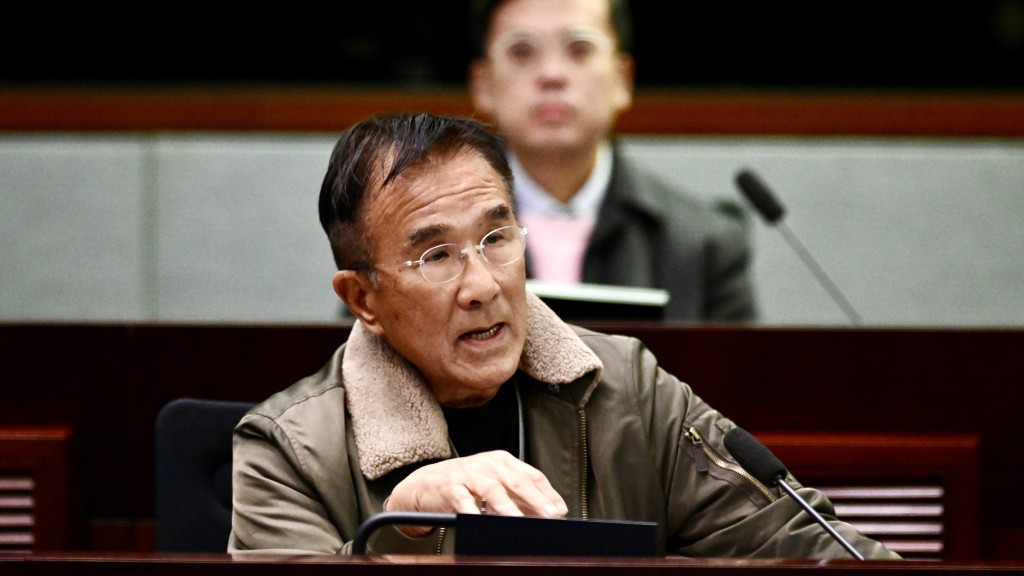
Former lawmaker Michael Tien Puk-sun has questioned the use of public money to pay extra bonuses to legislative assistants, after a report said 30 outgoing lawmakers handed out about HK$9.4 million in bonuses or gratuities before leaving office.
The report said the payments were made to 157 assistants after the Legislative Council changed term, raising concern over how public funds were used by lawmakers who were not re-elected.
Among the cases cited was former Election Committee sector lawmaker Ma Fung-kwok, who reportedly paid HK$264,000 in bonuses to his assistant Sei Chun-hing, equivalent to six months’ salary. Sei has recently been linked to a sex scandal case.
Speaking on a radio program on Monday, Tien, also convenor of Roundtable, said he found it “strange” that additional bonuses were paid with public funds when staff contracts already included end-of-contract gratuities.
Tien was among the few outgoing lawmakers who did not use public money to pay staff bonuses. He said most of his team members were retained by his successor, Mark Chong Ho-fung.
He said he was particularly cautious when public money was involved.
“For my own company, or private matters, that is one thing. But when it comes to public money, I myself am not quite willing to do so,” Tien said.
He said staff in his office were employed on contracts, and end-of-contract gratuities would be paid when the contracts expired. Salaries would also be renegotiated upon renewal.
Tien added that staff salaries were adjusted in line with civil service pay rises during the contract period, meaning the terms were already better than those in much of the private market.
Given that end-of-contract gratuities were already included, he said the purpose of long-service payments or extra bonuses had effectively been covered, making it difficult to understand why some lawmakers would still use public funds to issue additional payments.
Meanwhile, the former lawmaker said whether the reported bonuses were reasonable would depend on the specific circumstances.
He said it could be acceptable for a staff member who had served in a lawmaker’s office for more than 20 years to receive a bonus of around HK$200,000. But if a staff member with only a few years of service received the same amount, he described it as “outrageous.”
He added that even in his own private business, he would not normally give an extra bonus to an employee who had been repeatedly renewed under favorable contract terms upon departure, let alone when the payment involved public funds.
Asked how such payments should be regulated, Tien said the arrangement should be based on existing contract terms.
He said if an employment contract clearly stated that a staff member was entitled to such a payment upon departure, the public should respect the agreement. But if the payment was not specified in the contract and was purely a discretionary decision by the lawmaker, public money should not be used.
Tien said lawmakers who wished to reward their staff at their own discretion should pay out of their own pockets, in order to address public concerns over the proper use of public funds.