





Read More



Night Recap - May 12, 2026
2 hours ago






Mother's Day dining revenue drops $50m, expert says
11-05-2026 13:30 HKT

Hong Kong’s iconic Lamma Winds decommissioned after two decades
11-05-2026 18:07 HKT


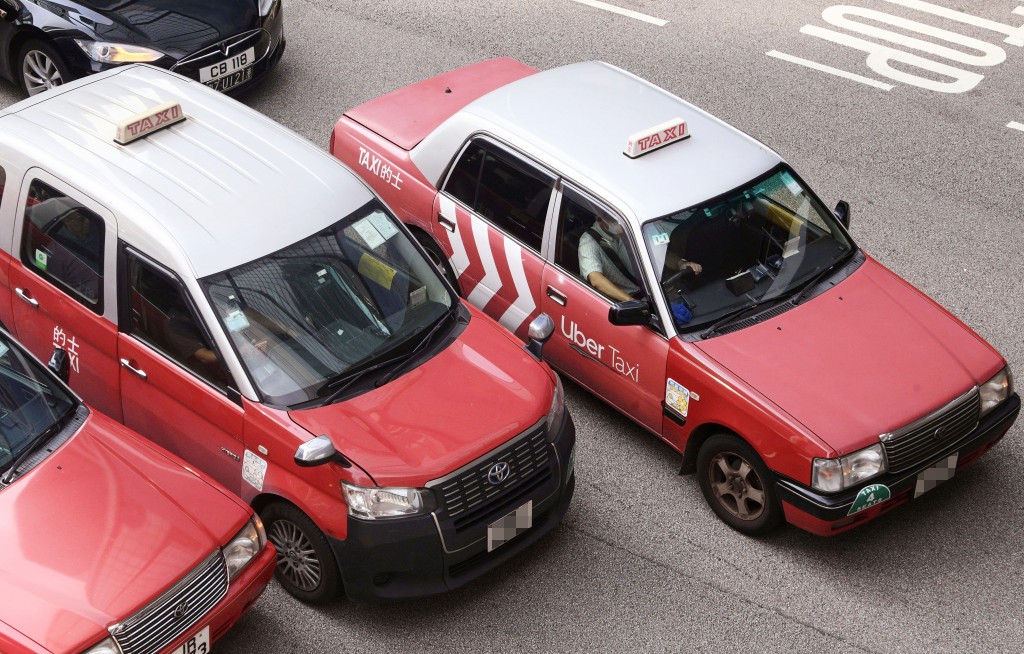
Uber has warned that an insufficient number of ride-hailing licenses could cause major inconvenience to consumers, with the platform estimating that four out of every 10 ride requests may fail and fares could surge by 70 percent if the quota is set too low.
The warning came as the government prepares to submit subsidiary legislation for the regulation of ride-hailing services in the first half of this year. Under the proposed timetable, platforms will be invited to apply for licenses in the third quarter, while vehicle and driver applications will open in the fourth quarter. Approved platforms will also be allowed to begin preparatory work from the fourth quarter.
Speaking on a radio program on Tuesday, Legislative Council transport panel chairman Ben Chan Han-pan said the government’s decision to proceed first with a consultation paper, rather than directly tabling a bill, was appropriate as it would allow sufficient room for public discussion.
Chan said the initial rollout of ride-hailing licenses should take a gradual approach to ensure a smooth landing for the industry. He suggested that the first batch of licenses should be kept below 10,000, with around 7,000 to 8,000 permits as a suitable starting point.
He said issuing too many licenses at the beginning could lead to unhealthy competition and damage the overall transport ecosystem, while too few licenses could make it difficult for passengers to book rides.
At this stage, he added, the total number of ride-hailing licenses should not exceed the number of taxis in Hong Kong, which currently stands at about 18,000.
According to Transport Department figures, ride-hailing services currently carry around 190,000 passenger trips a day, with an average of 1.67 passengers per ride, equivalent to about 114,000 vehicle trips daily.
The government has also estimated that as around 60 to 70 percent of ride-hailing drivers work part-time for fewer than 20 hours a week, the combined capacity of about three ride-hailing vehicles is roughly equivalent to one taxi operating 18 hours a day.
Chan said the calculation was reasonable, noting that ride-hailing vehicles are generally tied to specific drivers and cannot operate around the clock through shift arrangements like taxis. He said most ride-hailing drivers work only two to three hours a day, while even more active drivers may operate for about six hours, meaning their overall capacity is lower than that of taxis.
Responding to Uber’s claim that more than 30,000 drivers rely on the platform for income, and that a quota of only 10,000 to 15,000 permits could create a 66 percent gap in peak-hour demand, Chan said the platform’s forecast was based on “many different assumptions.”
He said one such assumption appeared to be that the market only had ride-hailing services and no taxis, which would make the supply-demand calculation very different. He added that actual data such as drivers’ online hours, operating patterns and passenger demand would have to be considered before any conclusion could be drawn.
Chan said many of the 30,000 drivers cited by the platform were part-time drivers, and the final number of licenses would have to strike a “dynamic balance,” taking into account road capacity and the need to prevent disorderly competition.
He added that ride-hailing services alone may not be enough to meet passenger demand, but existing taxis could also join online platforms to provide more choices for the public.
On how often the license quota should be reviewed, Chan said once platforms are licensed, the government will be able to obtain more accurate data on drivers’ actual online hours, passenger waiting times and the proportion of failed bookings.
He said the legislation is expected to empower the Commissioner for Transport to adjust the number of licenses based on objective data and market conditions.
Insurance sector lawmaker Chan Pui-leung, meanwhile, took a different view and said the government should issue at least 18,000 ride-hailing licenses to maintain the current level of service capacity.
He said taxis and ride-hailing services currently account for 78 percent and 22 percent of Hong Kong’s point-to-point passenger transport capacity, respectively.
As about 80 percent of ride-hailing drivers work part-time, operating fewer than 40 hours a week and around four hours a day, he estimated that about 4.5 ride-hailing vehicles would be needed to match the capacity of one taxi operating about 18 hours a day.
On that basis, he said at least 18,000 ride-hailing licenses would be needed to preserve the existing 22 percent capacity share of ride-hailing services. If the government wanted to raise ride-hailing capacity to 25 percent, the quota may need to reach 20,000 licenses.
Chan Pui-leung also backed the government’s proposed minimum service requirement, under which vehicles would have to complete a specified number of trips during the permit period in order to qualify for renewal.
He said the measure was reasonable as the number of ride-hailing licenses would be limited, and the government should ensure applicants have a genuine intention to operate. He said idle permits would waste market capacity and affect the healthy development of the ride-hailing sector.
He also supported the proposal to limit the total renewal period of vehicle permits to no more than five years, saying this would allow the government to adopt a “review as it goes” approach and leave room for policy adjustments in the coming years.
𝗗𝗼𝘄𝗻𝗹𝗼𝗮𝗱 𝗧𝗵𝗲 𝗦𝘁𝗮𝗻𝗱𝗮𝗿𝗱 𝗔𝗽𝗽 ↓
